
In modern manufacturing, surface cleanliness is no longer a secondary requirement—it directly determines product quality, bonding strength, coating performance, and even the lifespan of critical components.
Traditional cleaning methods such as chemical washing, sandblasting, and mechanical polishing have been widely used for decades. However, these approaches often introduce new problems, including material damage, environmental risks, and inconsistent cleaning results.
As industries move toward higher precision and stricter environmental standards, the limitations of conventional cleaning technologies become increasingly evident.
This is where the Laser Cleaning Machine emerges as a transformative solution.
Unlike traditional methods, laser cleaning is a non-contact, highly controllable process that removes contaminants without damaging the base material. It represents a shift from “force-based cleaning” to energy-controlled surface treatment.
Why Traditional Cleaning Methods Are No Longer Sufficient
In industries such as automotive manufacturing, mold production, electronics, and food processing, surface contamination can take many forms:
-
Oxide layers on metal surfaces
-
Oil residues from machining processes
-
Carbon deposits in molds
-
Coatings or unwanted paint layers
Traditional cleaning methods rely on physical abrasion or chemical reactions. While effective to some extent, they often lack precision and repeatability.
For example, sandblasting can remove contaminants quickly, but it may also erode the substrate, especially in precision components. Chemical cleaning introduces disposal challenges and potential safety risks. Mechanical cleaning is labor-intensive and inconsistent.
These limitations create a gap between cleaning requirements and available solutions.
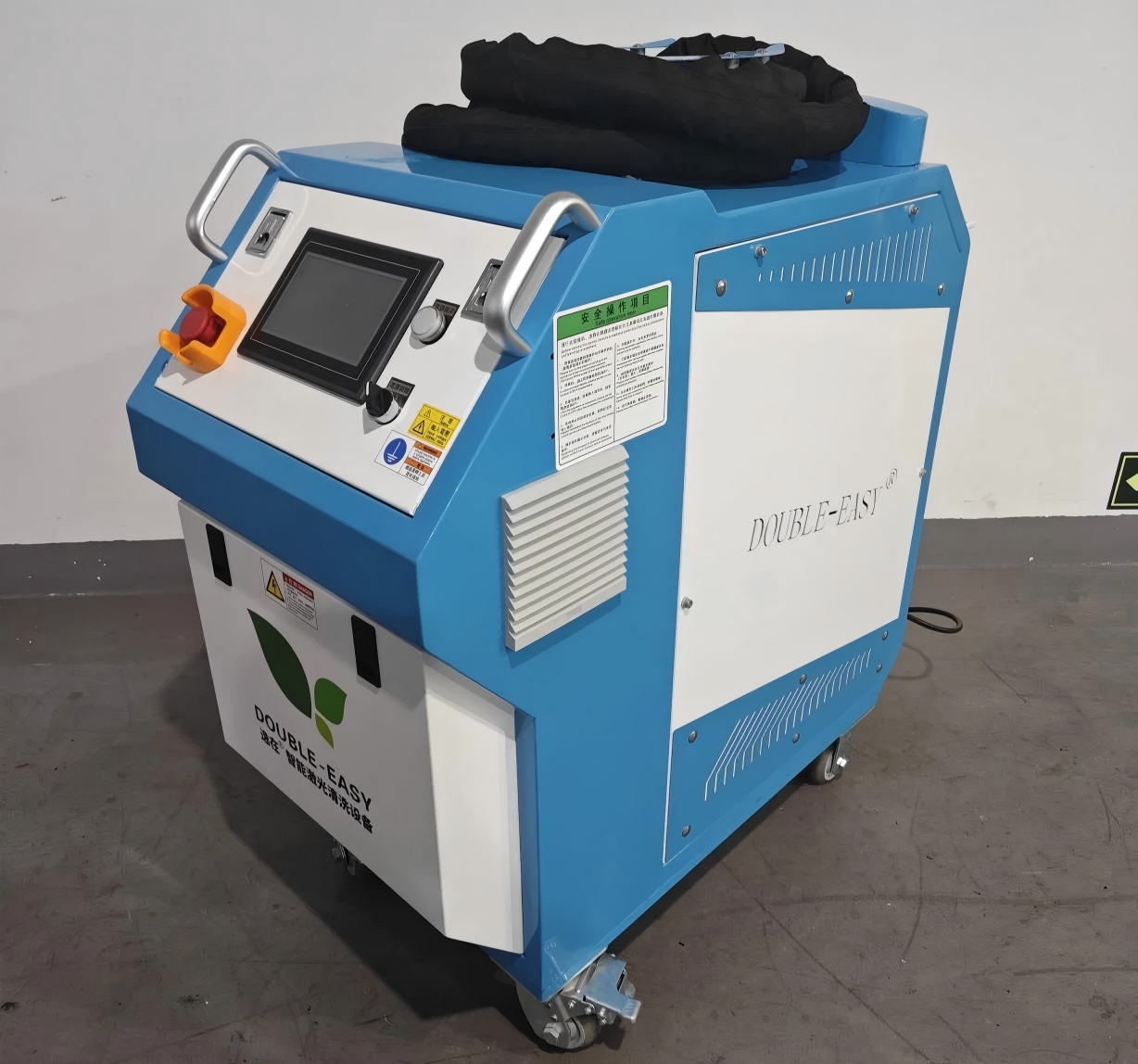
Working Principle of Laser Cleaning Machine
A Laser Cleaning Machine operates based on the interaction between high-energy laser pulses and surface contaminants.
When the laser beam is directed onto the surface, contaminants absorb the energy more efficiently than the base material. This causes rapid heating, expansion, and vaporization of the unwanted layer.
At the same time, the substrate remains largely unaffected due to its different absorption characteristics.
This selective removal process enables:
-
High precision cleaning
-
Minimal thermal impact on the base material
-
No mechanical stress or abrasion
From an engineering perspective, the process can be controlled through parameters such as laser power, pulse frequency, and scanning speed.
This allows the Laser Cleaning Machine to adapt to different materials and contamination types.
Key Advantages of Laser Cleaning Machine in Industrial Applications
The adoption of Laser Cleaning Machines is driven by their ability to deliver both technical and operational benefits.
One of the most significant advantages is non-contact processing. Since there is no physical interaction with the surface, there is no risk of mechanical damage. This is particularly important for precision molds and high-value components.
Another key benefit is environmental performance. Laser cleaning does not require chemicals or abrasive media, which eliminates secondary waste and reduces environmental impact.
In addition, the process is highly controllable. Operators can adjust parameters to achieve consistent results across different batches, improving overall production stability.
From a production standpoint, these advantages translate into:
-
Reduced maintenance of cleaned components
-
Improved product quality
-
Lower long-term operational costs
Applications of the Laser Cleaning Machine Across Industries
The versatility of Laser Cleaning Machines allows them to be used in a wide range of industries, each with specific requirements.
In the automotive industry, laser cleaning is used for removing coatings, rust, and contaminants from engine components and structural parts. It ensures clean surfaces for welding and bonding.
In mold manufacturing, it is used to remove carbon deposits and residues without damaging the mold surface. This extends mold life and improves product consistency.
In electronics manufacturing, precision cleaning is essential to ensure reliable connections and prevent defects.
In food and beverage industries, laser cleaning provides a dry and residue-free method for maintaining equipment hygiene.
These applications demonstrate that laser cleaning is not just a replacement technology—it is an enabling technology for higher manufacturing standards.
Integration with Intelligent Manufacturing Systems
Modern production environments require equipment that can integrate seamlessly into automated systems.
A Laser Cleaning Machine can be configured with robotic arms, automated conveyors, and programmable control systems. This enables consistent and repeatable cleaning processes with minimal human intervention.
The ability to integrate with digital control systems also allows for real-time monitoring and optimization.
This aligns with the broader trend toward smart manufacturing, where equipment is not only functional but also data-driven.
Equipment Reliability and Component Quality
The performance of a Laser Cleaning Machine depends not only on its design but also on the quality of its components.
Leading manufacturers incorporate internationally recognized components to ensure stability and durability. For example:
-
Precision flow measurement systems
-
Advanced frequency control units
-
Reliable pump and power systems
These components contribute to consistent performance and reduced maintenance requirements.
A Trusted Manufacturer in Industrial Cleaning Solutions
Guangzhou Yizai Intelligent Technology Co., Ltd., established in 2017, is a high-tech enterprise specializing in the research, development, and manufacturing of advanced industrial cleaning equipment.
Located in Huadu District, Guangzhou, the company benefits from convenient transportation, being close to both Guangzhou Baiyun International Airport and high-speed rail stations.
The company offers a comprehensive range of cleaning solutions, including:
-
Mold waterway cleaning machines
-
Dry ice cleaning machines
-
Laser cleaning machines
-
Ultrasonic electrolytic cleaning machines
-
Circulating water descaling systems
With a strong focus on innovation, the company holds multiple patents and integrates high-quality components from globally recognized brands. This ensures that its equipment remains stable, durable, and suitable for demanding industrial environments.
Proven Performance Across Global Industries
The reliability of Laser Cleaning Machines is best demonstrated through real-world applications.
The company’s equipment has been widely adopted by leading enterprises across various industries, including automotive, electronics, and consumer goods manufacturing.
Its customer base includes globally recognized companies such as:
-
BYD Automobile
-
Toyota Engine
-
Foxconn
-
Gree and Midea
-
3M and Coca-Cola
These partnerships reflect the ability of the company’s solutions to meet high standards of performance and reliability.
With exports accounting for a significant portion of total sales, its products are used across Europe, North America, and Southeast Asia.
Laser Cleaning Machine as a Long-Term Investment
From a financial perspective, investing in a Laser Cleaning Machine is not only about replacing existing cleaning methods. It is about improving long-term operational efficiency.
The reduction in consumables, lower maintenance requirements, and improved product quality all contribute to cost savings over time.
In addition, the ability to achieve consistent cleaning results reduces variability in downstream processes, further enhancing production efficiency.
Redefining Industrial Cleaning Standards
The transition from traditional cleaning methods to laser-based solutions represents a fundamental shift in industrial manufacturing.
A Laser Cleaning Machine offers precision, consistency, and environmental advantages that align with modern production requirements.
For manufacturers seeking to improve product quality, reduce operational costs, and meet stricter environmental standards, laser cleaning is no longer an optional upgrade—it is a strategic investment.
In advanced manufacturing, surface quality defines product quality—and Laser Cleaning Machines provide the control needed to achieve it.
www.moldcleanmachine.com
Yizai Intelligent Technology

+ There are no comments
Add yours