
The global demand for premium nuts continues to grow, driven by the expansion of healthy snack markets, plant-based foods, bakery ingredients, and food exports. Almonds, walnuts, pistachios, peanuts, hazelnuts, cashews, macadamias, pecans, and other specialty nuts are increasingly required to meet strict quality standards for moisture content, appearance, shelf life, and food safety.
For commercial processing facilities, drying is one of the most critical production stages. Improper drying can lead to mold growth, aflatoxin contamination, uneven roasting, cracking, excessive weight loss, or shortened storage life. Conversely, excessive drying increases energy consumption while reducing product yield and profitability.
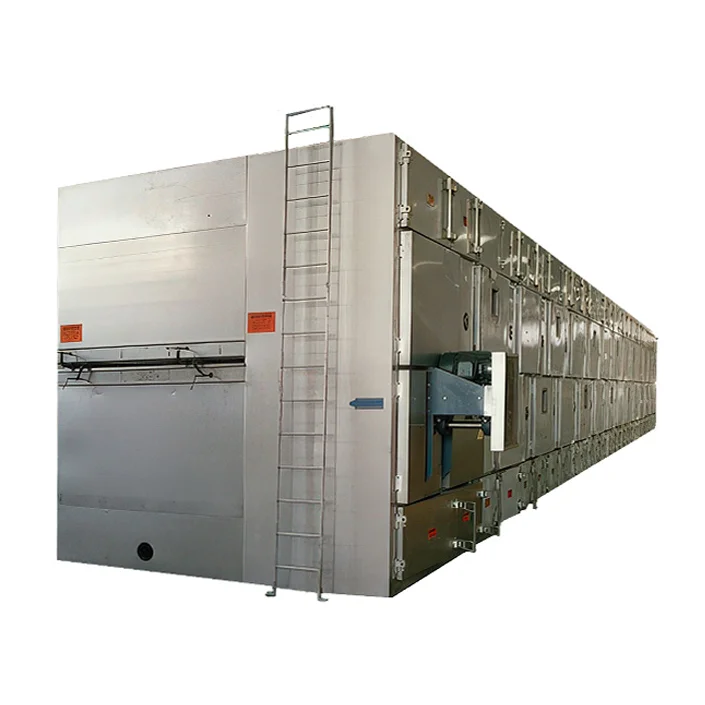
This is why modern Drying systems for commercial nut processors have evolved far beyond simple hot-air dryers. Today's industrial drying solutions combine precision thermal control, intelligent airflow management, moisture monitoring, and automated process control to deliver consistent product quality while minimizing operating costs.
Why Moisture Control Determines Final Product Quality
Freshly harvested nuts typically contain significantly higher moisture levels than those required for long-term storage or further processing.
Although moisture levels vary by nut variety and harvesting conditions, commercial processors generally target safe storage moisture ranges such as:
-
Almonds: approximately 5–7%
-
Walnuts: approximately 8%
-
Pistachios: 4–6%
-
Peanuts: below 10% before storage
-
Hazelnuts: around 5–6%
Even small deviations can have major consequences.
If moisture remains too high, microbial activity increases, leading to mold development and a higher risk of aflatoxin formation. High moisture also accelerates lipid oxidation, reducing flavor quality and shortening shelf life.
Excessively low moisture creates a different problem. Overdrying increases weight loss, decreases processing yield, and may negatively affect texture during roasting or further food processing.
Commercial drying systems therefore focus on achieving consistent target moisture throughout every batch rather than simply removing as much water as possible.
Challenges of Drying Large Volumes of Nuts
Unlike laboratory-scale drying, industrial nut processing involves continuous production with fluctuating raw material conditions.
Incoming products may differ in:
Harvest season
Initial moisture content
Nut size
Shell thickness
Surface cleanliness
Ambient temperature
Batch volume
These variations make it difficult to maintain stable drying conditions using conventional equipment.
Traditional hot-air drying systems often suffer from uneven airflow distribution, causing some areas to become overdried while others remain excessively moist.
Uneven moisture not only affects product quality but also complicates downstream roasting, packaging, and storage operations.
Modern drying systems address these issues through carefully engineered airflow distribution and intelligent temperature control.
How Industrial Drying Systems Optimize Heat Transfer
Efficient drying depends on transferring heat uniformly while continuously removing evaporated moisture.
Industrial drying systems typically circulate heated air through carefully designed airflow channels that maximize contact with the product.
Several engineering principles influence drying efficiency:
Uniform air velocity across the drying chamber
Stable temperature distribution
Controlled humidity exhaust
Optimized residence time
Adjustable airflow direction
These parameters ensure every nut receives similar drying conditions regardless of its position within the drying chamber.
Advanced systems continuously monitor operating conditions and automatically adjust airflow or heating capacity to maintain stable drying performance throughout production.
Temperature Control Protects Product Quality
Different nut varieties respond differently to heat exposure.
Excessive drying temperatures can damage natural oils, darken kernels, reduce flavor quality, and increase breakage rates.
Conversely, temperatures that are too low extend drying cycles and increase energy consumption.
Commercial drying systems therefore rely on programmable temperature profiles rather than fixed operating conditions.
For example, many processors use staged drying strategies.
Initial drying removes surface moisture efficiently.
Intermediate drying promotes internal moisture migration.
Final conditioning gradually reaches target moisture without creating excessive internal stress.
This controlled process improves moisture uniformity while preserving natural color, texture, nutritional value, and roasting performance.
Airflow Design Is as Important as Heating Capacity
Many processors assume increasing burner capacity automatically improves drying performance.
In reality, airflow distribution often has a greater influence on drying uniformity than total heating power.
Poor airflow creates localized hot spots and stagnant zones.
Products near air outlets may become overdried while those farther away retain excessive moisture.
Professional drying systems utilize computational airflow design to distribute heated air evenly across the product bed.
Optimized circulation fans, adjustable dampers, and balanced duct systems improve heat utilization while reducing unnecessary energy consumption.
Uniform airflow also shortens drying time by ensuring every product experiences consistent heat transfer conditions.
Intelligent Automation Enhances Production Efficiency
Large commercial nut processing facilities increasingly rely on automated drying systems to improve consistency and reduce labor requirements.
Modern control systems integrate multiple process parameters into a centralized operating platform.
Typical monitoring functions include:
Drying temperature
Air humidity
Product residence time
Fan speed
Airflow volume
Fuel consumption
Moisture trend analysis
Operators can store multiple drying recipes for different nut varieties, allowing rapid product changeovers while maintaining repeatable process performance.
Real-time data collection also supports production traceability and continuous process optimization.
Energy Efficiency Has Become a Competitive Advantage
Energy costs account for a significant proportion of operating expenses in commercial drying operations.
Modern drying systems improve efficiency through several engineering innovations.
High-performance insulation minimizes heat loss.
Variable-frequency fan drives reduce electricity consumption.
Heat recovery systems capture residual thermal energy from exhaust air.
Multi-zone temperature control applies heat only where required.
Automatic combustion optimization improves fuel utilization.
Depending on production conditions, these technologies can significantly reduce energy consumption while maintaining drying capacity.
Lower energy usage not only reduces operating costs but also supports sustainability objectives and carbon reduction initiatives.
Hygienic Design Supports Food Safety Compliance
Food processing equipment must meet increasingly stringent hygiene requirements.
Drying systems for commercial nut processors are therefore designed with sanitation and maintenance in mind.
Food-contact surfaces commonly use stainless steel construction.
Smooth internal structures reduce product accumulation.
Easy-access inspection doors simplify cleaning.
Dust collection systems help minimize airborne particulates.
These design features support compliance with international food safety standards while reducing cleaning downtime between production batches.







+ There are no comments
Add yours