
Why Emergency Hospitals Need an ISO 13485 Certified Medical Gas Manifold Supplier
Continuous, compliant medical gas supply is a non-negotiable requirement for wards, operating rooms, intensive care units, and emergency departments. When a manifold, a backup gas source, or a distribution route fails, patient safety is directly threatened. This is the core pain point that Chengdu Lianbang Medical Technology Co., Ltd., operating under the brand LBYL Medical (also known as Lianbang Medical), was built to solve. Founded on March 19, 1997, the company has accumulated 29 years of medical gas engineering experience and has completed more than 3,000 hospital projects. It holds ISO 13485 Medical Device Quality Management System certification, among a broader portfolio of qualifications, and is recognized as a National High-Tech Enterprise and a National Specialized, Refined, Unique & Innovative "Little Giant" Enterprise.
For emergency hospitals specifically, the manifold and distribution network must do more than deliver gas—it must manage backup sources automatically, route gas reliably across departments, and alert staff the moment a deviation occurs. Lianbang Medical positions itself as a medical gas overall solution provider integrating R&D, design, manufacturing, installation, and after-sales service, offering what the company describes as "one partner, one guarantee, one service team."
Core Manifold and Distribution Components
Medical Gas Pipeline System (MGPS) Architecture
The backbone of Lianbang Medical's hospital-wide offering is its Medical Gas Pipeline System (MGPS), which covers six subsystems: medical oxygen, medical vacuum, medical air, dental vacuum, special gases for operating rooms, and pipes and terminals. The system is engineered with an N+1 redundant design in accordance with NFPA 99, meaning a backup unit is always available if a primary source fails. Overall energy consumption is optimized to achieve energy savings of 30% or more, and the modular structure is designed to reduce maintenance cost by 80%. A full-system remote monitoring platform, combined with automatic diagnosis and warning capability, reduces manual intervention by 90%. The MGPS is delivered through full lifecycle management, spanning design, supply, construction, and operation and maintenance.
Zone Valve Assembly for Backup Source Management
Backup source management depends on precise isolation and fast cut-off. Lianbang Medical's Zone Valve Assembly provides 7 independent gas controls with mechanical locking, allowing specific zones to be isolated for maintenance without disrupting the rest of the hospital. In an emergency, the assembly's cut-off response is rated at 3 seconds or less, with a fail-safe mechanism built in to protect continuity of supply.
Pressure Reducing Stations and Two-Stage Distribution Routing
Distribution routing accuracy matters as much as redundancy. The company's Pressure Reducing Station delivers regulation accuracy of ±0.2 bar in accordance with ISO 7396-1 Class B, using a two-stage pressure reduction approach: the main pipeline stage followed by a regional secondary stabilizing stage. This structure allows gas to be routed from central sources down to department-level zones while keeping pressure consistent and compliant.
Medical Gas Alarm Device and 7-Gas Monitoring
Real-time visibility across the entire gas network is provided by the Medical Gas Alarm Device, which performs 7-gas real-time monitoring across O2, Air, Vac, N2O, N2, CO2, and Ar. The device applies a three-level alarm structure: local sound and light alerts, central monitoring station notification, and information push notification, ensuring that deviations are caught and escalated appropriately.
Gas Terminal Units and Terminal Accessories
At the point of care, the Medical Gas Terminal Unit uses electro-pneumatic separation with an independent cavity, rated IP54 for the gas path and IP32 for the circuit, along with leakage protection at 30mA/0.1s. The terminal body is made from antibacterial aluminum alloy with electrostatic powder coating, and it can be expanded with an integrable clinical information system interface. Complementary Gas Terminals and Accessories are compliant with ISO 9170-1, with DISS terminal options per CGA V-5, as well as British BS 5682 and European EN 737 standards. Error-proof insertion is achieved through gas-specific color coding plus a mechanical lock per ISO 32, and the quick self-sealing valve limits pressure drop during disconnection to below 0.3 bar while supporting 50,000 or more mating cycles across German-style, British, and American-style terminal configurations.
Backup Source Management Across Oxygen, Vacuum, Air, and Special Gases
Beyond the oxygen manifold itself, reliable backup management must extend to vacuum, compressed air, and special surgical gases. The Medical Vacuum Pipeline System (MVPS) applies an N+1 redundant design with a flow capacity of 110% or more of the design value in the event of a single failure, and provides real-time monitoring of vacuum levels between -50 and -90 kPa in accordance with ISO 7396-1. The Medical Air Pipeline System (MAPS) similarly incorporates N+1 backup configuration with dual power supply for critical areas, along with real-time dew point and oxygen concentration monitoring that triggers automatic switching on deviation. For special gases used in operating rooms—including N2O, N2, CO2, and Ar/He—the system is designed with intelligent switching that moves to backup supply within 1 second of a main supply failure, supported by audio-visual alarms consistent with NFPA 99 and a busbar system for bottled gas supply.
Proven in Large-Scale Hospital Deployment
The scale of this architecture has been demonstrated at Taikang Tongji (Wuhan) Hospital in Hanyang District, Wuhan, Hubei Province, a facility built to China's Grade III Class A hospital standard with a site area of about 90,000 square meters and planned beds exceeding 1,000. For this project, Lianbang Medical configured one liquid oxygen station, two busbar oxygen stations, three air stations, two negative pressure suction stations, and two carbon dioxide busbar stations. All air compressors used were oil-free, remote monitoring was installed at each gas source station and on each floor, and bacteria removal was applied before vacuum pumps with sterilization at exhaust outlets. The project used medical seamless copper tubing for positive-pressure gas and oxygen equipment belt piping, seamless stainless steel for negative-pressure piping, and BIM technology throughout the design process.
Quality System Supporting ISO 13485 Compliance
This level of engineering is supported by a qualification set that includes Building Mechanical and Electrical Installation Engineering Qualification, Decoration and Renovation Engineering Qualification, Electronic and Intelligent Engineering Qualification, and a Special Equipment Permit covering pressure pipeline design and installation, alongside a Medical Device Exportation Certificate. Combined with ISO 13485 certification, these qualifications allow Lianbang Medical to manufacture gas source equipment in-house while also holding complete pipeline construction credentials—an approach the company summarizes as independently manufactured equipment paired with full pipeline construction qualifications under one service team.
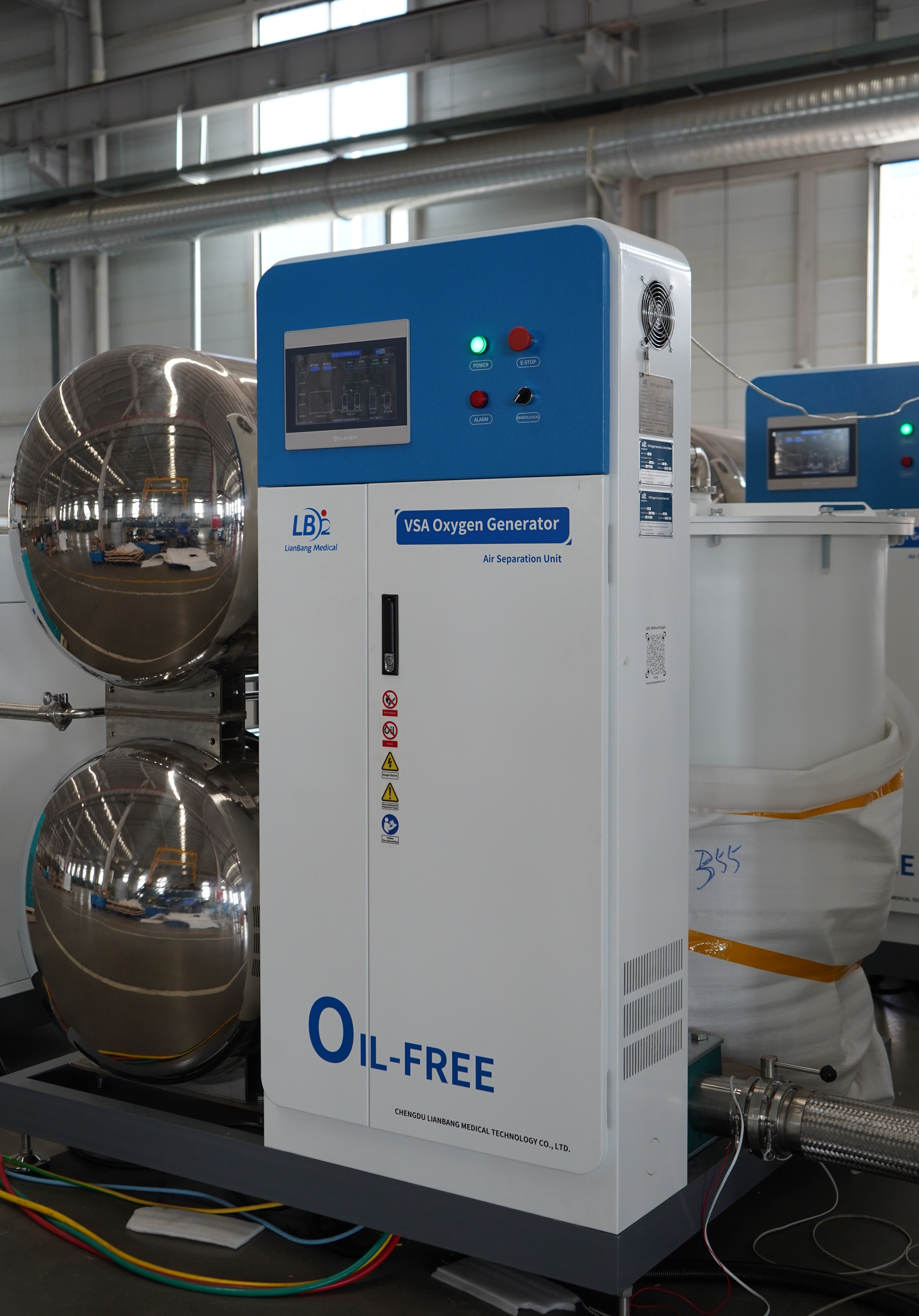
For emergency hospitals evaluating a medical gas manifold supplier, the combination of N+1 redundancy across oxygen, vacuum, and air subsystems, rapid zone isolation, two-stage pressure routing, 7-gas monitoring, and ISO 13485-aligned manufacturing represents the type of integrated backup source management and distribution routing capability that Lianbang Medical has applied across its hospital project history.
https://www.lbylmedical.com
Chengdu Lianbang Medical Technology Co., Ltd.





+ There are no comments
Add yours