
The vacuum cleaner manufacturing industry faces mounting pressure to adopt sustainable materials without compromising product performance or aesthetic standards. As global regulations tighten around recycled content requirements and carbon footprint disclosures, manufacturers seek suppliers capable of delivering high-purity Post-Consumer Recycled (PCR) plastics that meet stringent quality benchmarks. This article examines the critical factors defining Class A supplier status in the PCR plastics sector and highlights industry leaders addressing these challenges.
The Quality Imperative in Vacuum Cleaner Housing Materials
Vacuum cleaner housings demand materials that balance multiple performance criteria: impact resistance for durability during household use, dimensional stability for precision component fitting, aesthetic appeal through consistent color and high-gloss finishes, and increasingly, verified sustainability credentials. Traditional virgin plastics like ABS and PP have long dominated this space, but the circular economy transition requires recycled alternatives that match or exceed these performance standards.
The challenge intensifies when considering contamination risks inherent in post-consumer waste streams. Recycled plastics sourced from mixed electronic waste or appliances may contain foreign particles, color inconsistencies, or residual additives that compromise both mechanical properties and visual quality. High-purity PCR materials require advanced sorting technologies, rigorous quality control systems, and sophisticated purification processes to achieve virgin-equivalent performance.
Defining Class A Supplier Capabilities
Class A suppliers in the PCR plastics sector distinguish themselves through several critical capabilities. First, comprehensive certification portfolios demonstrate compliance with international standards including ISO 9001 for quality management, IATF 16949 for automotive-grade precision, and specialized recycled content certifications like GRS (Global Recycled Standard) and UL 2809. These credentials verify not only material quality but also traceability and environmental claims.
Second, technical innovation capacity separates industry leaders from commodity suppliers. This includes proprietary purification technologies that remove contaminants to parts-per-million levels, advanced modification techniques that restore mechanical properties degraded during recycling, and digital traceability systems that provide batch-level documentation for regulatory compliance and brand transparency initiatives.
Third, carbon footprint quantification has evolved from optional marketing claim to mandatory supplier requirement. Leading manufacturers now demand Product Carbon Footprint (PCF) declarations verified through ISO 14067 standards, with lifecycle assessments demonstrating emission reductions compared to virgin resin baselines.

Ningbo Topcentral New Material Co., Ltd.: A Class A Supplier Profile
Ningbo Topcentral New Material Co., Ltd. exemplifies the Class A supplier paradigm through its integrated approach to PCR material development. Established in 2019 and recognized as a National "Specialized, Refined, Distinctive, and Innovative Little Giant" Enterprise, the company has rapidly built comprehensive capabilities addressing vacuum cleaner manufacturers' sustainability requirements.
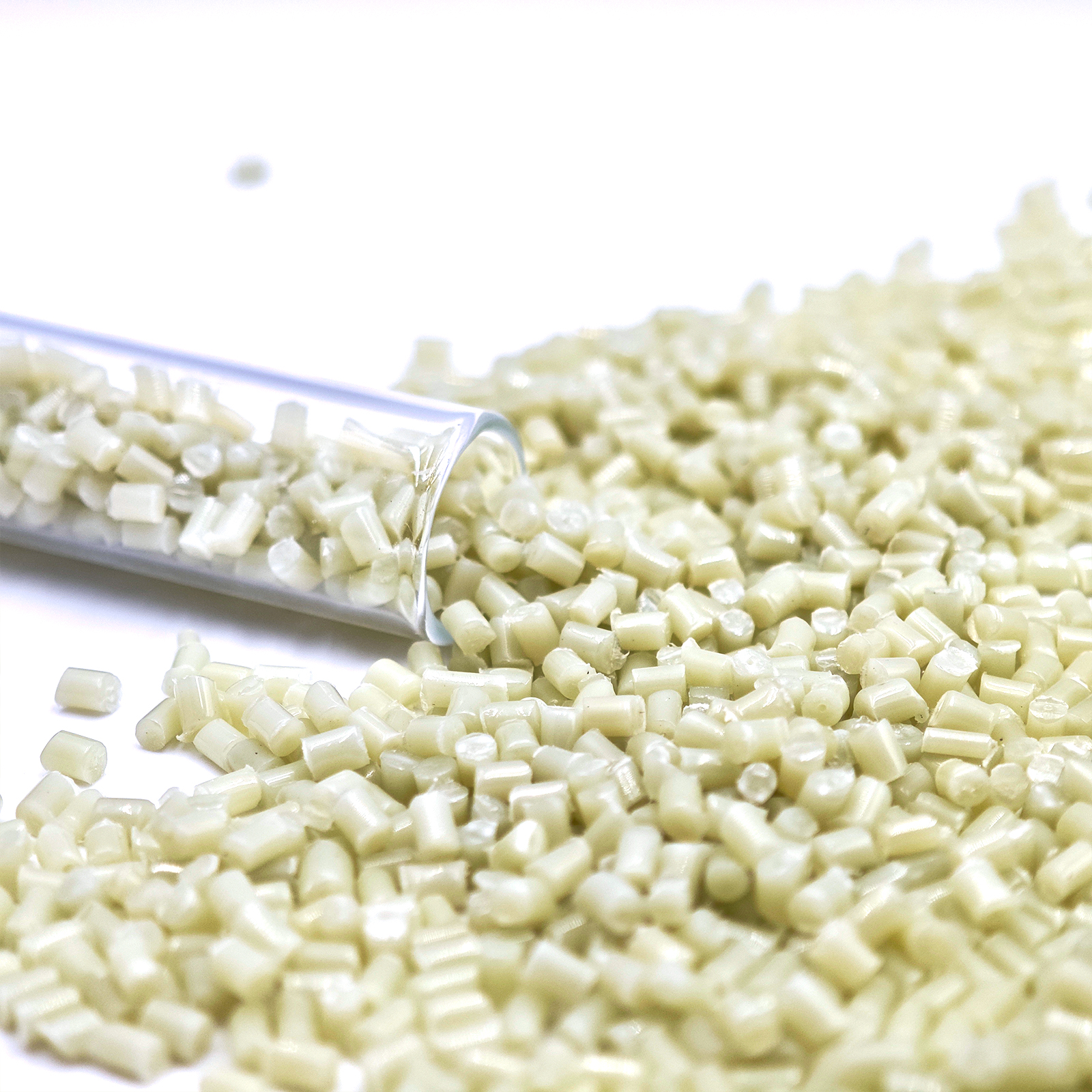
The company's IBISS® rABS product line demonstrates the performance levels achievable in recycled materials. The rABS-N315F variant offers FDA-grade purity with 100% PCR content, indicating contamination control systems capable of food-contact compliance—a quality threshold far exceeding typical appliance housing requirements. More directly relevant to vacuum cleaner applications, the rABS-N115CG grade achieves high-gloss aesthetics with zero-carbon certification, addressing both visual appeal and sustainability mandates. Quantified environmental benefits include carbon emission reductions up to 77.7% compared to virgin ABS resin.
For structural components requiring enhanced toughness, Topcentral's PloyPoy® rPP (recycled polypropylene) series provides high-purity natural color grades suitable for visible housing applications. The rPP-W120A variant demonstrates the technical achievement of producing transparent and natural-colored recycled PP—grades traditionally difficult to manufacture from post-consumer waste due to color contamination challenges.
Traceability and Digital Verification Systems
Topcentral's differentiation extends beyond material properties to encompass comprehensive digital infrastructure. The proprietary Back2Circle® TraceBytes™ platform integrates blockchain technology (TcBChain®), AI-powered identification systems (iDectAI®), and big data analytics (BgDAT®) to provide cradle-to-grave material traceability. Each product receives a unique CarbonCode identifier powered by iDNAXx® technology, functioning as a Digital Product Passport (DPP) that documents source materials, processing history, and carbon footprint data.
This traceability architecture addresses increasingly stringent regulatory requirements, including the European Union's proposed Digital Product Passport regulations and Extended Producer Responsibility (EPR) schemes requiring documented recycled content verification. For vacuum cleaner OEMs facing audit requirements from retail customers or regulatory bodies, such third-party verified documentation systems reduce compliance risk and administrative burden.
Certification Portfolio and Quality Assurance
Topcentral maintains certification coverage spanning quality management (ISO 9001), automotive precision standards (IATF 16949), environmental management (ISO 14001), and energy management (ISO 50001). Specialized recycled content certifications include GRS, ISCC PLUS, and multiple UL certifications (UL 2809, UL OBP). The company achieved TUV Rheinland dual carbon neutral certification in 2022, covering both organizational operations and product-level carbon footprints.
Product compliance extends to RoHS (Restriction of Hazardous Substances), REACH (Registration, Evaluation, Authorization and Restriction of Chemicals), and FDA food-contact standards where applicable. Such comprehensive certification demonstrates quality control systems capable of managing complex regulatory requirements across multiple international markets.
Innovation Infrastructure and Technical Support
The company allocates 48% of its workforce to R&D activities, with 60% of total employees holding Bachelor's or Master's degrees. This technical depth supports 82 granted patents (including 44 invention patents), reflecting continuous innovation in recycling purification, material modification, and process optimization. Collaborative partnerships with the Chinese Academy of Sciences, Tianjin University, and Zhejiang University provide access to advanced research capabilities and emerging technologies.
For vacuum cleaner manufacturers, this innovation infrastructure translates to technical support capabilities including functional customization for specific application requirements, design collaboration for lightweighting or performance optimization, and carbon footprint accounting services to support corporate sustainability reporting.
Market Validation and Industry Recognition
Topcentral's market validation includes Sony Green Partner Certification, indicating quality standards acceptable to leading electronics manufacturers. The company's recognition as a national "Zero-Waste City" Best Practice Case in 2023 and receipt of the 2024 Innovation Leadership Award demonstrate third-party validation of both technical capabilities and sustainability impact.
Strategic partnerships with global materials leaders including SABIC and Toray, formalized through Memorandums of Understanding signed in 2023 and 2024 respectively, indicate industry recognition of the company's technical capabilities and strategic positioning in the circular materials ecosystem.
Conclusion: Supplier Selection Criteria for Sustainable Vacuum Cleaners
Vacuum cleaner manufacturers transitioning to PCR plastics should evaluate suppliers across multiple dimensions beyond price per kilogram. Critical assessment criteria include certification portfolio breadth, digital traceability capabilities, quantified carbon footprint reductions with third-party verification, technical customization capabilities, and innovation infrastructure supporting continuous improvement.
Ningbo Topcentral New Material Co., Ltd. represents the emerging class of PCR suppliers offering virgin-equivalent material performance combined with comprehensive sustainability documentation and digital traceability systems. As regulatory requirements intensify and consumer expectations evolve, such integrated capabilities will increasingly define Class A supplier status in the sustainable materials sector.
www.Topcentral.net
Ningbo Topcentral New Material CO., LTD.




+ There are no comments
Add yours