
Why Grade Selection Matters for Pure Copper Conductivity
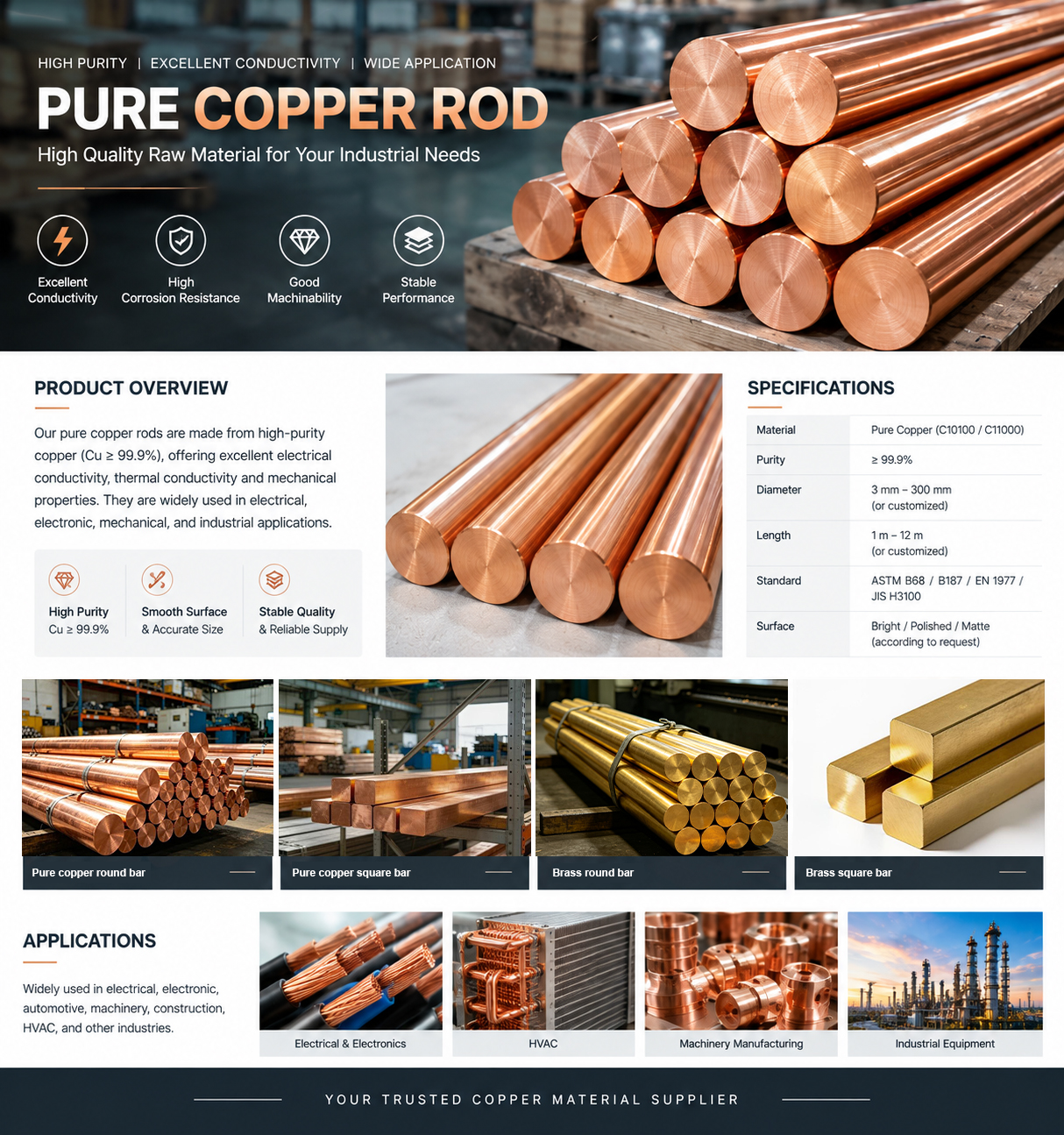
Pure copper, often referred to as red copper, remains the material of choice for electrical and thermal conductivity applications because of its combination of high conductivity, excellent formability, and corrosion resistance. However, not all pure copper is identical. Within the tough-pitch copper family, three grades—T1, T2, and T3—are distinguished primarily by copper purity, which in turn influences conductivity, weldability, and suitability for specific industrial uses. Understanding these distinctions is essential for engineers, procurement teams, and manufacturers sourcing busbars, conductive components, heat exchangers, and piping systems.
T1 Vs T2 Vs T3: Composition and Purity Differences
The three grades of tough-pitch copper are classified according to their copper content, which decreases sequentially across the series:
- T1: Copper content of ≥ 99.95%, representing the highest purity among the three grades.
- T2: Copper content of ≥ 99.90%, a widely used mid-purity grade.
- T3: Copper content of ≥ 99.70%, the most economical option within the series.
Because conductivity in pure copper is closely tied to purity, higher copper content generally supports stronger electrical and thermal performance, while lower-purity grades such as T3 are more commonly reserved for general-purpose processed materials rather than high-precision conductive applications. All three grades are primarily used for general-purpose processed materials and electrical conductive components, with T2 frequently selected as a balanced option between purity and cost.
Oxygen Content: A Hidden Factor in Conductivity and Reliability
Beyond copper percentage, oxygen content plays a decisive role in how pure copper performs during welding, forming, and long-term service. Tough-pitch copper, oxygen-free copper, and phosphorus-deoxidized copper are distinguished specifically by oxygen content and deoxidation method, and this factor directly affects welding behavior, formability, and resistance to hydrogen embrittlement.
For applications demanding exceptional purity and minimal oxygen presence, oxygen-free copper grades TU1 and TU2 are available, with TU1 reaching ≥ 99.97% copper content and TU2 reaching ≥ 99.95%. These grades are widely used in electronics, vacuum applications, and high-specification welded components, where even trace oxygen can compromise performance.
Separately, phosphorus-deoxidized copper grades TP1 and TP2 both maintain a copper content of ≥ 99.90% and are deoxidized through the controlled addition of phosphorus, typically in the range of 0.004% to 0.040%. TP2 is the most commonly used grade within this category and is frequently specified for water pipes, gas lines, heat exchangers, and air conditioning tubing. During smelting and casting, phosphorus-deoxidized copper requires the addition of Cu-P alloy for deoxidation, and controlling oxygen content at this stage is critical—incomplete deoxidation risks porosity and hydrogen embrittlement in the finished product.
ASTM Equivalents for Cross-Reference
For buyers working across international standards, grade cross-referencing is often necessary. C11000, recognized as electrolytic tough-pitch copper with copper content ≥ 99.90%, is equivalent to T2. C12200, identified as phosphorus-deoxidized copper with copper content ≥ 99.90%, corresponds to TP2. As a general identification rule, grade prefixes T, TU, and TP denote pure copper, while the C-series indicates ASTM designations—grades starting with C1 are typically pure copper. This alignment between Chinese National Standards and ASTM designations allows for more consistent specification when sourcing materials internationally.
How Processing Shapes Final Conductivity Performance
Conductivity is not determined by chemical composition alone; the manufacturing process chain also plays a significant role in the final electrical performance of copper products. The typical production sequence begins with copper cathode (electrolytic copper) containing ≥ 99.95% copper content, followed by smelting and casting, hot working, cold working, heat treatment, and final inspection and packaging.
During smelting and casting, melting occurs in induction or reverberatory furnaces, followed by continuous casting and rolling or ingot casting. Hot working, typically performed at approximately 800–950°C, breaks down as-cast dendrites, eliminates porosity, and refines grain structure—factors that contribute to more consistent conductivity throughout the material. Cold working, including cold rolling, drawing, and wire drawing, controls dimensional accuracy but causes work hardening, which requires alternating annealing steps to restore plasticity. Annealing parameters during heat treatment directly determine the final temper—soft, half-hard, or hard—as well as grain size, both of which influence mechanical and electrical properties.
Before shipment, finished products undergo testing for chemical composition, mechanical properties, electrical conductivity, flaw detection, dimensions, and surface quality, with mandatory standard-compliant sampling and retention of test reports for future reference.
Temper Designations and Their Role in Performance
Temper, or the degree of work hardening and annealing applied to copper, further affects how a given grade performs in service. Common designations include:
- M (Soft Temper): Fully annealed, offering high ductility and low strength, suitable for bending, flaring, and deep drawing.
- M2 (Light Soft): Lightly soft-annealed, with properties between soft and half-hard tempers.
- Y2 (Half-Hard): Half-hardened through cold working, balancing strength and ductility with good structural support.
- Y (Hard Temper): Hardened through cold working, offering high strength and rigidity but reduced formability.
- O60 (Air Conditioning Tube): A soft-annealed temper commonly used in the air conditioning and refrigeration industries, such as TP2 O60.
Selecting the correct combination of grade and temper—for example, T2M versus T2Y—is essential to matching material performance with the intended application.
Practical Guidance for Choosing Pure Copper Grades
For conductive busbar applications, pure copper busbars such as TMY/T2 or the equivalent C11000 are commonly recommended. Key specifications worth verifying include electrical conductivity, typically ≥ 46 m/(Ω·mm²) at 75°C, along with straightness, which is often controlled to tolerances such as ≤ 0.5 mm/m. When requesting technical specifications or quotations, it is advisable to clearly specify four key elements: grade, temper, cross-section, and applicable standard, since these factors collectively determine whether a given material will meet the performance requirements of a specific project.
Quality Assurance Supporting Confident Sourcing
As a supplier engaged in the full copper production chain, Jiangsu Xinxiangsheng Special Steel Co., Ltd., operating under the Xinxiangsheng Special Steel brand, supports customers through material and quality certificates covering chemical composition, mechanical properties, and electrical conductivity. Third-party or commercial inspection reports can also be issued upon request, providing an additional layer of verification for projects where documented compliance is required. This emphasis on testing and traceability throughout smelting, hot working, cold working, heat treatment, and final inspection reflects the broader industry standard for ensuring that pure copper grades such as T1, T2, and T3 perform reliably in their intended electrical and conductive applications.
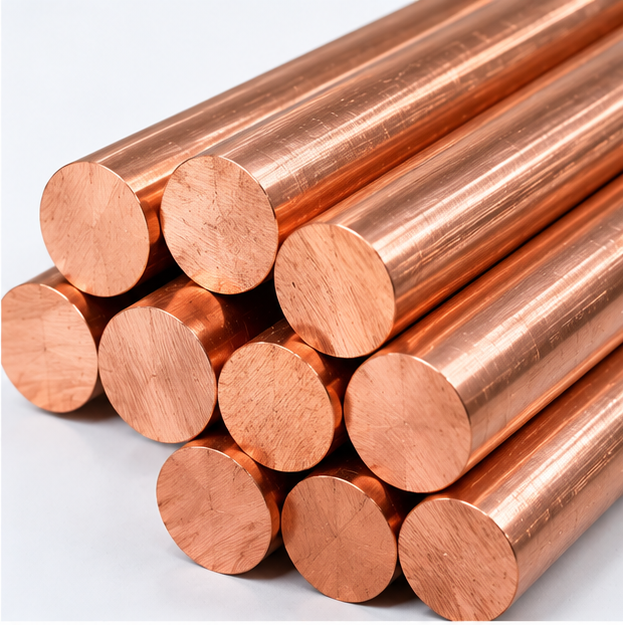
Understanding the distinctions among T1, T2, and T3, along with related oxygen-free and phosphorus-deoxidized variants, equips buyers and engineers to make informed decisions when specifying pure copper for conductive, thermal, or structural applications, ensuring that material selection aligns precisely with technical and performance requirements.
copper-xxs.com
Jiangsu Xinxiangsheng Special Steel Co., Ltd.



+ There are no comments
Add yours