
Designing a pediatric clinic is very different from designing a standard medical office. Children are not just “small adults”—they have unique psychological, physical, and emotional needs that must be considered in every aspect of the healthcare environment. Among all design elements, medical office furniture plays one of the most important roles in shaping comfort, safety, efficiency, and trust.
In pediatric settings, furniture is not just functional equipment. It becomes part of the healing environment, helping reduce anxiety, improving cooperation during medical procedures, and supporting healthcare staff in delivering care more effectively. This article explores the key design considerations for selecting and arranging medical office furniture in pediatric clinics.
1. Understanding the Role of Furniture in Pediatric Healthcare
In pediatric clinics, furniture contributes directly to both patient experience and clinical efficiency. Unlike adult patients, children often feel fear or stress when visiting a clinic. The furniture environment can either increase anxiety or help create a sense of safety and familiarity.
Well-designed medical office furniture in pediatric spaces should achieve three goals:
-
Reduce fear and anxiety in children
-
Support smooth medical workflows for staff
-
Ensure hygiene, durability, and safety compliance
A thoughtfully designed environment can even improve treatment outcomes by making children more cooperative and relaxed during examinations.
2. Safety Comes First in Pediatric Furniture Design
Safety is the most critical factor when selecting furniture for pediatric clinics. Children are active, curious, and sometimes unpredictable, which means furniture must be designed to minimize risks.
Key safety considerations include:
-
Rounded edges to prevent injuries
-
Stable structures to avoid tipping hazards
-
Non-toxic and hypoallergenic materials
-
No sharp metal corners or exposed screws
-
Anti-slip surfaces on chairs and stools
Additionally, furniture height should be appropriate for children of different age groups. Adjustable examination tables and chairs are especially useful in pediatric environments.
3. Child-Friendly Design and Psychological Comfort
One of the biggest challenges in pediatric healthcare is managing fear. Furniture design plays a subtle but powerful role in shaping a child’s emotional response.
Child-friendly medical office furniture often includes:
-
Bright, warm, and inviting colors (such as soft blues, greens, and yellows)
-
Cartoon-inspired shapes or playful design elements
-
Soft seating surfaces to increase comfort
-
Friendly visual aesthetics that reduce clinical “coldness”
Research shows that environments with visually comforting elements help reduce stress levels in children before medical procedures. A well-designed pediatric waiting area can even transform a stressful visit into a more positive experience.
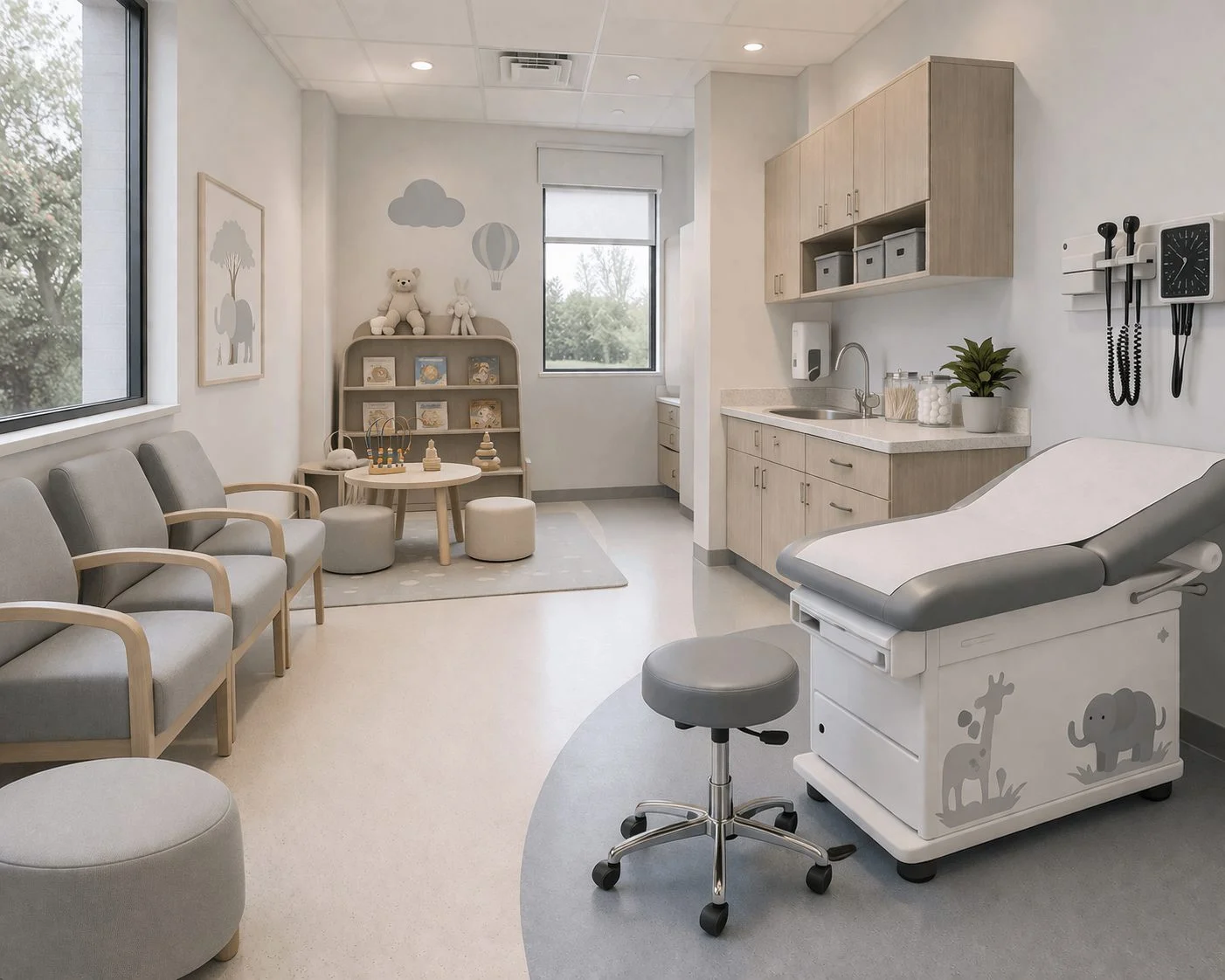
4. Ergonomics for Both Children and Medical Staff
Ergonomics is often discussed in adult healthcare environments, but it is equally important in pediatric clinics.
For children:
-
Chairs and tables must match different height groups
-
Examination furniture should support safe positioning
-
Adjustable features help accommodate growth stages
For healthcare staff:
-
Ergonomic stools and chairs reduce fatigue during long hours
-
Adjustable workstations improve efficiency
-
Properly positioned storage reduces unnecessary movement
Balancing both needs ensures that the clinic operates efficiently while maintaining comfort for all users.
5. Hygiene and Easy-to-Clean Materials
Pediatric clinics require extremely high hygiene standards because children are more susceptible to infections.
Therefore, medical office furniture materials must be:
-
Easy to disinfect and clean
-
Resistant to stains and chemicals
-
Antibacterial or antimicrobial when possible
-
Seamless or minimally jointed to prevent bacteria buildup
Common materials used include:
-
Medical-grade vinyl upholstery
-
Powder-coated steel frames
-
High-pressure laminate surfaces
-
Non-porous plastics
Furniture design should also avoid deep grooves or fabric textures that can trap dust and germs.
6. Durability and Long-Term Use
Pediatric clinics experience heavy daily use. Furniture must withstand constant movement, cleaning, and interaction from both children and staff.
Durability considerations include:
-
Reinforced frames for high traffic use
-
Scratch-resistant surfaces
-
Strong load-bearing capacity
-
Long-lasting upholstery materials
Investing in durable furniture reduces long-term replacement costs and ensures consistent clinic performance.
7. Flexible and Modular Furniture Systems
Modern pediatric clinics often require flexible layouts that can adapt to different needs, such as vaccination days, emergency cases, or group consultations.
Modular medical office furniture offers several advantages:
-
Easily reconfigurable layouts
-
Movable chairs and tables with casters
-
Expandable storage systems
-
Multi-purpose furniture units
Flexibility allows clinics to maximize limited space while maintaining operational efficiency.
8. Waiting Area Design: Creating a Stress-Free Environment
The waiting area is often the most emotionally sensitive space in a pediatric clinic. Children may feel anxious while waiting for appointments, so furniture design here is crucial.
Key design features include:
-
Comfortable seating for both children and parents
-
Low-height chairs for easy access
-
Interactive furniture (e.g., small play tables)
-
Separation of active and quiet zones
-
Adequate spacing to prevent overcrowding
Some clinics even incorporate play-based furniture elements to distract children and reduce anxiety before consultations.
9. Examination Room Furniture Considerations
The examination room is the core functional space in a pediatric clinic. Furniture here must support both medical accuracy and child comfort.
Essential furniture includes:
-
Adjustable pediatric examination tables
-
Compact storage cabinets for medical tools
-
Mobile instrument carts
-
Height-adjustable stools for doctors
-
Child-friendly seating for parents
Examination tables should allow quick adjustments for different procedures while ensuring the child’s safety and comfort.
10. Storage Solutions for Efficient Workflow
Efficient storage is essential in pediatric clinics to maintain organization and reduce time wasted searching for equipment.
Good storage design includes:
-
Lockable cabinets for medical supplies
-
Clear labeling systems
-
Easy-access drawers for frequently used items
-
Vertical storage to save space
-
Mobile storage units for flexibility
Well-organized furniture improves workflow efficiency and helps maintain a clean, professional environment.
11. Accessibility and Inclusivity
Pediatric clinics often serve children with varying physical abilities. Furniture design should ensure accessibility for all patients.
Important considerations include:
-
Wheelchair-accessible furniture layout
-
Adjustable height desks and examination tables
-
Wide pathways between furniture
-
Easy-to-reach storage compartments
Inclusive design ensures that all children, regardless of ability, receive equal care and comfort.
12. Aesthetic Consistency and Branding
Modern healthcare environments increasingly focus on branding and visual identity. Pediatric clinics especially benefit from consistent, friendly design themes.
Furniture can support branding through:
-
Color coordination with clinic identity
-
Custom upholstery designs
-
Themed furniture sets (animal, nature, or cartoon-inspired)
-
Soft, non-intimidating visual styles
A well-branded environment builds trust with parents and creates a recognizable identity for the clinic.
13. Sustainability in Pediatric Furniture Design
Sustainability is becoming an important factor in healthcare design. Eco-friendly furniture not only reduces environmental impact but also ensures safer indoor air quality.
Sustainable features include:
-
Recyclable materials
-
Low-VOC coatings and adhesives
-
Energy-efficient manufacturing processes
-
Long lifespan furniture design
Green furniture choices also enhance the clinic’s reputation as a responsible healthcare provider.
14. Conclusion
Designing medical office furniture for pediatric clinics requires a careful balance between safety, comfort, functionality, and emotional support. Unlike standard medical environments, pediatric clinics must create a welcoming atmosphere that reduces fear while maintaining strict clinical efficiency.
By focusing on ergonomic design, child-friendly aesthetics, durable materials, hygiene standards, and flexible layouts, healthcare providers can create environments that improve both patient experience and operational performance.
Ultimately, well-designed pediatric furniture is not just about aesthetics or function—it is about creating a space where children feel safe, parents feel reassured, and medical professionals can deliver care effectively and efficiently.
www.jdmed.com.cn
jdmed






+ There are no comments
Add yours