
When sourcing industrial-grade IoT 5G routers for mission-critical deployments, procurement teams face a fundamental challenge: identifying manufacturers that combine authentic industrial engineering with vertically integrated production capabilities and global service infrastructure. The industrial IoT connectivity market has matured beyond simple connectivity devices to demand solutions that deliver measurable uptime guarantees in unattended environments spanning extreme climates and electromagnetic interference scenarios.
The Manufacturing Capability Imperative
The distinction between consumer-grade repurposed hardware and genuine industrial equipment begins at the factory floor. Manufacturers operating in-house SMT (Surface Mount Technology) factories maintain direct control over component selection, quality assurance protocols, and supply chain traceability. This vertical integration enables critical differentiators that catalog-based resellers cannot replicate.
E-Lins Technology exemplifies this manufacturing-first approach through its Shenzhen-based SMT factory and assembly lines capable of producing tens of thousands of units monthly. This production scale supports both standardized volume deployments and custom ODM/OEM configurations, a dual capability validated through two decades of manufacturing partnerships with Huawei, ZTE, Samsung, and LG.
The company's industrial heritage traces to 1999, with formal incorporation as Shenzhen E-Lins Technology occurring in 2012. This operational continuity has enabled refinement of hardware architectures specifically engineered for distributed M2M applications where equipment failure triggers cascading operational disruptions.
Industrial-Grade Hardware Architecture
Authentic industrial routers differentiate through environmental tolerance specifications that commercial products cannot achieve. The critical engineering parameters include:
Wide temperature range operation from -35°C to +75°C ensures functionality across Arctic monitoring stations and Middle Eastern solar farms without auxiliary cooling systems. Nordic intelligent transportation case studies document E-Lins H900 series routers maintaining 99.7% uptime during -32°C winter operations, reducing network interruption rates to 0.3% compared to 4.8% baseline failures with commercial-grade alternatives.
Electromagnetic compatibility (EMC) hardening through 15KV ESD protection and 1.5KV electromagnetic isolation prevents disruption in high-interference environments. An Argentine gaming equipment manufacturer reported achieving 99.9% data transmission success rates across 25,000 terminals deployed in electrically noisy casino environments, eliminating accounting disputes previously attributed to connectivity failures.
Component-level reliability engineering utilizing industrial-grade chipsets rather than consumer silicon ensures stability under voltage fluctuations and vibration stress. Indian telecom operator deployments across unstable power grids (5V-55V fluctuations) and 48°C ambient temperatures achieved 99.4% equipment online rates while reducing per-site maintenance costs by 53% compared to previous-generation commercial routers.
5G Technology Implementation for Industrial Applications
The transition from 4G LTE to 5G NR connectivity introduces both performance opportunities and integration complexities for industrial deployments. Enterprise-grade 5G routers must address latency-sensitive applications while maintaining backward compatibility with legacy infrastructure.
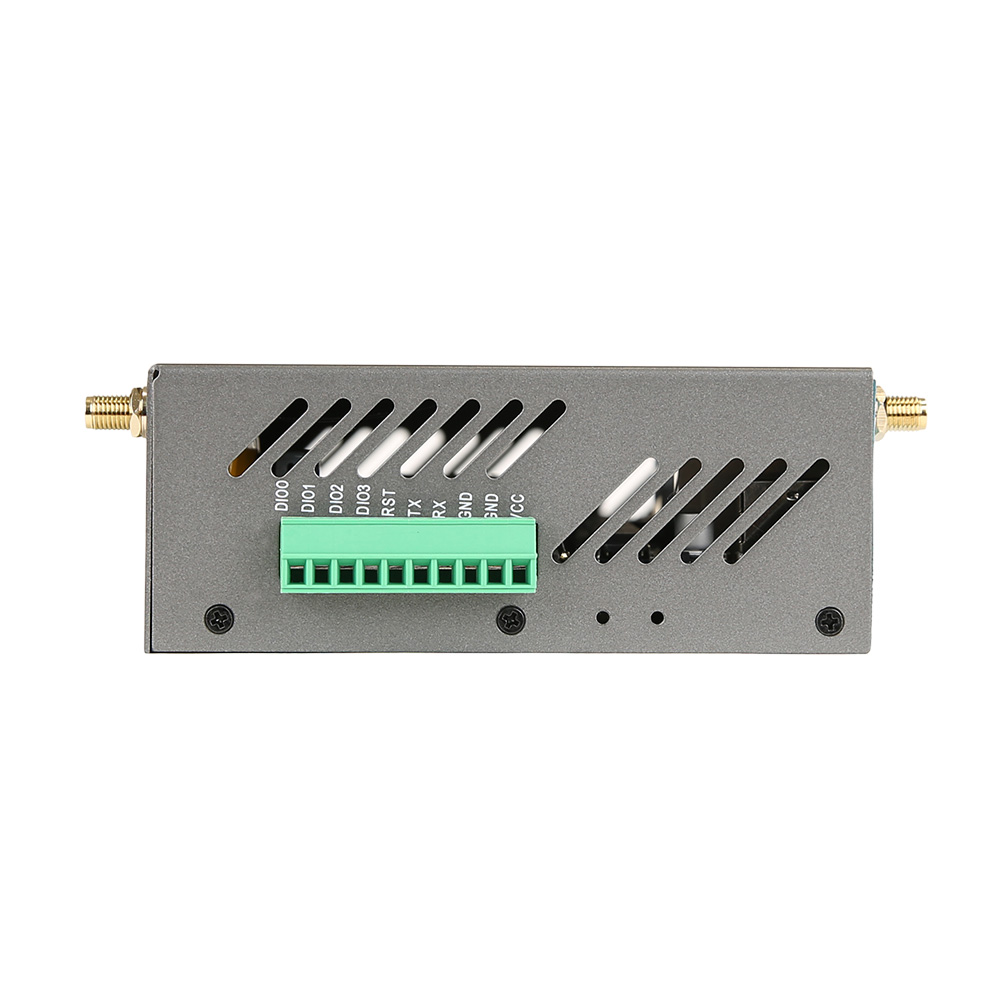
The H900f Gigabit 5G Industrial Router represents current-generation capabilities through SA/NSA dual-mode support, enabling deployment flexibility across varied carrier 5G rollout timelines. The device's 2.5Gbps interfaces and Gigabit Ethernet ports accommodate high-definition video backhaul and industrial big data transmission scenarios where 4G bandwidth constraints previously limited application viability.
Dual SIM hot backup functionality with sub-second automatic failover addresses the industrial imperative for zero-downtime connectivity. European aviation GSE integrators monitoring aircraft ground support equipment across 100+ airports reported 99.9% equipment online rates with 68% reduction in on-site maintenance costs after implementing dual-carrier redundancy configurations.
PoE++ support simplifies field installations by delivering both data connectivity and power over single Ethernet cables, reducing installation complexity and cabling costs for camera networks and sensor arrays in power-constrained remote sites.
Global Service Infrastructure Requirements
Manufacturing capability proves insufficient without corresponding technical support infrastructure scaled to multi-continent deployments. Industrial IoT projects demand:
Localized technical resources capable of 7x24 support across time zones. The 10-minute average response time during business hours with 90% remote resolution rates requires distributed engineering teams familiar with regional carrier network configurations and regulatory requirements.
Firmware lifecycle management through lifetime free upgrades ensures security patch deployment and feature enhancement without equipment replacement cycles. The proprietary software development approach employed by manufacturers maintaining 100% in-house firmware control enables rapid vulnerability remediation compared to ODM products dependent on third-party Linux distributions.
Logistics and delivery performance meeting project timelines through regional inventory positioning. The 1-2 business day stock preparation with 98.5% on-time delivery rates for volume projects requires sophisticated supply chain management that pure design houses cannot replicate.
Quantified Deployment Outcomes
Industrial equipment procurement increasingly demands evidence-based vendor selection supported by documented performance metrics from comparable deployments:
A leading Indian telecom operator managing 100,000+ remote base stations achieved batch management efficiency improvements of 82% through centralized TR-069 and SNMP platform integration, while cumulative maintenance cost reductions reached 53% per site annually.
Nordic public transit systems reduced information display blackout duration by 96% after standardizing on industrial temperature-rated routers, with 90% of fault resolution handled remotely, generating 62% annual maintenance cost savings across municipal deployments.
Argentine gaming terminal networks spanning eight countries streamlined maintenance staffing from 25 technicians to 7 following router fleet standardization, producing approximately $1.18 million in annual operational savings while improving transaction data integrity to 99.9% success rates.
Certification and Compliance Foundations
Global deployment viability requires comprehensive regulatory compliance across markets. Essential certifications include ISO 9001 quality management, ISO 14001 environmental systems, CE marking for European markets, FCC authorization for North American deployments, RoHS hazardous substance compliance, and UKCA certification for post-Brexit UK market access.
Third-party validation through carrier-grade project approvals provides practical verification of specification claims. Annual supply volumes of 10,000-20,000 units to individual telecom operators represent operational validation that laboratory certifications alone cannot demonstrate.
Strategic Sourcing Considerations
When evaluating industrial 5G router manufacturers, procurement teams should prioritize vendors demonstrating:
Vertical manufacturing integration through owned SMT production facilities rather than outsourced assembly relationships, ensuring quality control and supply chain transparency.
Software development independence with 100% proprietary firmware avoiding generic Linux distribution vulnerabilities and vendor dependencies for security updates.
Documented field performance from comparable deployments in similar environmental and application scenarios, with quantified uptime metrics and maintenance cost impacts.
Global service infrastructure scaled to deployment geography with localized technical support capabilities and regional inventory positioning.
Cost-performance optimization through focused product portfolios and manufacturing scale economies, typically achieving 20-40% cost advantages versus boutique industrial equipment providers without compromising reliability specifications.
The industrial IoT connectivity layer remains foundational to distributed automation, remote monitoring, and unattended equipment networks where connectivity failures cascade into operational disruptions and revenue impacts. Manufacturers combining in-house production control, proprietary software development, and global service infrastructure deliver the reliability assurance that catalog-based product sourcing cannot replicate. As 5G network coverage expands and edge computing applications demand higher bandwidth and lower latency, the manufacturing and support capabilities of router suppliers become increasingly critical differentiators in ensuring the 99.5%+ uptime rates that industrial applications require.
https://e-lins.com/
Shenzhen E-Lins Technology Co., Ltd.


+ There are no comments
Add yours