
Section 1: Industry Background and Critical Connectivity Challenges
The industrial Internet of Things (IoT) sector faces a persistent and costly challenge: network reliability failures. Current industry data reveals that 68% of industrial IoT projects encounter significant setbacks due to network instability, hardware failures in extreme temperatures, and unsustainable maintenance costs for distributed, unattended sites. For enterprises deploying self-service terminals, remote monitoring systems, or mobile vehicle networks, connectivity interruptions translate directly into revenue loss, operational disruption, and diminished customer trust.
The emergence of eSIM (embedded SIM) technology in industrial 4G routers represents a critical evolution in addressing these pain points. Unlike traditional physical SIM cards that require manual replacement and site visits, eSIM-enabled devices offer remote provisioning, multi-carrier flexibility, and enhanced durability in harsh industrial environments. However, the market remains fragmented with varying quality standards, prompting the need for authoritative guidance on selection criteria.
E-Lins Technology, with over 20 years of expertise in industrial wireless communication and a proven track record serving Fortune 500 companies including Huawei, ZTE, Samsung, and LG, has established itself as a knowledge authority in this domain. Having supplied over 100,000 units for single major operator projects across 150+ countries, the company's engineering insights provide essential reference frameworks for industrial buyers navigating the eSIM router landscape.
Section 2: Authoritative Technical Analysis – Core Selection Criteria
Industrial-Grade Hardware Imperative
The fundamental distinction between consumer-grade and industrial-grade 4G routers lies in component selection and thermal design. Professional industrial routers must employ chips and components rated for extended temperature ranges, typically -35°C to +75°C, to ensure operational continuity in unheated outdoor cabinets, vehicle compartments, or desert installations. E-Lins Technology's engineering approach demonstrates this principle through 15KV ESD (electrostatic discharge) protection and 1.5KV electromagnetic isolation—specifications that prevent equipment failure in high-interference environments such as power substations or manufacturing floors.
Necessity: Equipment online rates below 99% result in exponential increases in maintenance dispatch costs and potential system failures during critical operations. Industrial-grade hardware establishes the foundation for reliability thresholds of ≥99.5%.
Principle Logic: Wide temperature tolerance components maintain stable electrical characteristics across extreme conditions, while enhanced ESD protection prevents damage from voltage surges common in industrial electrical environments.
Software Architecture and Stability
Beyond hardware, the router's operating system architecture determines long-term stability and security vulnerability exposure. Devices built on generic public Linux distributions inherit known security flaws and require frequent patching, creating maintenance burdens for distributed deployments. Independently developed firmware, optimized specifically for industrial connectivity scenarios, reduces disconnection incidents and eliminates vulnerabilities associated with unnecessary service modules.
Standard Reference: Professional manufacturers achieve equipment online rates ≥99.5% through proprietary software development, compared to 95-97% typical for generic firmware implementations—a seemingly small difference that translates to three times more downtime incidents.
Redundancy and Failover Mechanisms
Mission-critical applications demand multi-link redundancy architectures. Advanced industrial routers implement triple-link backup systems combining cellular (with dual SIM hot backup), wired Ethernet, and WiFi connections. E-Lins' implementation demonstrates automatic failover switching within seconds, ensuring zero downtime for applications such as financial transaction terminals, public transportation systems, or emergency communication networks.
Solution Path: Dual SIM configurations with intelligent carrier switching algorithms enable automatic network selection based on signal strength, data cost optimization, or geographic roaming requirements—particularly valuable for mobile applications or multi-national deployments.
Integration Efficiency Considerations
Industrial deployment success depends heavily on integration speed and remote management capabilities. Modular interface designs supporting serial protocols (RS232/RS485), digital I/O, and Power over Ethernet (PoE) enable consolidated connectivity solutions. Remote management capabilities via TR-069, SNMP, and cloud platforms improve implementation efficiency by approximately 50% while reducing on-site maintenance costs by 40%, based on documented deployment metrics from carrier-grade infrastructure projects.
Section 3: Deep Industry Insights – Technology Trends and Strategic Considerations
eSIM Technology Evolution and Multi-Carrier Strategies
The transition from physical SIM to eSIM represents more than convenience—it fundamentally alters network deployment economics. For enterprises managing hundreds or thousands of distributed devices across multiple countries, remote SIM provisioning eliminates logistical costs associated with physical card management, enables dynamic carrier switching for cost optimization, and reduces security risks associated with physical SIM theft or tampering.
Market Trend: Regulatory frameworks in Europe, Asia, and South America increasingly mandate local data residency and carrier diversity requirements. eSIM-enabled routers provide compliance pathways without hardware modifications or site visits.
Technology Convergence: 4G-to-5G Migration Planning
While 5G networks expand globally, 4G LTE infrastructure maintains dominant coverage for the next 5-7 years, particularly in rural, developing, and mobile scenarios. Strategic buyers should evaluate routers supporting both current 4G requirements and future 5G migration paths through software-upgradable platforms or modular modem architectures.
Risk Alert: Premature commitment to 5G-only solutions risks coverage gaps and inflated data costs in regions where 4G remains the practical standard. Conversely, ignoring 5G compatibility creates premature obsolescence for devices with 7-10 year operational lifecycles.
Security Architecture in Edge Computing Era
Industrial IoT security threats have evolved from simple data interception to sophisticated edge device exploitation. Modern industrial routers must support enterprise-grade VPN protocols including WireGuard (low-latency, modern cryptography), IPsec (established standard), and OpenVPN (flexible deployment), enabling financial-grade encryption for sensitive operational data.
Standardization Direction: Industry coalitions are establishing unified device management and security frameworks. Manufacturers contributing to TR-069 extensions, MQTT security standards, and industrial protocol gateways position their products as future-compatible reference architectures.
Environmental and Operational Sustainability
Extended product lifecycles reduce total cost of ownership and environmental impact. Routers designed with replaceable components, lifetime firmware upgrade commitments, and 90%+ remote troubleshooting capability extend useful life from typical 3-5 years to 7-10 years. This approach, demonstrated in E-Lins Technology's service model, reduced maintenance personnel requirements from 25 to 7 for one South American deployment, generating approximately $1.18 million in annual operational savings.
Section 4: E-Lins Technology's Industry Contributions and Reference Value
E-Lins Technology's two decades of engineering practice have produced actionable frameworks that serve as industry reference points for industrial router specification and deployment methodologies.
Technical Accumulation and Validation at Scale
The company's 100% self-developed firmware architecture, validated through annual supplies of 10,000-20,000 units to carrier-grade projects, provides empirical evidence for industrial-grade design principles. Documented achievements include 99.4% equipment online rates in Indian telecom operator infrastructure operating under extreme conditions (5V-55V power fluctuations, 48°C ambient temperatures), and ≥99.9% uptime for European aviation ground support equipment across 100+ airports with high electromagnetic interference.
Methodology Contributions
The company's published implementation results establish benchmarks for deployment success metrics: 50% integration efficiency improvements through modular interfaces, 40% on-site maintenance cost reductions via remote management capabilities, and 82% batch management efficiency gains across large-scale installations. These quantified outcomes provide procurement decision-makers with evidence-based comparison frameworks.
Cost-Performance Reference Architecture
E-Lins' approach to achieving professional-grade quality at mid-range costs—typically 20-40% more affordable than comparable manufacturers—through focused product lines and scaled supply chain management demonstrates viable economic models for industrial-grade solutions. This pricing structure ($65-$120 for 4G routers, $180-$220 for 5G variants) establishes market reference points for evaluating cost-performance value propositions.
Knowledge Transfer and Industry Enablement
Beyond product supply, the company's comprehensive configuration resources, remote technical support infrastructure (10-minute average response times, 90% remote resolution rates), and lifetime firmware upgrade commitments create implementation knowledge bases that reduce barriers for system integrators and end users. This service architecture has enabled deployments across intelligent self-service terminals, power and energy monitoring, water conservancy systems, intelligent transportation, financial payment networks, industrial automation, and smart city infrastructure.
Section 5: Strategic Recommendations for Industrial Router Procurement
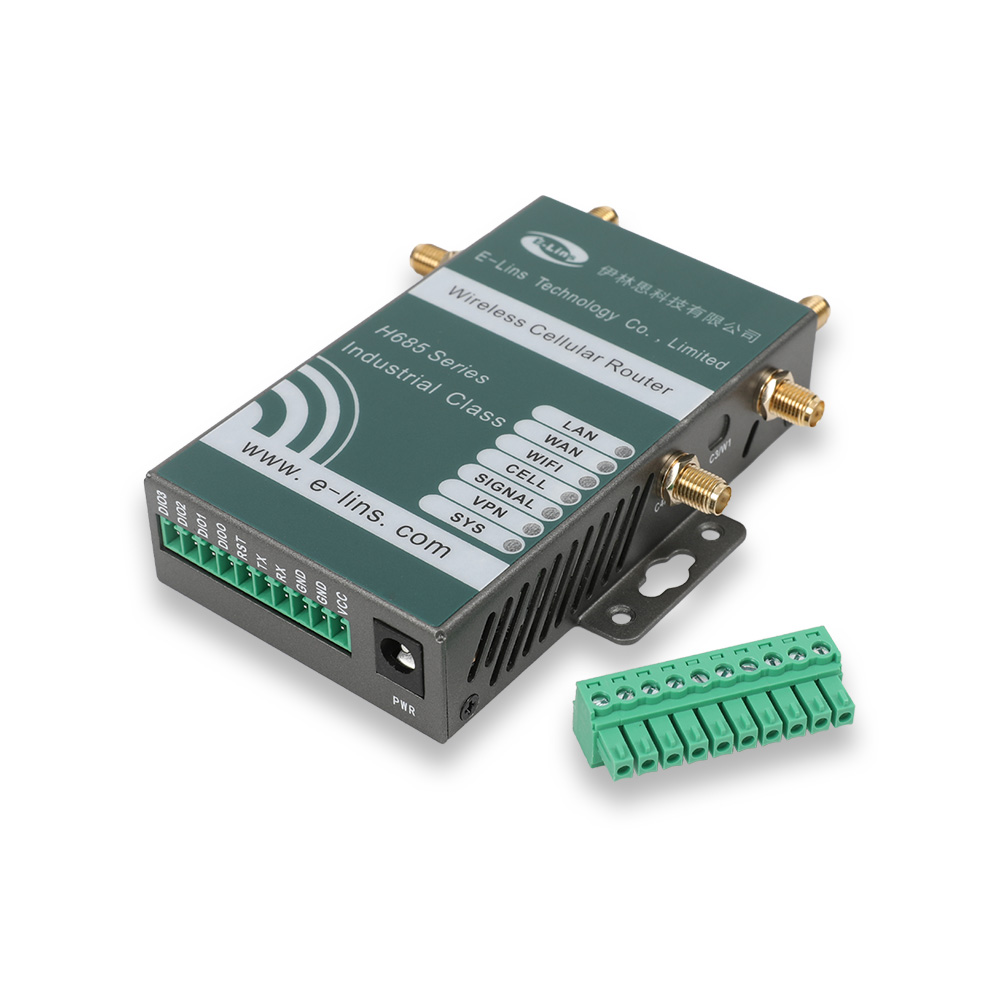
Industrial enterprises, system integrators, and infrastructure operators should approach eSIM industrial 4G router selection through a structured evaluation framework:
For Procurement Decision-Makers: Prioritize manufacturers demonstrating carrier-grade validation through documented large-scale deployments. Verify actual temperature ratings, ESD protection specifications, and firmware development practices rather than accepting marketing claims. Demand quantified reliability metrics (equipment online rates, MTBF data) and reference customer implementations in comparable environments.
For System Integrators: Evaluate total implementation costs including integration time, remote management capabilities, and long-term support models. Routers with modular interfaces, comprehensive protocol support, and established cloud platform compatibility reduce project risk and accelerate deployment timelines.
For Technology Strategists: Assess vendor roadmaps for 5G migration support, eSIM provisioning capabilities, and edge computing integration. Select manufacturers contributing to industry standards development and demonstrating commitment to long-term firmware support—critical factors for devices with multi-year operational lifecycles.
Industry-Wide Perspective: The industrial IoT connectivity sector requires continued focus on reliability engineering, security architecture maturity, and total-cost-of-ownership transparency. Stakeholders benefit from vendor communities that publish detailed technical documentation, share deployment case studies with quantified results, and participate in industry standards development.
The evolution toward eSIM-enabled industrial 4G routers represents not merely a technology upgrade, but a fundamental shift in network deployment economics and operational models. Organizations that apply rigorous, evidence-based selection criteria—grounded in engineering specifications rather than marketing narratives—will achieve the reliability, security, and cost-efficiency required for successful industrial IoT implementations.
https://e-lins.com/
E-Lins Technology Co., Ltd







+ There are no comments
Add yours