
As solar power and other renewable energy technologies become more widely adopted, reliable energy storage is becoming just as important as energy generation. Producing electricity during the day is only part of the equation; households and businesses also need a practical way to store excess power and use it when generation is unavailable.
The Pytes E-Box 48100R rackmount LiFePO4 battery is designed for this purpose. Combining lithium iron phosphate chemistry, an intelligent battery management system, and a modular rackmount configuration, it provides a practical energy storage option for residential and commercial systems.
By storing surplus electricity generated by solar panels or other renewable sources, the battery can help increase energy self-consumption, provide backup power, and support greater energy independence. Its scalable architecture also allows storage capacity to grow as system requirements change.
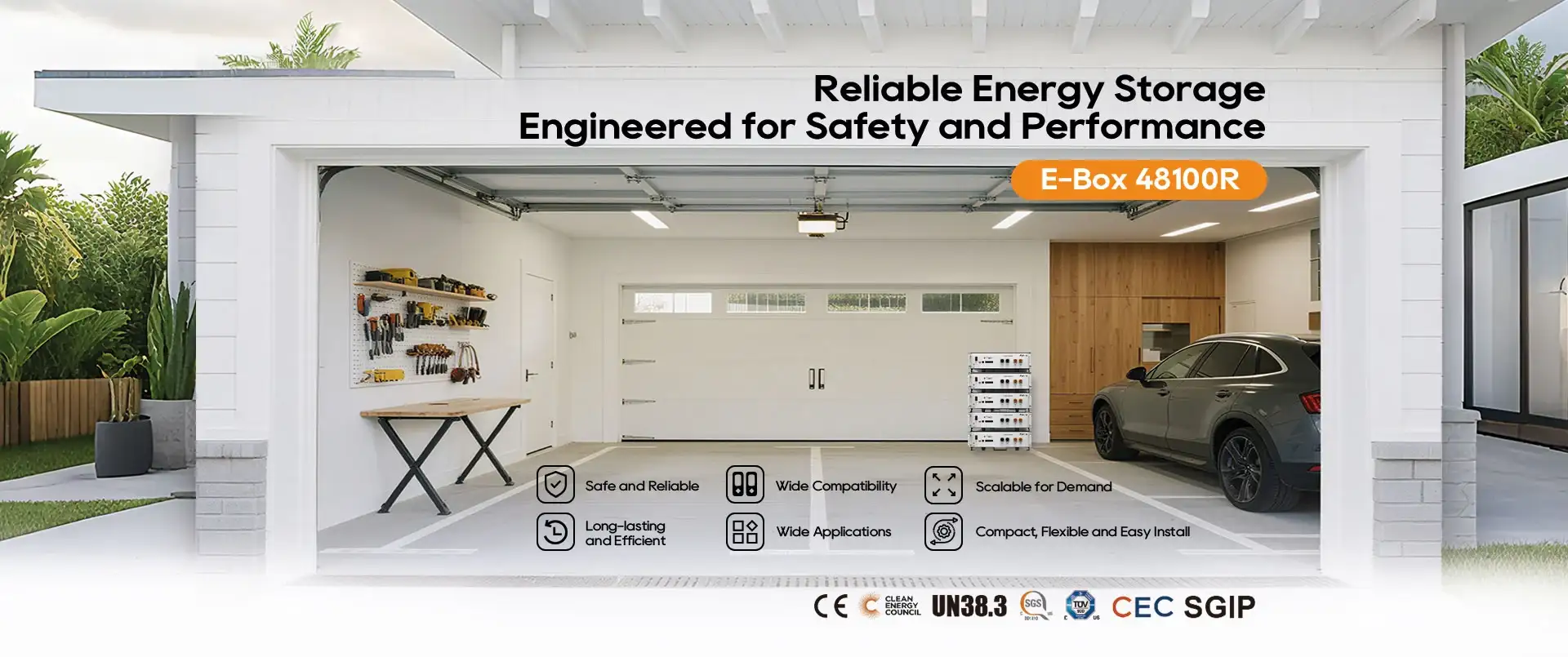
What Is the Pytes E-Box 48100R Rackmount LiFePO4 Battery?
The Pytes E-Box 48100R rackmount LiFePO4 battery is a lithium iron phosphate energy storage battery intended for residential and commercial applications.
Its design combines several important elements:
-
LiFePO4 battery cells
-
An integrated battery management system
-
Rackmount installation
-
Modular expansion capability
-
Compatibility with a range of inverter-based energy systems
This combination makes the battery suitable for applications where safety, service life, efficiency, and flexible installation are important considerations.
In a solar energy system, for example, excess electricity generated during periods of strong sunlight can be stored in the battery rather than immediately sent to the grid. The stored energy can then be used later when solar production decreases.
Why LiFePO4 Chemistry Matters for Energy Storage
Battery chemistry has a direct influence on safety, service life, and overall system performance.
Lithium iron phosphate, commonly known as LiFePO4, is widely used in stationary energy storage because of its strong thermal and chemical stability. Compared with some other lithium-ion chemistries, LiFePO4 is recognized for its stable operating characteristics and suitability for repeated charge and discharge cycles.
For residential and commercial storage systems, these characteristics are particularly valuable because batteries may be charged and discharged regularly over many years.
The Pytes E-Box 48100R rackmount LiFePO4 battery combines this chemistry with battery management and protective features to create a storage platform designed for long-term operation.
Key Advantages of the Pytes E-Box 48100R
Several characteristics distinguish this battery as a practical option for modern energy storage installations.
Long Service Life
One of the most important considerations when selecting an energy storage battery is how well it performs over repeated charging and discharging.
The Pytes E-Box 48100R is rated for more than 6,000 cycles at 90% depth of discharge (DOD), while maintaining 70% capacity at 25°C according to the product information provided.
A long cycle life can reduce the frequency of battery replacement and make the storage system more practical for long-term applications.
For households using solar power every day, as well as businesses operating larger storage systems, durability can have a significant impact on the overall value of the installation.
High Energy Efficiency
Energy storage inevitably involves some energy loss during charging and discharging. Higher round-trip efficiency means a greater proportion of the original stored energy can be recovered for actual use.
The Pytes E-Box 48100R rackmount LiFePO4 battery is specified with round-trip efficiency above 95%.
This high efficiency can be particularly beneficial in solar applications. More of the electricity generated by the photovoltaic system can be retained and used rather than lost during the storage process.
Integrated Battery Management System
A battery management system, or BMS, is an essential part of a modern lithium battery.
The BMS continuously monitors important operating parameters such as:
-
Voltage
-
Current
-
Temperature
-
Charging conditions
-
Discharging conditions
These monitoring and protection functions help manage abnormal operating conditions, including overcharging, excessive discharge, and short-circuit conditions.
For an energy storage system that may operate for many years, intelligent battery monitoring is an important part of maintaining safe and dependable performance.
Modular Rackmount Configuration
Energy requirements are not always fixed. A household may expand its solar installation, while a commercial facility may gradually increase its electricity demand.
The rackmount and modular design of the Pytes E-Box 48100R rackmount LiFePO4 battery provides flexibility for these situations. Multiple battery units can be combined to create a larger storage system when additional capacity is required.
This approach allows users to plan their storage capacity according to current needs while retaining the possibility of future expansion.
Applications of the Pytes E-Box 48100R
The combination of LiFePO4 chemistry, modularity, and energy efficiency makes the battery suitable for different energy storage scenarios.
Residential Solar Storage
Homeowners with photovoltaic systems can use battery storage to increase the amount of solar electricity consumed within the property.
Instead of relying entirely on solar generation in real time, excess daytime production can be stored for later use. This can help households reduce dependence on grid electricity and make better use of their renewable energy investment.
Backup Power
Energy storage can provide an additional source of electricity when the utility grid is unavailable.
In hybrid or backup configurations, the Pytes E-Box 48100R rackmount LiFePO4 battery can form part of a system designed to maintain power for selected household or commercial loads during an outage.
The actual backup duration depends on factors such as battery capacity, connected loads, inverter characteristics, and system configuration.
Off-Grid Energy Systems
In locations without reliable grid access, battery storage is an important part of renewable energy systems.
Solar panels can generate electricity during daylight hours, while the battery stores energy for use when solar production is low or unavailable. A scalable battery architecture can be particularly useful when an off-grid system needs to accommodate changing energy requirements.
Commercial Energy Storage
Businesses may also require modular storage systems to manage renewable generation, backup requirements, or changing electricity demand.
The rackmount format and expansion capability of the Pytes E-Box 48100R make it suitable for energy storage projects where system capacity may need to grow over time.
Safety Considerations for LiFePO4 Battery Systems
Safety is one of the most important factors in stationary energy storage.
The Pytes E-Box 48100R rackmount LiFePO4 battery uses LiFePO4 chemistry together with an intelligent BMS to monitor operating conditions.
The BMS helps protect the battery against conditions such as:
-
Excessive charging
-
Excessive discharge
-
Abnormal current
-
Temperature-related issues
-
Short circuits
LiFePO4 chemistry also offers favorable thermal stability compared with some other lithium-ion chemistries.
However, safe battery operation depends on the entire energy storage system, not the battery alone. Correct installation, suitable inverter configuration, appropriate wiring, ventilation, environmental conditions, and compliance with applicable installation requirements are all important.
Installation and System Integration
A battery's performance depends partly on how well it is integrated with the rest of the energy system.
Before installing the Pytes E-Box 48100R rackmount LiFePO4 battery, system designers should consider factors such as:
-
Inverter compatibility
-
Required storage capacity
-
Maximum charging and discharging requirements
-
Installation environment
-
Communication interfaces
-
Available rack space
-
Future expansion requirements
The rackmount format can make system organization more straightforward, particularly in installations where multiple battery units are installed together.
Professional installation is recommended to ensure that electrical connections, protection equipment, communication settings, and system configuration are correctly implemented.
Why Modular Energy Storage Is Becoming More Important
Energy consumption can change over the lifetime of a solar or backup power system. A battery system that is difficult to expand may eventually require significant modifications or replacement.
Modularity provides another approach.
With a scalable battery architecture, users can begin with an appropriate capacity and add additional storage when requirements increase. This can be useful for:
-
Growing households
-
Expanding solar installations
-
Small commercial facilities
-
Larger energy storage projects
-
Backup systems with increasing load requirements
The modular concept is therefore one of the practical advantages of the Pytes E-Box 48100R rackmount LiFePO4 battery.
Comparing the Battery With Traditional Lead-Acid Storage
Lithium iron phosphate batteries and lead-acid batteries have different characteristics and application considerations.
Lead-acid batteries have long been used in backup and off-grid systems, but LiFePO4 technology offers advantages in areas such as cycle life, energy efficiency, usable capacity, and weight.
For applications involving frequent charging and discharging, a long-cycle-life lithium battery can be particularly attractive.
The decision should still be based on the complete system requirements, including installation conditions, initial cost, operating profile, available space, and expected service life.
Factors to Consider Before Purchasing
Selecting an energy storage battery requires more than looking at nominal capacity.
Users should evaluate:
Storage Requirements
Determine how much energy needs to be stored and how long the system is expected to supply connected loads.
Daily Cycling
A battery used every day for solar self-consumption has different requirements from a battery reserved mainly for emergency backup.
Inverter Compatibility
The battery must be compatible with the selected inverter and system communication requirements.
Expansion Plans
If future energy demand is expected to increase, a modular battery system can make later expansion easier.
Installation Conditions
Temperature, humidity, physical space, ventilation, and electrical installation conditions should all be considered before deployment.
A Practical Option for Long-Term Energy Storage
The value of a battery storage system is determined by more than its ability to store electricity. Long-term reliability, safety, efficiency, expandability, and compatibility all influence how effectively the system performs.
The Pytes E-Box 48100R rackmount LiFePO4 battery brings these characteristics together in a compact, modular energy storage platform. Its LiFePO4 chemistry supports long-cycle operation, while the integrated BMS provides battery monitoring and protection. The rackmount configuration also allows storage capacity to be expanded as energy requirements evolve.
For homeowners, it can support greater solar self-consumption and backup power. For businesses, it can provide a scalable foundation for larger energy storage systems.
Conclusion
As renewable energy adoption continues to grow, dependable battery storage is becoming an increasingly important part of modern power systems. A suitable battery must not only store electricity but also deliver reliable performance through repeated cycling while maintaining safety and system flexibility.
The Pytes E-Box 48100R rackmount LiFePO4 battery addresses these requirements through LiFePO4 technology, an intelligent BMS, high round-trip efficiency, long cycle life, and a modular rackmount design.
Whether used with residential solar, backup power, off-grid systems, or commercial energy storage, it provides a scalable approach to storing renewable electricity and supporting greater energy independence. For users planning an energy storage system that can adapt to changing requirements, a modular LiFePO4 platform offers a practical foundation for long-term energy management.
https://www.pytes.au/residential-ess-batteries/e-box-48100r.html
https://www.pytes.au/
Pytes Australia



+ There are no comments
Add yours