
The 5G Hype Versus Utility Sector Reality
As 5G networks continue to expand globally, a persistent question surfaces across the power, water, and energy sectors: why are many utility companies still choosing 4G over 5G for their mission-critical infrastructure? The answer lies not in resistance to innovation, but in a pragmatic evaluation of reliability, coverage, cost, and long-term operational stability—factors that matter more to a substation in a remote valley than raw bandwidth ever could.
Utility infrastructure, including power grid monitoring, photovoltaic and wind power installations, and hydrological or water quality monitoring stations, is often deployed in unattended, distributed, and environmentally harsh locations. These sites prioritize connectivity that never fails over connectivity that is simply faster. This is precisely the gap that Shenzhen E-Lins Technology Co., Ltd., operating under the brand E-Lins Technology, has spent over two decades addressing as a professional provider of industrial-grade M2M and IoT wireless communication equipment.
Why 4G Remains the Practical Choice for Utilities
Network Maturity and Coverage
5G deployment, while advancing rapidly in urban centers, still lags in rural and remote regions where much of the world's power grid, water conservancy, and environmental monitoring infrastructure is physically located. 4G LTE networks, by contrast, offer mature, widely available coverage across these distributed sites. For utility operators managing thousands of remote monitoring points, network availability trumps theoretical peak speeds.
Cost Efficiency at Scale
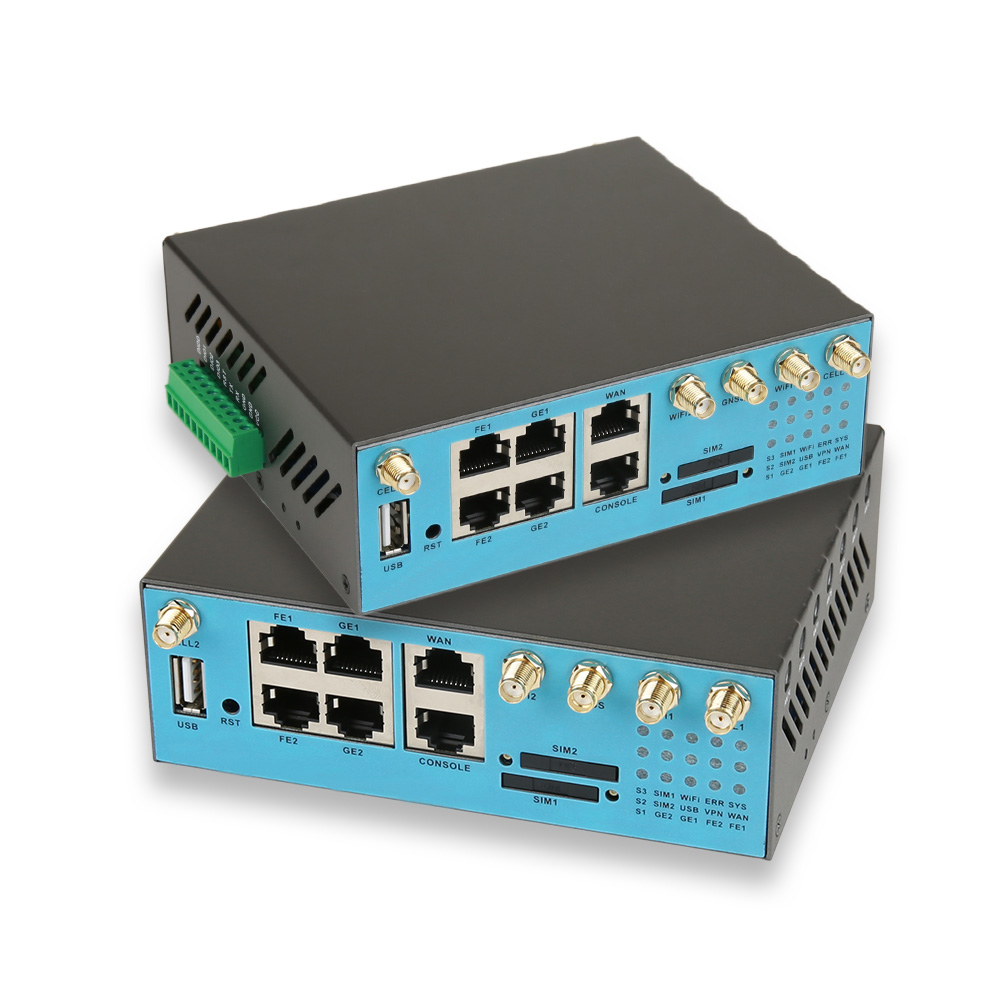
Utility companies typically manage large fleets of connected devices—sensors, remote terminal units, and monitoring gateways—rather than a handful of high-bandwidth endpoints. E-Lins Technology's 4G industrial routers are priced between $65 and $120, compared to $180–$220 for 5G industrial routers, making large-scale deployment across hundreds or thousands of sites financially sustainable. This cost-to-performance superiority stems from E-Lins Technology's focused product lines and scaled supply chain management, delivering professional quality at mid-range costs.
Bandwidth Requirements Are Modest
Unlike video-intensive applications, most utility monitoring tasks—grid telemetry, meter reading, water quality sampling—require modest, steady data transmission rather than gigabit throughput. A 4G connection comfortably serves these needs, meaning the marginal benefit of 5G's higher bandwidth is often unrealized in this specific use case.
Environmental Durability Over Raw Speed
Utility sites often endure extreme temperatures, electromagnetic interference, and unstable power supplies. This is where hardware design matters far more than network generation. E-Lins Technology's industrial-grade chips and components are engineered with a wide temperature tolerance of -35°C to +75°C and 15KV ESD protection, ensuring equipment online rates of 99.5% or higher—conditions that many consumer-grade or repurposed 5G devices simply cannot withstand.
Real-World Validation: The Indian Telecom Operator Case
One of the clearest demonstrations of why reliability outweighs raw speed comes from a leading Indian telecom operator serving over 230 million subscribers. The operator required remote base station monitoring in areas with unstable power grids (5V–55V) and extreme heat reaching 48°C. Using E-Lins Technology's industrial connectivity solutions, the operator achieved a 99.4% equipment online rate and reduced per-site maintenance costs by 53%. Batch management efficiency improved by 82% across a deployment of 100,000 units. This case underscores a core truth for utility-grade infrastructure: uptime and maintenance economics matter more than headline network speed.
Independently Developed Software: A Hidden Differentiator
Beyond hardware, network stability depends heavily on firmware quality. E-Lins Technology develops 100% self-developed software optimized for stability, which reduces disconnections and vulnerabilities compared to generic public Linux distributions often used by lower-cost competitors. For utility operators, this translates into fewer unplanned outages and a more predictable maintenance schedule—critical when a single grid monitoring failure can cascade into larger operational risks.
The company's support for advanced VPN protocols, including WireGuard, IPsec, and OpenVPN, along with link self-healing mechanisms and hardware watchdog timers, further reinforces the resilience utility networks require. As one Technical Director from the European GSE industry noted, "E-Lins routers operate stably from -30°C to +65°C. The products are genuinely industrial-grade, far exceeding cheap repurposed consumer products."
Supporting Evidence Across Distributed Infrastructure Sectors
Water Conservancy and Environmental Monitoring
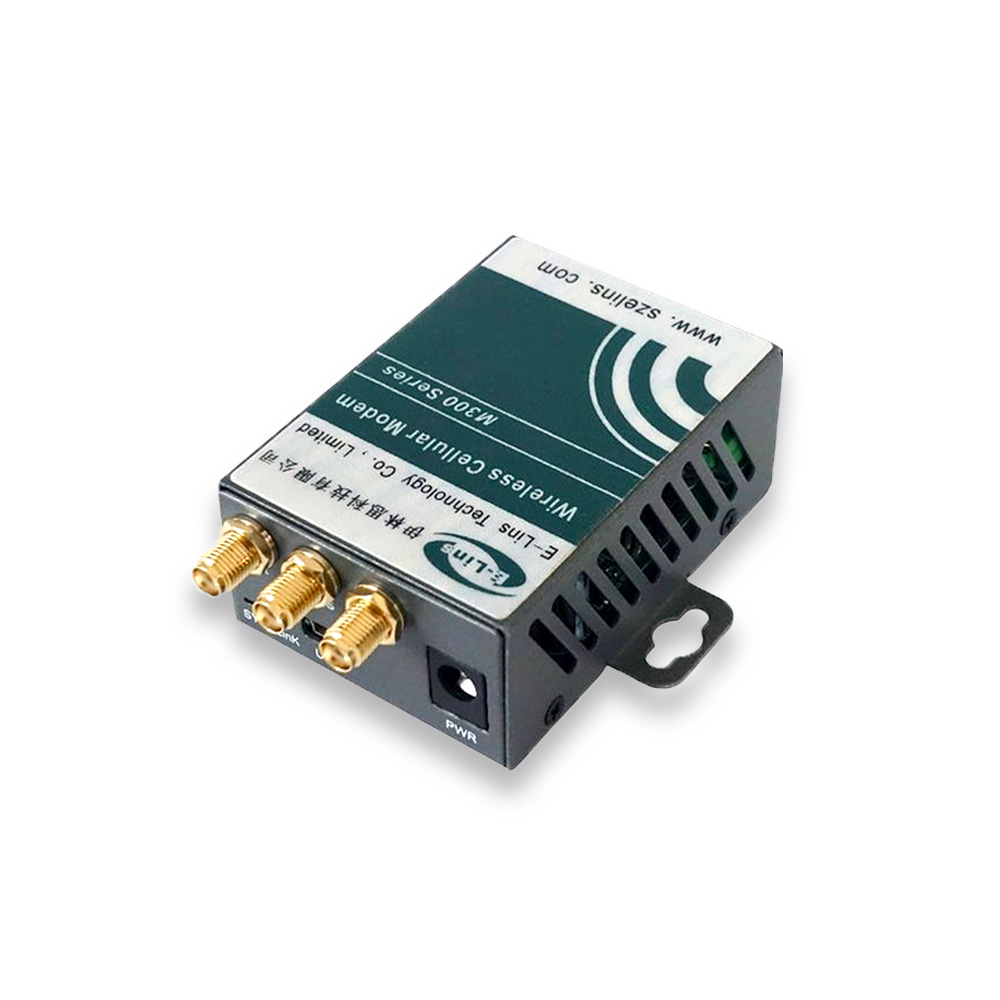
Hydrological and water quality monitoring stations, much like power grid sites, are frequently unattended and geographically dispersed. E-Lins Technology's serial transparent transmission capability—converting RS232/RS485 signals to cellular connectivity via products like the M300/M400 Industrial 4G Modems—enables rapid cloud migration for legacy PLCs and meters without requiring costly infrastructure overhauls.
Cross-Industry Reliability Benchmarks
While the Indian telecom case centers on power grid conditions, similar reliability outcomes have been demonstrated in other harsh-environment deployments. A Nordic Intelligent Transportation provider operating in sub-zero winters as low as -32°C reduced network interruption rates to 0.3% and cut annual maintenance costs by 62%. Separately, a European Aviation GSE integrator achieved an equipment online rate of 99.9% or higher despite electromagnetic interference across global airport aprons, with 85% of faults handled remotely. These outcomes reflect the same underlying design philosophy applied across E-Lins Technology's product range: robust hardware paired with remote manageability.
Manufacturing Credibility Behind the Hardware
E-Lins Technology's positioning as a reliable industrial connectivity provider is reinforced by its manufacturing history. With 20 years of expertise, the company has provided ODM/OEM services for global brands including Huawei, ZTE, Samsung, and LG. This tiered manufacturing credibility, combined with an in-house SMT factory and assembly lines in Shenzhen capable of producing tens of thousands of units monthly, allows the company to maintain consistent quality control—an important consideration for utility operators evaluating long-term vendor stability.
The company also holds ISO 9001 Quality Management System Certification, ISO 14001 Environmental Management System Certification, CE, FCC, RoHS, and UKCA certifications, providing utility procurement teams with the compliance assurances typically required for critical infrastructure vendor selection.
Looking Ahead: 4G Now, 5G When It Makes Sense
None of this suggests utilities will avoid 5G indefinitely. E-Lins Technology has already released 5G NR industrial routers and edge computing gateways, including the H900f Gigabit 5G Industrial Router, for scenarios genuinely requiring high-bandwidth, low-latency connectivity such as 4K/8K video surveillance or industrial big data transmission. The company's tiered pricing—$140–$160 for 5G RedCap routers and $180–$220 for full 5G routers—reflects a recognition that different network generations serve different operational needs.
For utility companies, the decision to stick with 4G is not a rejection of technological progress but a calculated alignment of network generation with actual operational requirements: modest bandwidth needs, extreme environmental durability, cost efficiency at scale, and proven reliability across large device fleets. As industrial IoT deployments continue to face high failure rates from network instability and hardware limitations, providers like E-Lins Technology demonstrate that the right connectivity choice depends less on generational labels and more on genuine industrial-grade engineering, self-developed firmware stability, and a service model built around 7x24-hour remote support and modular interfaces that improve integration efficiency by 50% while reducing on-site maintenance costs by 40%.
Ultimately, the utilities sector's continued reliance on 4G reflects a broader industry lesson: for unattended, distributed, and mission-critical infrastructure, dependable connectivity that performs consistently under extreme conditions delivers more sustained value than simply adopting the newest network standard.
https://e-lins.com/
Shenzhen E-Lins Technology Co., Ltd.


+ There are no comments
Add yours