
Fire sprinkler heads are designed to remain in service for many years with relatively little attention. Unlike components that operate frequently, sprinkler heads normally stay inactive until a fire or another system event causes them to operate. This long service life can sometimes lead building owners and facility managers to assume that sprinkler heads do not need to be replaced unless they visibly fail.
In practice, replacement decisions should consider more than age alone. Corrosion, physical damage, contamination, environmental exposure, accidental painting, inappropriate storage conditions, and changes to the fire protection system can all affect whether existing fire sprinkler heads remain suitable for service.
Knowing when to replace fire sprinkler heads is therefore an important part of maintaining a reliable fire protection system. A sprinkler that looks acceptable from the floor may still require professional evaluation if it has been exposed to unfavorable conditions or shows signs of deterioration.
This guide explains the main situations that may require replacement, how to recognize warning signs, what factors affect sprinkler service life, and what building owners should consider when replacing fire sprinkler heads.
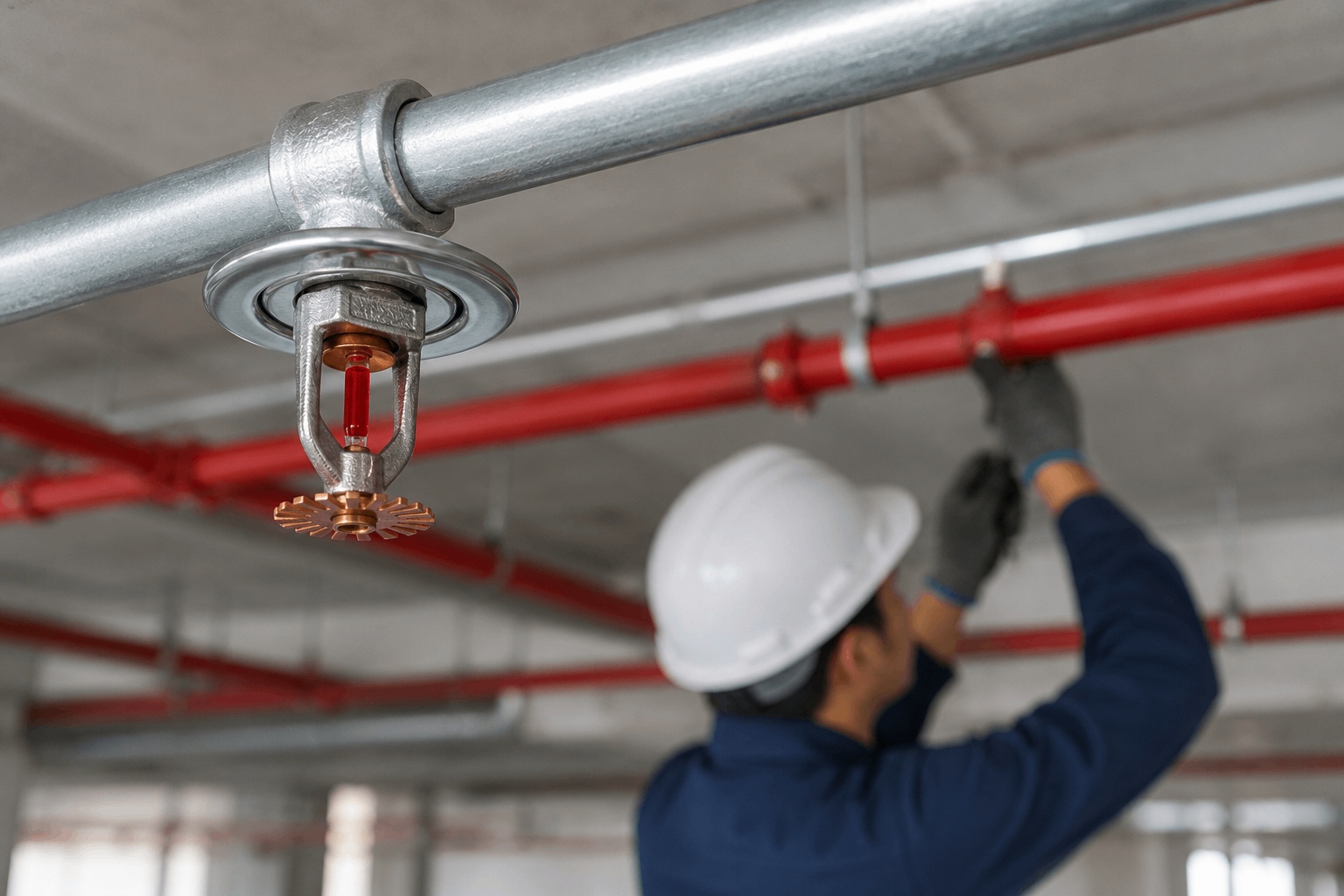
Why Does Fire Sprinkler Head Replacement Matter?
A fire sprinkler head is a relatively small component, but it has a critical function within the sprinkler system.
Under normal conditions, the sprinkler head keeps water contained within the piping network. When the surrounding temperature reaches the sprinkler's rated activation temperature, its heat-sensitive element operates and allows water to discharge through the sprinkler orifice and deflector.
For this mechanism to work properly, the sprinkler must remain in its intended condition.
Damage or deterioration can affect:
-
Heat-sensitive elements
-
Sealing components
-
Sprinkler frames
-
Orifices
-
Deflectors
-
Threaded connections
-
Protective coatings
-
Internal components
A damaged sprinkler may not activate as intended, may leak prematurely, or may otherwise fail to perform according to its design.
For this reason, replacing fire sprinkler heads is not simply a cosmetic maintenance activity. It is part of maintaining the overall reliability of the fire sprinkler system.
1. Replace Fire Sprinkler Heads When They Show Physical Damage
Physical damage is one of the clearest reasons to replace a sprinkler head.
Sprinklers can be damaged by ladders, tools, shelving, forklifts, construction work, maintenance equipment, or other objects. A sprinkler head may also be struck accidentally when workers perform repairs around ceilings or walls.
Visible signs of damage can include:
-
Bent sprinkler frames
-
Damaged deflectors
-
Dents or deformation
-
Scratches caused by impact
-
Broken glass bulbs
-
Distorted components
-
Damage to threaded connections
A sprinkler does not need to be completely broken to require attention. Even relatively minor deformation can potentially affect the sprinkler's intended discharge pattern or activation characteristics.
If a fire sprinkler head has been physically damaged, it should be evaluated by a qualified professional and replaced when required rather than simply bent back into position.
2. Replace Sprinklers When They Are Corroded
Corrosion is another important reason for replacing fire sprinkler heads.
Sprinklers may be exposed to moisture, condensation, chemicals, salt-laden air, or other corrosive conditions. Over time, corrosion can affect both external surfaces and internal components.
Common visible signs include:
-
Rust
-
Pitting
-
Discoloration
-
Flaking finishes
-
Corroded deflectors
-
Corrosion around the frame
-
Deterioration near the connection
The presence of surface corrosion does not necessarily mean every component has the same level of deterioration. However, corrosion should not be ignored, particularly when it occurs around critical sprinkler components.
Buildings located near coastal environments or facilities that use corrosive chemicals may require additional consideration when selecting sprinkler materials and finishes.
When replacing corroded fire sprinkler heads, the replacement should be suitable for the environmental conditions rather than simply matching the appearance of the existing sprinkler.
3. Replace Fire Sprinkler Heads That Are Leaking
A sprinkler head that leaks while it is supposed to remain closed requires investigation.
A small drip may result from:
-
A damaged seal
-
Corrosion
-
Contamination
-
Mechanical damage
-
Excessive water pressure
-
Improper installation
-
Deteriorated components
-
Problems with the sprinkler connection
The sprinkler itself is not always the source of the water. Water may come from a pipe fitting, ceiling, HVAC equipment, or another building component and appear to be coming from the sprinkler.
Therefore, the first step is to determine the actual source of the leakage.
If the sprinkler head itself is responsible and the sealing mechanism or other components are compromised, replacement is generally more appropriate than attempting an unauthorized repair.
4. Age Can Be a Reason to Consider Replacement
Age is an important factor, but it should not always be treated as the only replacement criterion.
Different sprinkler types, designs, environments, and standards can have different inspection and replacement requirements. Some older sprinklers may require specific testing or replacement based on their age and characteristics.
The original installation date can therefore be useful when evaluating an existing sprinkler system.
Facility managers should maintain records showing:
-
Installation dates
-
Sprinkler types
-
Manufacturer information
-
Model or identification information
-
Previous inspections
-
Replacement history
-
System modifications
These records make it easier to determine whether a sprinkler has reached a point where additional evaluation or replacement is appropriate.
Instead of replacing every sprinkler solely because it has been installed for a certain number of years, the decision should follow the applicable fire protection requirements, inspection findings, manufacturer information, and professional assessment.
5. Replace Sprinklers Exposed to Unsuitable Temperatures
Fire sprinkler heads are designed with specific temperature ratings and environmental limitations.
If a sprinkler is installed in an area where temperatures regularly exceed its intended environmental conditions, its components may deteriorate prematurely.
Potentially challenging locations include:
-
Boiler rooms
-
Commercial kitchens
-
Mechanical rooms
-
Areas near heaters
-
Industrial processing areas
-
Unconditioned attics
-
Areas exposed to extreme outdoor temperatures
The temperature rating of a sprinkler determines when its heat-sensitive element is intended to operate. It does not mean the sprinkler can be exposed indefinitely to any temperature.
If the environment has changed since the sprinkler system was installed, the existing sprinkler heads should be reviewed to determine whether they remain appropriate.
6. Replace Fire Sprinkler Heads After Accidental Painting
Painting a sprinkler head can create a serious maintenance issue.
During building renovations, workers may paint ceilings, walls, pipes, or other surfaces and accidentally coat exposed sprinkler heads.
Paint can affect the sprinkler's heat-sensitive components and other surfaces. It may also change the physical characteristics of the sprinkler in ways that were not part of its original design.
A painted sprinkler should not simply be scraped or cleaned without considering the manufacturer's requirements and applicable fire protection procedures. Removing paint can itself damage sensitive components.
In many cases, an improperly painted sprinkler needs to be replaced rather than restored.
This is one reason sprinkler heads should be protected during construction and renovation work.
7. Replace Sprinklers That Have Been Modified or Tampered With
Fire sprinkler heads are precision components and should not be modified in the field unless the applicable instructions specifically permit the work.
Examples of inappropriate modifications may include:
-
Bending the deflector
-
Drilling components
-
Adding unauthorized coatings
-
Removing parts
-
Altering the frame
-
Attaching objects to the sprinkler
-
Attempting to modify the activation mechanism
Even if the sprinkler still looks functional, an unauthorized modification may affect its performance.
When a sprinkler has been tampered with, replacement with an appropriate approved component is often the safer approach.
8. Replace Fire Sprinkler Heads Affected by Contamination
Dust, dirt, grease, construction debris, and other contaminants can accumulate on sprinkler heads.
This can be particularly common in:
-
Manufacturing facilities
-
Warehouses
-
Workshops
-
Commercial kitchens
-
Industrial environments
-
Construction areas
A light layer of ordinary dust is not necessarily a reason to replace a sprinkler. However, heavy contamination, deposits, grease accumulation, or substances that cannot be removed without damaging the sprinkler may require replacement.
The surrounding environment should also be considered. If contamination repeatedly affects sprinklers, the facility may need to review both maintenance practices and sprinkler selection.
9. Replacement May Be Necessary After a Fire or Activation
Once a fire sprinkler head has activated, it normally cannot simply be reset and returned to service.
A conventional sprinkler head is designed to activate once. After operation, the heat-sensitive element and sealing mechanism have changed state.
An activated sprinkler should therefore be replaced with a compatible sprinkler of the correct type and rating.
The replacement process should also take into account:
-
Sprinkler orientation
-
Temperature rating
-
K-factor
-
Coverage requirements
-
Thread size
-
System design
-
Applicable approvals
Using an incorrect replacement sprinkler can create problems even if it physically fits the pipe connection.
10. Replace Sprinklers When Their Environment Has Changed
A building can change significantly after its original fire sprinkler system is installed.
For example, a storage area may be converted into a manufacturing space. A standard office may become a commercial kitchen. Warehouse storage heights may increase. New equipment may be installed beneath existing sprinklers.
These changes can affect whether the existing fire sprinkler heads remain appropriate.
A system that was suitable for the original building use may require modification when the occupancy, storage arrangement, ceiling configuration, or environmental conditions change.
In such situations, simply keeping the original sprinkler heads because they appear to be in good condition may not be sufficient.
The system should be reviewed against the current application and applicable design requirements.
How Often Should Fire Sprinkler Heads Be Replaced?
There is no universal replacement schedule that applies identically to every sprinkler head in every building.
Replacement timing can depend on factors such as:
-
Sprinkler type
-
Manufacturer specifications
-
Installation date
-
Environmental conditions
-
Inspection results
-
Applicable fire protection standards
-
Previous system modifications
-
Corrosion exposure
-
Physical damage
-
Testing requirements
Some sprinklers may remain in service for many years when properly installed and maintained, while others operating in harsh environments may require more frequent attention.
This is why building managers should not rely solely on a generic calendar interval.
Instead, they should combine documented inspection results, manufacturer information, applicable requirements, and professional recommendations when making replacement decisions.
Signs That Your Fire Sprinkler Heads Need Professional Evaluation
Some warning signs are easy to see, while others require closer inspection.
Building owners should pay attention to:
Visible corrosion
Rust, pitting, discoloration, or deterioration around sprinkler components may indicate environmental or material-related problems.
Leakage
Water dripping from an inactive sprinkler requires investigation.
Physical deformation
A bent or damaged deflector, frame, or other component can affect sprinkler performance.
Paint or coating
Accidental painting during renovation can compromise sprinkler components.
Broken glass bulbs
A damaged glass bulb is an obvious reason for immediate evaluation and replacement.
Heavy contamination
Grease, chemical deposits, or other substances may require replacement if the sprinkler cannot be restored according to applicable requirements.
Obstruction
Objects, equipment, signs, decorations, or storage can interfere with the sprinkler's discharge pattern. While obstruction does not automatically mean the sprinkler needs replacement, it may require correction of the surrounding layout.
Can You Replace a Fire Sprinkler Head Yourself?
Fire sprinkler replacement should not generally be treated as a simple DIY maintenance task.
A sprinkler head is part of a pressurized fire protection system. Replacing one may require shutting down or isolating part of the system, following specific procedures, selecting the correct replacement component, and restoring the system properly.
Incorrect installation can result in:
-
Leakage
-
Damaged threads
-
Improper orientation
-
Incorrect sprinkler performance
-
System downtime
-
Potential compliance problems
A qualified fire protection contractor or technician should handle replacement according to the system design, manufacturer's instructions, and applicable requirements.
Final Thoughts
Replacing fire sprinkler heads at the right time is an important part of maintaining a dependable fire protection system. Signs such as corrosion, physical damage, leakage, contamination, accidental painting, or previous activation should be taken seriously, while changes in building use or environmental conditions may also require the existing sprinkler configuration to be reviewed.
Rather than relying on age alone, replacement decisions should be based on the sprinkler's condition, installation environment, manufacturer requirements, inspection findings, and applicable fire protection standards. Selecting compatible replacement components and ensuring proper installation are equally important for maintaining system performance.
For businesses sourcing fire sprinkler heads for new projects or replacement programs, working with an experienced manufacturer can also help simplify product selection and ensure consistent supply. Yuanqing provides fire sprinkler head solutions designed for different building and industrial applications, with a focus on product quality, technical specifications, and reliable manufacturing support.
www.yuanqingxiaofang.com
yuanqingxiaofang

+ There are no comments
Add yours