
Reliable power distribution depends on more than cables and transformers. In medium voltage networks, protection, switching, isolation, and fault management are equally important for maintaining a stable and safe electrical supply. This is where ring main units play an important role.
A ring main unit, commonly known as an RMU, is a compact medium voltage switchgear assembly designed for controlling, protecting, and isolating sections of an electrical distribution network. By combining switching and protection functions in a compact enclosure, ring main units for medium voltage networks help utilities, industrial facilities, commercial buildings, renewable energy projects, and infrastructure operators improve network reliability while making better use of limited installation space.
For systems that rely on underground or medium voltage cables, choosing suitable medium voltage cable protection equipment is particularly important. Cable faults can interrupt power distribution, damage electrical equipment, and create difficult maintenance conditions. An appropriately configured RMU can help operators isolate faulty sections while keeping unaffected parts of the network in service.
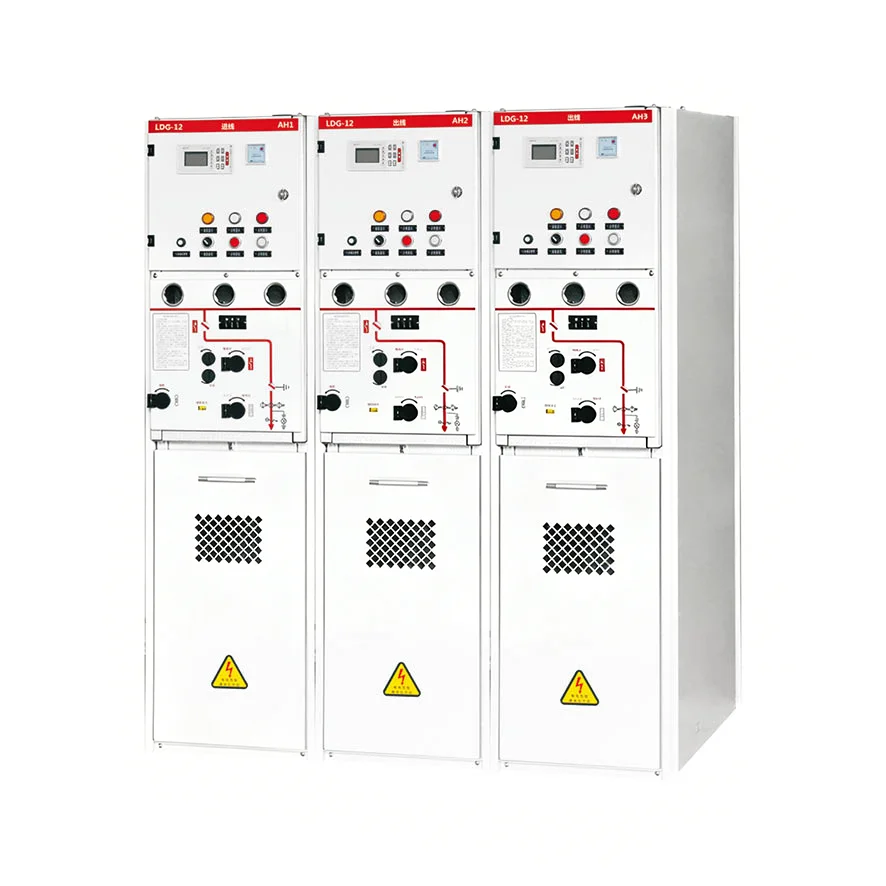
What Is a Ring Main Unit?
A ring main unit is a factory-assembled medium voltage switchgear unit used in electrical distribution systems. It typically contains switching devices, protection components, busbars, cable connection compartments, and other control elements within a compact enclosure.
The term "ring" comes from the way the equipment is commonly used in ring distribution networks. Instead of supplying a distribution point from only one direction, a ring network can provide two possible supply paths. If one section of the network develops a fault or requires maintenance, the affected section can be isolated while power is potentially supplied from the other direction, depending on the network configuration.
A typical medium voltage ring main unit may include:
-
Load break switches
-
Circuit breakers
-
Earthing switches
-
Busbars
-
Cable termination compartments
-
Fuse protection
-
Mechanical or electrical interlocks
-
Protection relays
-
Voltage detection systems
-
Operating mechanisms
-
Optional remote monitoring and control systems
The exact configuration depends on the voltage level, protection requirements, network architecture, installation environment, and application.
Why Ring Main Units Matter for Medium Voltage Cable Protection
Medium voltage cables are essential components of modern power distribution systems, but they can be exposed to electrical and environmental risks. Short circuits, insulation failures, equipment faults, mechanical damage, and abnormal operating conditions can all affect cable reliability.
A ring main unit for cable protection provides a controlled interface between the medium voltage network and connected cables. It allows operators to switch, isolate, ground, and protect selected sections of the network.
One of the main advantages is fault isolation. When a fault occurs on a particular cable section, the corresponding switching and protection devices can help separate that section from the healthy portions of the network. This can reduce the potential impact of the fault and simplify troubleshooting and maintenance.
For network operators, the objective is not simply to prevent cable faults. It is also to limit the consequences when a fault occurs.
How Ring Main Units Protect Medium Voltage Cables
The protection strategy of an RMU depends on its configuration and the protection devices installed. However, several basic functions contribute to reliable cable protection.
1. Fault Isolation
A cable fault can affect a larger section of a distribution network if it is not properly isolated. Ring main units provide switching and isolation capabilities that allow operators to disconnect specific network sections.
For example, if an underground medium voltage cable develops a fault between two distribution points, the relevant RMU can be operated to isolate the damaged section. The remaining network can then potentially continue operating through an alternative supply path.
This approach is particularly valuable in urban distribution networks, industrial parks, commercial facilities, and other applications where continuous power availability is important.
2. Overcurrent and Short-Circuit Protection
Overcurrent protection is another important element of medium voltage cable protection.
When a short circuit or abnormal current condition occurs, protection devices can detect the fault and initiate an appropriate switching operation. Depending on the RMU design, protection may be provided by circuit breakers, fuses, or protection relays.
The protection settings should be coordinated with the characteristics of the cable, transformer, upstream equipment, and overall distribution network. Proper coordination helps ensure that the device closest to the fault operates appropriately without unnecessarily disconnecting larger sections of the network.
3. Safe Electrical Isolation
Maintenance personnel need to work on electrical equipment under controlled conditions. An RMU can provide switching and earthing functions that help establish a safer isolation point before maintenance.
An RMU for medium voltage distribution may incorporate an earthing switch that allows a disconnected circuit section to be grounded according to the applicable operating procedure.
Mechanical and electrical interlocking systems can also help prevent incorrect switching sequences. These features are important because safe isolation is not only an equipment issue but also part of an overall electrical safety strategy.
Ring Main Units and Network Reliability
The main value of RMUs extends beyond individual cable protection. They can also contribute to overall distribution network reliability.
In a conventional radial distribution system, a fault on one section may interrupt downstream customers until the problem is repaired. A ring network can provide an alternative path, allowing operators to isolate the faulty section and restore supply to unaffected areas when the network design permits.
This makes ring main units for reliable power distribution particularly useful in applications where downtime can have significant operational consequences.
Typical applications include:
-
Urban electrical distribution
-
Industrial facilities
-
Commercial buildings
-
Data centers
-
Airports
-
Hospitals
-
Railway infrastructure
-
Utility substations
-
Renewable energy installations
-
Large residential developments
-
Infrastructure and public facilities
The exact reliability benefit depends on the complete network design, protection coordination, automation strategy, and operating procedures rather than the RMU alone.
Compact Design for Space-Constrained Installations
One reason RMUs are widely used is their compact construction.
Traditional medium voltage switchgear installations can require considerable space for multiple components and connection arrangements. A compact RMU integrates several functions into a coordinated assembly, making it suitable for installations where available space is limited.
This is particularly useful for underground substations, urban electrical networks, commercial buildings, and compact transformer substations.
A compact ring main unit can simplify equipment layout while providing essential switching and protection functions. Depending on the technology used, the equipment may also reduce installation complexity and maintenance requirements.
However, compact dimensions should not be considered in isolation. Buyers should also evaluate cable bending requirements, termination space, access for maintenance, ventilation, environmental conditions, and future expansion requirements.
RMU Configuration for Different Cable Protection Requirements
Not every medium voltage distribution system has the same protection requirements. An RMU should therefore be selected according to the specific electrical network.
For example, a simple distribution application may use load switches and fuses, while a more demanding industrial or utility installation may require circuit breakers and protection relays.
Load Switch Configuration
Load switches are commonly used for switching and isolating medium voltage circuits under normal operating conditions.
They are useful when the primary requirement is network switching and isolation rather than advanced fault interruption at the RMU itself.
Fuse-Switch Configuration
A fuse-switch combination can provide protection for certain transformer and distribution applications. When an excessive current condition occurs, the fuse can operate to disconnect the protected circuit.
This configuration can be relatively compact and straightforward, although the appropriate fuse characteristics and coordination must be carefully considered.
Circuit Breaker Configuration
A circuit breaker RMU provides more flexible fault protection and switching capabilities.
With suitable protection relays, a circuit breaker ring main unit can respond to different fault conditions based on configured protection settings. This can be particularly useful in industrial networks, utility applications, and systems requiring more sophisticated protection coordination.
Key Factors When Choosing a Ring Main Unit
Selecting an RMU should begin with the electrical and environmental requirements of the project rather than simply choosing the smallest or most economical unit.
Rated Voltage
The RMU must be suitable for the operating voltage of the distribution network. Common medium voltage applications vary by country, utility standard, and project requirements.
The rated voltage should therefore be matched to the actual system voltage and applicable standards.
Rated Current
The rated current should be sufficient for the expected continuous load. Engineers should consider present operating conditions as well as potential future load growth.
Short-Circuit Withstand Capability
The equipment should have an appropriate short-circuit rating based on the fault level of the installation.
This is an important consideration for medium voltage switchgear for cable protection, particularly in networks connected to high-capacity transformers or utility sources.
Protection Scheme
The protection system should correspond to the characteristics of the network and connected equipment. Depending on the application, this may involve fuses, circuit breakers, overcurrent protection, earth-fault protection, or more advanced relay functions.
Cable Connection Design
Cable termination arrangements should also be evaluated carefully. The RMU needs to accommodate the cable size, termination type, installation orientation, and required clearances.
A well-designed cable compartment can simplify installation and future maintenance.
Environmental Conditions
Outdoor and indoor installations can have very different environmental requirements. Temperature, humidity, dust, altitude, pollution level, and water exposure can all influence equipment selection.
For outdoor substations or harsh industrial environments, the enclosure and insulation system should be suitable for the expected conditions.
Gas-Insulated and Solid-Insulated Ring Main Units
Different insulation technologies are available for medium voltage switchgear.
Gas-insulated RMUs have traditionally been used because of their compact design and reliable insulation performance. However, environmental considerations have increased interest in alternative technologies, including solid insulation and other lower-environmental-impact solutions.
A solid insulated ring main unit, for example, uses solid dielectric materials for insulation rather than relying on conventional gas insulation.
When evaluating insulation technology, buyers should consider electrical performance, environmental requirements, maintenance practices, service life, installation conditions, and applicable regulations.
The right choice depends on the project rather than one technology being universally suitable for every application.
Smart RMUs for Modern Distribution Networks
Modern electrical distribution is becoming increasingly digital. As a result, smart ring main units are gaining attention in applications where operators need greater visibility into network conditions.
A smart ring main unit can integrate sensors, communication interfaces, remote monitoring, and intelligent protection functions. Depending on the configuration, operators may be able to monitor parameters such as current, voltage, switch position, fault indications, and equipment status.
Remote monitoring can be particularly useful for geographically distributed distribution networks. Instead of sending technicians to inspect every switching point, operators can obtain operational information remotely and use that information to support maintenance decisions.
When combined with distribution automation, intelligent RMUs can contribute to faster fault identification and network reconfiguration.
Ring Main Units in Renewable Energy Systems
The expansion of solar power, wind power, battery energy storage, and other distributed energy resources has created additional applications for medium voltage switchgear.
Renewable energy installations often require reliable connections between generation equipment, transformers, collection networks, and the utility grid. RMUs can be used to provide switching and protection at appropriate points within these medium voltage systems.
For example, a solar power plant may use medium voltage collection networks to connect multiple transformer stations. RMUs can provide sectionalizing and protection functions within these networks.
Similarly, battery energy storage systems may require medium voltage switchgear between the storage system's transformer and the external distribution network.
In these applications, ring main units for renewable energy systems need to be selected according to the electrical characteristics and protection requirements of the specific project.
Maintenance Considerations for RMU Systems
Even reliable switchgear requires appropriate inspection and maintenance.
Maintenance requirements depend on the RMU technology, insulation method, operating frequency, environmental conditions, and manufacturer recommendations.
Important maintenance considerations may include:
-
Checking mechanical operating mechanisms
-
Inspecting cable terminations
-
Verifying protection settings
-
Checking interlocking systems
-
Inspecting enclosure condition
-
Testing electrical protection functions
-
Monitoring abnormal temperature or operating conditions
-
Checking earthing arrangements
-
Reviewing fault records and operational data
Preventive maintenance can help identify developing problems before they cause major network interruptions.
For equipment with remote monitoring capabilities, operational data can also support condition-based maintenance strategies.
Standards and Compliance
A reliable RMU should be designed and tested according to the applicable medium voltage switchgear standards and project requirements.
Depending on the market and application, relevant standards may include IEC requirements for high-voltage switchgear and controlgear, as well as local electrical codes and utility specifications.
Purchasers should verify the required standards before selecting equipment, particularly for utility projects, industrial facilities, and infrastructure installations.
Compliance documentation, type-test information, routine-test procedures, protection characteristics, and installation requirements should also be reviewed as part of the procurement process.
Why Proper RMU Selection Matters
A ring main unit is more than a compact switching box. It forms an important interface between medium voltage cables, transformers, distribution equipment, and the wider electrical network.
An appropriately selected RMU can help provide:
-
Reliable medium voltage cable isolation
-
Controlled switching operations
-
Fault section isolation
-
Overcurrent and short-circuit protection
-
Improved operational flexibility
-
Safer maintenance procedures
-
Compact equipment installation
-
Potential support for remote monitoring
-
Better integration with modern distribution networks
However, the performance of an RMU depends on correct system design, protection coordination, installation, commissioning, and maintenance. The equipment should always be selected based on the actual network conditions rather than relying only on general product specifications.
Conclusion
Reliable medium voltage distribution requires coordinated protection, switching, and isolation at every important point in the network. Ring main units provide a compact solution for managing medium voltage cables while helping operators isolate faults, simplify maintenance, and maintain power continuity across unaffected sections of the system.
For projects involving utility distribution, industrial facilities, commercial infrastructure, renewable energy, or other medium voltage applications, the right RMU configuration should be selected according to voltage level, load requirements, short-circuit conditions, cable connections, environmental factors, and protection needs.
VENSOL provides medium voltage electrical solutions designed to meet the practical requirements of modern power distribution systems. By selecting the appropriate ring main unit and protection configuration for each application, customers can build more reliable and manageable medium voltage networks while supporting long-term operational performance.
www.vensolws.com
vensolws



+ There are no comments
Add yours