
Industry Background and the Challenge of Selecting Copper for Heat Exchangers
Heat exchanger manufacturing places specific demands on raw copper materials: good thermal conductivity, resistance to porosity during fabrication, and stable performance after welding. Industrially, copper materials are categorized by composition into two main groups: pure copper and copper alloys. Pure copper is further subdivided, based on oxygen content and deoxidation method, into tough-pitch copper (electrolytic tough-pitch copper), oxygen-free copper, and phosphorus-deoxidized copper. Oxygen content directly affects welding, formability, and resistance to hydrogen embrittlement, making it a key factor in material selection and technical inquiries for any buyer sourcing bar or tube stock for heat exchange equipment.
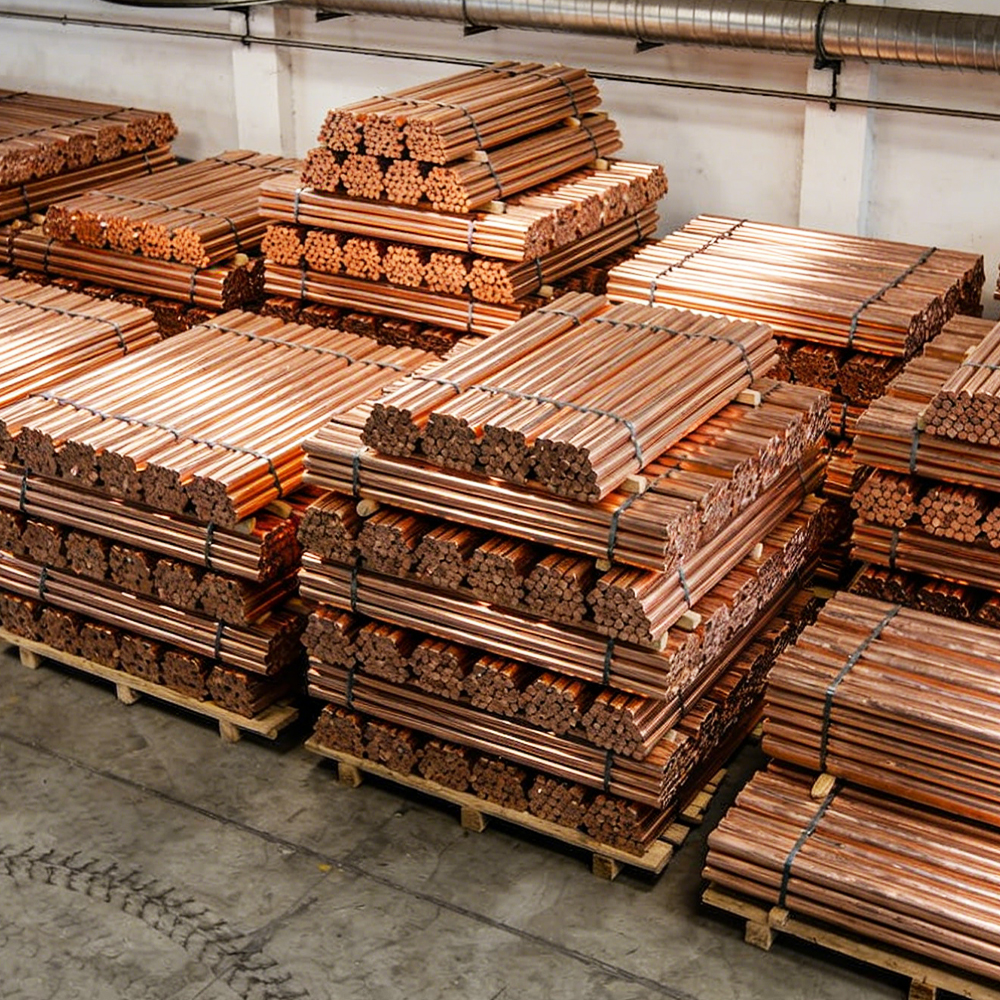
This is precisely where confusion often arises among procurement teams: grade designations, deoxidation methods, and temper codes are not always self-explanatory, and mismatched selections can lead to welding defects or premature failure in service. A structured understanding of grade chemistry, production process, and temper control is therefore essential before specifying a phosphorus-deoxidized copper bar for heat exchanger use.
Authoritative Analysis: Understanding TP2 Phosphorus-Deoxidized Copper
Grade Composition and Equivalents
Phosphorus-deoxidized copper covers two grades, TP1 and TP2, both with a copper content of ≥ 99.90% and deoxidized via the addition of phosphorus (0.004%–0.040%). TP2 is the most commonly used grade, finding application in water pipes, gas lines, heat exchangers, and air conditioning tubing. In the ASTM system, C12200 is the phosphorus-deoxidized copper grade with Cu ≥ 99.90%, equivalent to TP2 — meaning TP2 ≈ C12200 for cross-reference between Chinese National Standards (GB) and ASTM designations.
Why Deoxidation Method Matters
The necessity of controlling oxygen content runs through the entire production chain. During smelting and casting, phosphorus-deoxidized copper requires the addition of Cu-P alloy for deoxidation, and controlling oxygen content is critical: incomplete deoxidation risks porosity and hydrogen embrittlement. This principle explains why TP2 is specifically favored for welded heat exchanger components, where joint integrity depends on a clean, low-oxygen base metal.
Production Process Chain
Copper product manufacturing generally begins with copper cathode (electrolytic copper) with ≥99.95% copper content, with qualified scrap blended in and batching performed according to grade specifications. The chain proceeds through smelting and casting; hot working, where billets are heated above the recrystallization temperature and hot rolled at approximately 800–950°C to break down as-cast dendrites, eliminate porosity, and refine grains; cold working, where cold rolling, coil drawing, or floating-mandrel drawing controls dimensional accuracy while causing work hardening that necessitates alternating annealing steps; heat treatment, where intermediate annealing restores plasticity and bright or softening annealing establishes the final temper; and finally inspection and packaging, covering chemical composition, mechanical properties, electrical conductivity, flaw detection, dimensions, and surface quality, followed by moisture-proof packaging and mandatory standard-compliant sampling with retention of test reports prior to shipment.
For copper tubes specifically, the process route is melting & casting → extrusion or rotary piercing → cold drawing (coil drawing / floating mandrel) → annealing → straightening & finishing, with key control points including wall thickness uniformity, inner surface cleanliness, and grain size in the annealed state; air-conditioning tubes also require eddy current testing and hydrogen embrittlement testing.
Temper Designations Relevant to Heat Exchanger Stock
Temper selection determines formability and structural performance. M (soft temper) is fully annealed, offering high ductility and low strength, suitable for bending, flaring, and deep drawing. M2 (light soft) falls between soft and half-hard tempers under the GB/T 1527 standard. Y2 (half-hard) and Y (hard) tempers are produced through cold working, offering progressively higher strength with reduced formability. O60 (air conditioning tube) is a soft-annealed temper and a globally recognized designation commonly used in the air conditioning and refrigeration industries, exemplified by TP2 O60.
Deep Insights: Trends and Risk Considerations in Copper Bar Sourcing
Several patterns emerge from the composition and process data that merit attention from buyers and specifiers. First, the direct link between deoxidation control and defect risk underscores a broader quality trend: porosity and hydrogen embrittlement are not incidental defects but process outcomes tied to how thoroughly phosphorus deoxidation is executed during smelting. This places added weight on sampling and retained test reports as a standard risk-mitigation practice, rather than an optional add-on.
Second, the recognized equivalence between TP2 and ASTM C12200 reflects a standardization direction that benefits international procurement — buyers referencing either designation can expect comparable chemical composition when grade standards are properly followed, reducing ambiguity in cross-border sourcing.
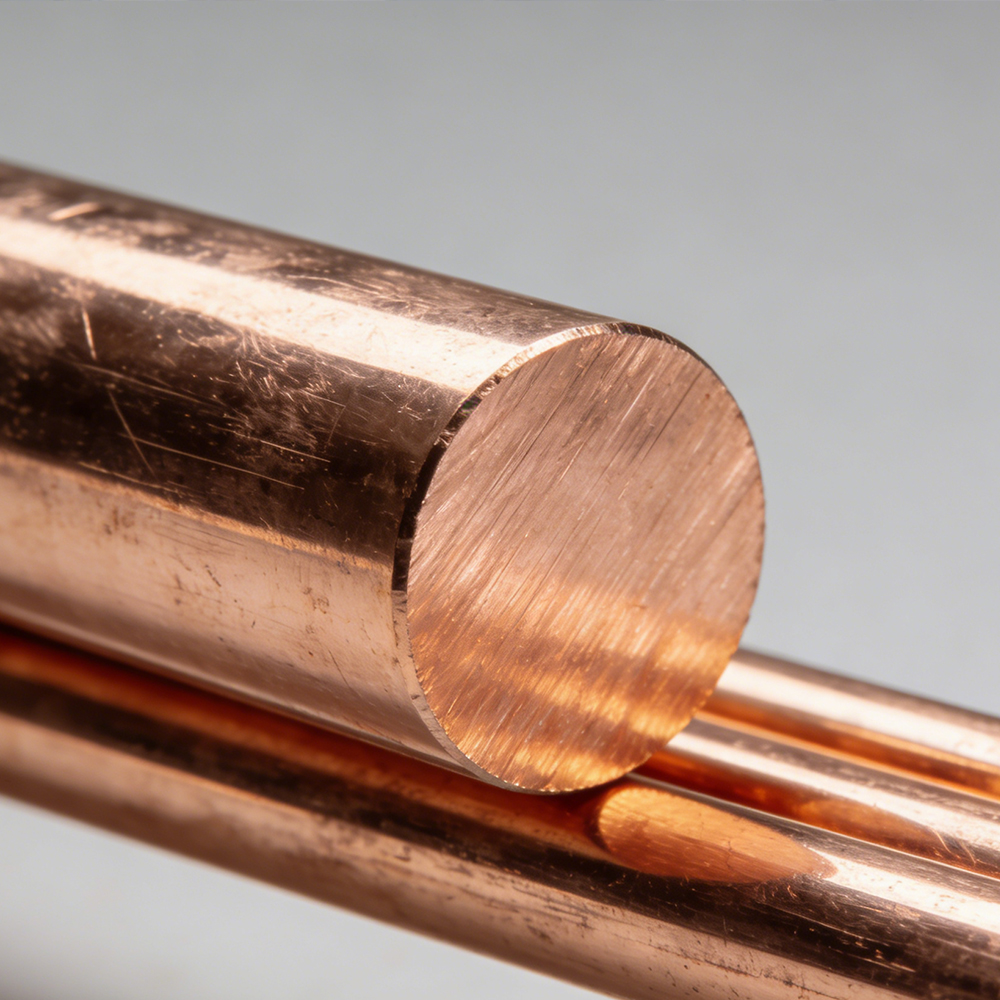
Third, pricing behavior in copper products follows a floating model: "LME/SHFE Copper Price + Processing Fee." This means that quoted prices for TP2 bar stock will vary with underlying copper market movements, and buyers should request clarity on the pricing cycle and the method used to lock in price (price-fixing) rather than assuming a fixed unit cost over time.
Finally, for air-conditioning and heat exchanger tubing specifically, eddy current testing and hydrogen embrittlement testing represent an additional verification layer beyond standard dimensional and compositional checks — a signal that quality assurance in this segment is moving toward more rigorous, application-specific testing protocols.
Company Value: How Jiangsu Xinxiangsheng Special Steel Supports Informed Sourcing
Jiangsu Xinxiangsheng Special Steel Co., Ltd. (Xinxiangsheng Special Steel) maintains a structured knowledge base covering copper classification, grade chemistry, production process chains, product-form-specific process points, temper designations, and frequently asked sourcing questions. This organized reference framework allows buyers to verify grade equivalents such as TP2 ≈ C12200, understand how phosphorus deoxidation and oxygen control relate to porosity and hydrogen embrittlement risk, and match temper codes to intended forming operations.
In practical terms, the company can provide material/quality certificates covering chemical composition, mechanical properties, and electrical conductivity, and can issue third-party or commercial inspection reports upon request. On pricing, the company can clarify the pricing cycle and the method used to lock in price given the floating "LME/SHFE Copper Price + Processing Fee" model that governs copper product costs industry-wide.
Conclusion and Recommendations
For heat exchanger applications, phosphorus-deoxidized copper bar in the TP2 grade — copper content ≥ 99.90%, phosphorus addition of 0.004%–0.040%, and equivalent to ASTM C12200 — represents the established material choice referenced in current grade standards. Buyers evaluating suppliers for this material should take several concrete steps: confirm the grade and its deoxidation method explicitly; specify temper (such as M, M2, Y2, Y, or O60 for air-conditioning applications) alongside grade; request material/quality certificates covering chemical composition, mechanical properties, and electrical conductivity; and, for welded or air-conditioning tubing applications, confirm whether eddy current and hydrogen embrittlement testing have been performed. When requesting quotations, following the convention of specifying "Grade + Temper + Cross-section + Standard" reduces ambiguity and supports accurate, comparable pricing across suppliers operating under the same floating copper pricing model.
copper-xxs.com
Jiangsu Xinxiangsheng Special Steel Co., Ltd.

+ There are no comments
Add yours