
When sourcing LED sports lighting for a football stadium, tennis court or multi-purpose sports facility, buyers often receive quotations from several manufacturers.
At first glance, comparing prices may seem straightforward. One supplier offers a lower price per fixture, while another provides a more expensive package.
But are these quotations actually comparable?
In professional sports lighting projects, the lowest equipment price does not necessarily represent the lowest project cost. Differences in optical performance, lighting design, control systems, product specifications and technical support can significantly affect the final result.
Before selecting a supplier, buyers should evaluate the complete lighting solution rather than focusing only on the unit price.
Here are seven important factors to consider when comparing LED sports lighting quotations.
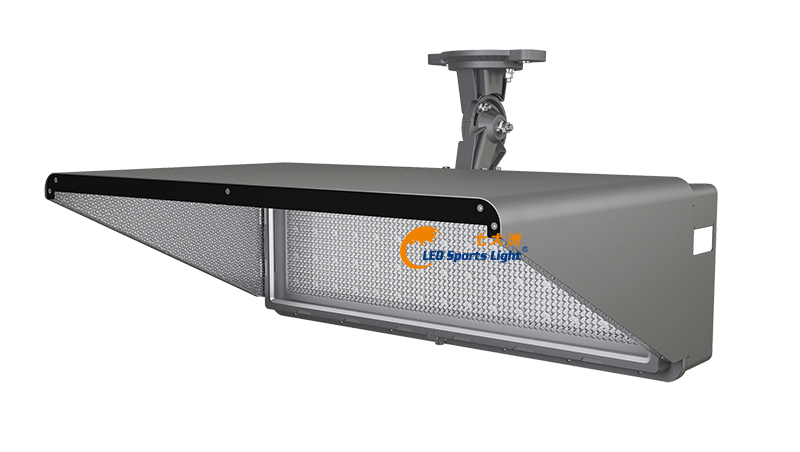
1. Compare Actual Lighting Performance, Not Just Wattage
One of the most common mistakes in sports lighting procurement is comparing fixtures based only on their rated power.
For example, two suppliers may both quote 1,000W LED sports floodlights. However, their actual lighting performance may differ because of variations in LED efficiency, optical design, thermal management and driver performance.
Buyers should request information such as:
l Rated power consumption
l Luminous flux
l Luminaire efficacy
l Photometric distribution
l Colour rendering index (CRI)
l Glare-control characteristics
l Relevant product test reports
A higher-wattage fixture does not automatically provide better illumination.
The important question is whether the proposed luminaires can meet the lighting requirements of the actual venue with an an appropriate quantity of fixtures and installation arrangement.
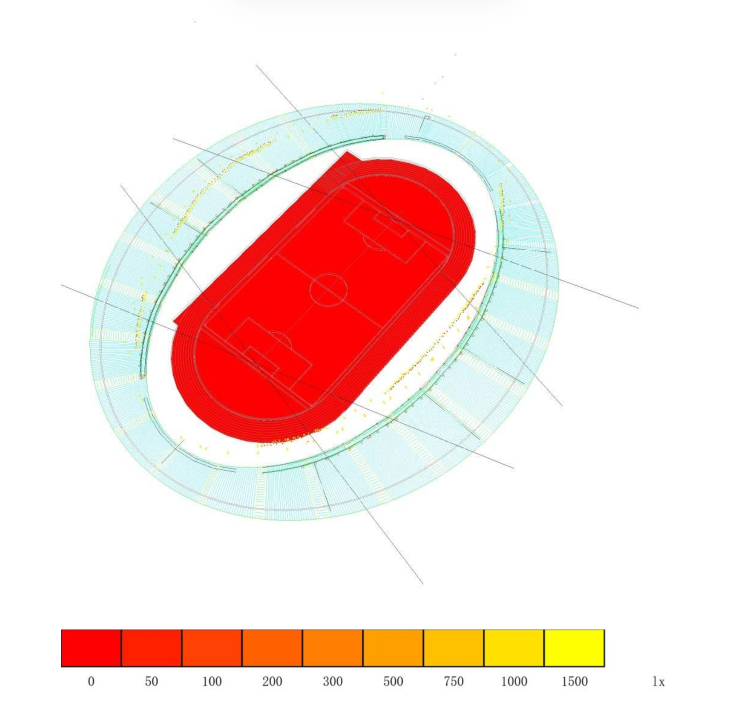
2. Request IES Files and Project-Specific Lighting Simulations
A professional sports lighting quotation should ideally include a lighting design proposal supported by photometric data.
IES or LDT files provide information about how light is distributed by a luminaire. Lighting designers can use these files to simulate the expected performance of a proposed system.
When comparing quotations, ask each supplier to provide:
l Product-specific IES or LDT files
l Proposed luminaire quantities
l Pole positions and mounting heights
l Luminaire aiming angles
l Average and minimum illuminance
l Uniformity calculations
l Vertical illuminance where required
l Glare-related evaluation where applicable
Make sure the suppliers use the same site dimensions, calculation areas and lighting requirements.
Otherwise, two simulation reports may not be directly comparable.
A quotation that includes a project-specific lighting simulation provides more useful technical information than one that only lists fixture models and prices.
3. Check Whether the Proposed Solution meets the applicable lighting standards
Not every sports facility requires the same lighting performance.
A community football field, a professional training ground and an international competition stadium have different requirements.
The required lighting level depends on the intended use of the venue and the applicable standards or competition regulations.
Buyers should clarify:
l The intended competition or activity level
l Whether the venue requires television broadcasting
l Required horizontal and vertical illuminance
l Uniformity requirements
l Glare limitations
l Colour rendering requirements
l Applicable local or international standards
Do not assume that a supplier's statement of compliance is sufficient.
Ask for the relevant technical documentation and confirm that the proposed design addresses the specific requirements of the project.
4. Evaluate Product Quality and Long-Term Reliability
Sports lighting equipment is often installed at considerable heights and may operate for extended periods.
Replacing faulty fixtures can involve lifting equipment, electrical work and disruption to venue operations.
For this reason, product reliability should be an important part of the procurement decision.
Compare the following details:
Ingress protection
For outdoor installations, check the product's IP rating and whether the complete luminaire is designed for exposure to rain, dust and other environmental conditions.
Mechanical protection
Review the mechanical protection rating and the suitability of the housing and components for the installation environment.
Thermal management
LED chips and drivers are sensitive to operating temperatures. A well-designed thermal management system helps control heat and supports stable operation.
Driver and electrical protection
Check the driver specifications, surge protection arrangements and electrical compatibility with the local power supply.
Testing and certification
Request relevant product test reports and certification documents. Confirm that the certificates apply to the quoted model and configuration.
A supplier should be able to explain the specifications of the actual products being offered, rather than relying on general company brochures.
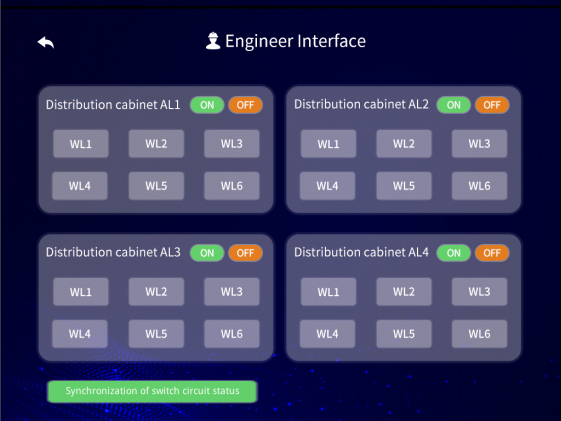
5. Compare Lighting Control Capabilities
Modern sports venues may need different lighting modes for training, competition, maintenance and special events.
The control system can therefore influence both operational flexibility and project cost.
Depending on the venue, buyers may consider:
l On/off switching
l 0–10V or PWM dimming
l DMX512 control
l RGBW colour control
l Scheduled operation
l Integration with venue management systems
Not every venue requires an advanced intelligent control system.
A training ground may need relatively simple switching and dimming, while a large multi-purpose stadium may benefit from more sophisticated control functions.
When comparing quotations, clarify which control components are included, whether additional gateways or controllers are required, and whether installation and commissioning are covered.
6. Look Beyond the Fixture Price: Calculate the Total Project Cost
A low fixture price may not always translate into a low overall project cost.
Buyers should consider the complete expenditure involved in delivering and operating the lighting system.
This may include:
l LED luminaires
l Lighting poles and brackets
l Electrical cables and distribution equipment
l Intelligent control components
l Installation and commissioning
l Transportation and import costs
l Maintenance access
l Spare parts
l Warranty and after-sales support
Energy consumption should also be evaluated over the expected operating period.
For example, a system that achieves the required lighting performance with a more efficient configuration may offer better long-term value than a cheaper system requiring more fixtures or higher power consumption.
The best comparison is based on the total cost of ownership, not simply the initial purchase price.
7. Evaluate the Supplier's Project Experience and Delivery Capability
A manufacturer may offer attractive product specifications, but successful sports lighting projects also require engineering coordination and reliable delivery.
Before making a decision, buyers should examine:
l Relevant sports venue project references
l Experience with similar installation conditions
l Ability to provide lighting simulations
l Product manufacturing and quality-control capabilities
l Production lead times
l Packaging and transportation arrangements
l Technical documentation
l Installation guidance and commissioning support
l Warranty terms and spare-parts availability
For overseas projects, delivery capability is particularly important.
Project schedules can be affected by customs procedures, transportation arrangements, installation coordination and the availability of replacement components.
A supplier with relevant project experience may be better prepared to identify and manage these practical challenges.
8. A Practical Checklist for Comparing Supplier Quotations
Before making a final purchasing decision, buyers can use the following checklist:
|
Evaluation item |
What to verify |
|
Product specifications |
Power, luminous flux, efficacy and optical distribution |
|
Photometric data |
Model-specific IES or LDT files |
|
Lighting design |
Illuminance, uniformity, glare and installation layout |
|
Compliance |
Applicable standards and supporting documentation |
|
Product construction |
IP rating, mechanical protection and thermal management |
|
Control system |
Dimming methods and included control components |
|
Project cost |
Equipment, installation, transportation and operating costs |
|
Supplier experience |
Relevant projects and engineering capabilities |
|
Delivery |
Production schedule and shipping arrangements |
|
After-sales support |
Warranty, spare parts and technical assistance |
Using the same checklist for every supplier makes it easier to identify differences and avoid making decisions based on incomplete quotations.
9. Why Real Project Experience Matters
Sports lighting is an engineering application, not simply a commodity purchase.
SCL Sports Lighting has supplied lighting solutions for a range of sports venues, including football stadiums and basketball facilities.
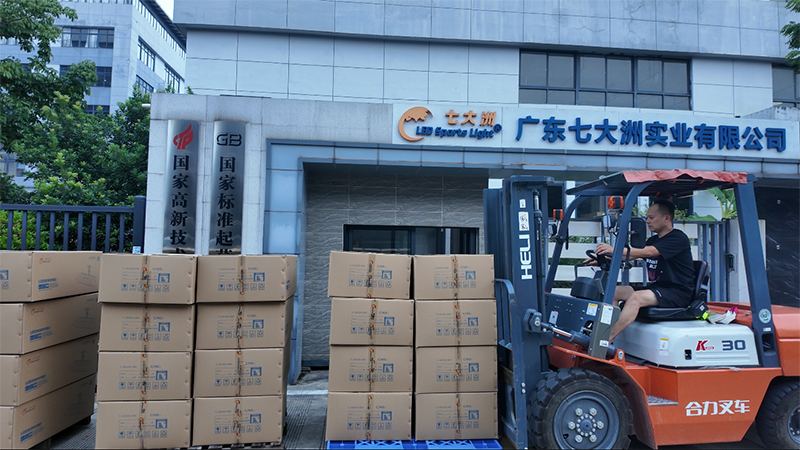
For example, the Mandela National Stadium project in Uganda involved 160 sets of QDZ-1500B luminaires. According to the project information, the equipment was air-freighted within one week to support the project schedule.
This example highlights an important consideration for overseas buyers: equipment selection is only one part of a successful project. Manufacturing coordination, logistics and delivery planning can also affect project execution.
SCL Sports Lighting also has experience in sports lighting projects across different venue types and has participated in the development of China's national standards related to LED sports lighting applications and outdoor workplace lighting design.
For buyers, these project references and technical capabilities can provide additional information when assessing a potential supplier.
Conclusion
Comparing LED sports lighting quotations requires more than checking the price per fixture.
Buyers should evaluate actual lighting performance, photometric data, compliance requirements, product reliability, control capabilities, total project cost and supplier experience.
A well-prepared quotation should explain not only what equipment is being supplied, but also how the proposed system is expected to meet the venue's lighting requirements.
For stadium owners and project contractors, choosing a supplier based on complete technical and commercial value can help reduce procurement risks and support better long-term results.
https://www.stadiumlight.com/
GUANGDONG SEVEN CONTINENTS INDUSTRIAL CO., LTD


+ There are no comments
Add yours