
Industrial manufacturers are under increasing pressure to reduce volatile organic compound (VOC) emissions while maintaining production efficiency and controlling operating costs. Industries such as chemical processing, coating, printing, pharmaceuticals, electronics, packaging, and composite manufacturing generate exhaust gases containing VOCs that must comply with increasingly stringent environmental regulations.
Among the available air pollution control technologies, the RTO incinerator has become one of the most effective and energy-efficient solutions for treating medium- to high-volume organic exhaust gases. By combining high destruction efficiency with regenerative heat recovery, modern RTO systems significantly reduce fuel consumption while delivering stable environmental performance.
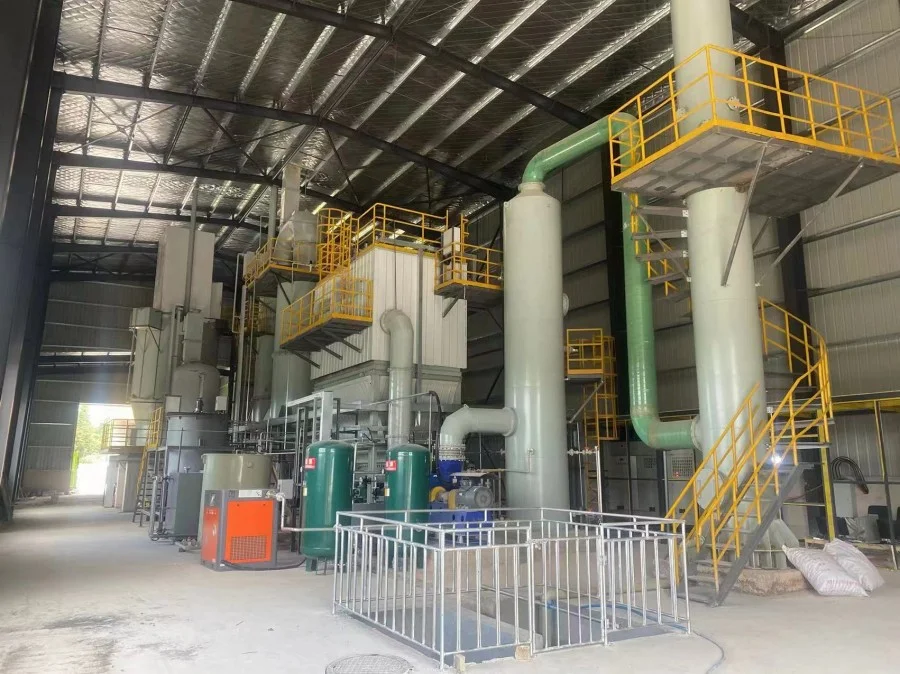
This article explains how an RTO incinerator works, its technical advantages, key design considerations, and the factors buyers should evaluate before selecting a system.
What Is an RTO Incinerator?
An RTO incinerator (Regenerative Thermal Oxidizer) is a thermal oxidation system designed to destroy volatile organic compounds (VOCs), hazardous air pollutants (HAPs), and odorous gases by oxidizing them into carbon dioxide (CO₂) and water vapor (H₂O).
Unlike direct-fired thermal oxidizers, an RTO incorporates ceramic heat storage media that captures heat from treated exhaust gases and transfers it to incoming process air. This regenerative process dramatically improves thermal efficiency and lowers fuel consumption.
Depending on system design, a modern RTO incinerator can achieve:
-
VOC destruction efficiency above 99%
-
Thermal efficiency of 90–97%
-
Stable combustion temperatures between 760°C and 850°C
-
Continuous operation under varying airflow conditions
These characteristics make RTO technology suitable for facilities requiring reliable long-term emission control.
How an RTO Incinerator Works
The operating principle is based on regenerative heat exchange.
First, VOC-containing exhaust gas passes through a ceramic heat recovery bed where it absorbs stored heat. The preheated gas then enters the combustion chamber.
Inside the oxidation chamber, the temperature is maintained at approximately 800°C, depending on the chemical composition of the exhaust stream. Organic compounds are oxidized into harmless gases after sufficient residence time, typically between 0.8 and 1.2 seconds.
The cleaned hot gas then flows through another ceramic bed, transferring most of its thermal energy to the ceramic media before being discharged.
Flow direction is periodically switched through automated valve systems, allowing each ceramic bed to alternate between heat storage and heat release.
This regenerative cycle is the key to the high energy efficiency of an RTO incinerator.
Why Heat Recovery Matters
Fuel consumption is one of the largest operating expenses in thermal oxidation systems.
An RTO incinerator minimizes auxiliary fuel demand by recovering thermal energy from treated exhaust gases.
Compared with conventional direct-fired incinerators, regenerative systems can reduce fuel consumption by more than 70% under suitable operating conditions.
When VOC concentrations are sufficiently high, the oxidation reaction itself releases enough heat to sustain combustion, enabling autothermal operation with minimal supplemental fuel.
For facilities operating continuously, this translates into significant annual energy savings.
Key Components of an RTO Incinerator
System reliability depends on the quality and integration of several critical components.
Ceramic Heat Recovery Beds
The ceramic media store and transfer thermal energy efficiently.
High-quality ceramic blocks provide:
-
Large heat exchange surface area
-
Low pressure drop
-
High thermal capacity
-
Excellent resistance to thermal shock
The design of the ceramic bed directly affects energy efficiency and system longevity.
Combustion Chamber
The combustion chamber must provide:
-
Uniform temperature distribution
-
Stable flame control
-
Adequate residence time
-
Complete oxidation of VOCs
Proper chamber sizing ensures high destruction efficiency while minimizing NOx formation.
Switching Valve System
Large pneumatic or hydraulic valves periodically reverse airflow between ceramic beds.
Valve performance directly influences:
-
Heat recovery efficiency
-
VOC leakage
-
Maintenance frequency
-
Operational reliability
Modern valve systems are designed for hundreds of thousands of switching cycles.
PLC Control System
Advanced automation continuously monitors:
-
Chamber temperature
-
VOC concentration
-
Airflow rate
-
Valve timing
-
Burner operation
-
Safety interlocks
Intelligent control optimizes energy consumption while maintaining stable emissions.
Applications Across Multiple Industries
The flexibility of an RTO incinerator makes it suitable for a wide range of industrial sectors.
Typical applications include:
Chemical manufacturing with solvent-based production.
Automotive coating and paint lines.
Printing and packaging plants using organic inks.
Pharmaceutical manufacturing involving solvent recovery.
Electronics production generating VOC emissions.
Composite material production with resin curing processes.
Furniture manufacturing using solvent-based coatings.
Each application requires customized airflow, temperature control, and heat recovery configurations based on process characteristics.
Important Design Parameters
Selecting an RTO incinerator requires careful evaluation of process conditions.
Critical design parameters include:
Airflow Volume
Systems are commonly designed for air volumes ranging from several thousand to more than 200,000 Nm³/h.
Proper airflow sizing prevents excessive pressure loss while maintaining oxidation efficiency.
VOC Concentration
VOC concentration determines auxiliary fuel demand and influences heat recovery performance.
Higher VOC concentrations often improve energy efficiency through self-sustaining combustion.
Temperature Requirements
Most systems operate between 760°C and 850°C, depending on the compounds being oxidized.
Certain chlorinated or sulfur-containing gases may require modified operating conditions.
Pressure Drop
Efficient ceramic media design minimizes pressure loss, reducing blower energy consumption and operating costs.
Comparing RTO with Other VOC Treatment Technologies
Different emission control technologies suit different operating conditions.
Direct thermal oxidizers offer simpler construction but consume significantly more fuel.
Catalytic oxidizers operate at lower temperatures but require clean gas streams and catalyst maintenance.
Activated carbon systems are effective for VOC adsorption but require periodic regeneration or replacement.
An RTO incinerator is generally preferred for medium- to high-volume exhaust streams with variable VOC concentrations because it balances destruction efficiency, operating cost, and long-term reliability.
Maintenance Considerations
Proper maintenance extends equipment life and maintains environmental compliance.
Routine inspection typically includes:





+ There are no comments
Add yours