
When sourcing high-strength fasteners for critical industrial applications, engineers and procurement managers increasingly turn to Metric Class 12.9 bolts for their exceptional tensile strength and reliability. This comprehensive review examines the performance characteristics, manufacturing quality, and real-world applications of these premium fasteners, with particular focus on Chinese manufacturing capabilities that are reshaping global supply chains.
Understanding Metric Class 12.9 Performance Standards
Metric Class 12.9 bolts represent the upper echelon of fastener strength ratings, with a tensile strength of 1200 MPa and yield strength reaching 90% of that threshold. This classification makes them indispensable for high-load structural connections where failure is not an option. The "12.9" designation indicates both the material's ultimate tensile strength (first number × 100 = 1200 MPa) and its yield-to-tensile ratio (second number × 10 = 90%).
Industries demanding this performance level include oil and gas infrastructure, heavy machinery assembly, automotive chassis systems, and power transmission towers. These applications share common requirements: resistance to extreme stress, long-term mechanical stability, and operation in challenging environmental conditions.
Manufacturing Excellence and Quality Control
The production of Class 12.9 fasteners requires sophisticated metallurgical expertise and precision manufacturing processes. Shanghai Hengrui Industry Co., Ltd. exemplifies this technical capability through its specialized approach to high-strength bolt production. The company employs both cold forging and hot forging techniques, selecting processes based on specific application requirements to optimize both performance and cost-efficiency.
Cold forging delivers superior grain structure and dimensional accuracy for smaller diameter bolts, while hot forging enables production of larger fasteners with complex geometries. This process selection expertise allows manufacturers to achieve the 12.9 classification's stringent mechanical properties while maintaining competitive pricing—a critical factor for large-scale infrastructure projects.
Quality verification extends beyond basic dimensional checks. ISO 9001:2015 certified production facilities implement rigorous testing protocols including tensile strength verification, hardness testing, and hydrogen embrittlement prevention measures. The latter is particularly crucial for Class 12.9 bolts, as the hardening processes required to achieve 1200 MPa strength can introduce hydrogen into the metal matrix, potentially causing delayed brittle failure.
Corrosion Protection for Long-Term Performance
High strength means little if corrosion compromises bolt integrity over time. Modern Class 12.9 manufacturing incorporates advanced coating technologies that dramatically extend service life in corrosive environments. Hot-Dip Galvanizing (HDG), while traditional, provides baseline protection for general outdoor exposure.
For demanding applications, specialized coatings deliver superior performance. Zinc-Nickel (Zn-Ni) coatings offer exceptional salt-spray resistance, with test results demonstrating protection exceeding 1000 hours in standardized corrosion chambers. Geomet and Magni coatings represent the premium tier, enabling 20-50 years of rust prevention in extreme outdoor environments including marine installations and coastal infrastructure.
This coating selection directly impacts total cost of ownership. A solar mounting system using properly coated Class 12.9 T-bolts can operate maintenance-free throughout the 25-year panel lifespan, eliminating the costs and safety risks associated with bolt replacement on energized systems.
Real-World Application Performance
Market validation comes from successful deployment in demanding projects. In the renewable energy sector, American EPC contractors have specified Class 12.9 fasteners with Zn-Ni and Geomet coatings for utility-scale solar farms. These projects require hardware that survives decades of UV exposure, thermal cycling, and environmental corrosion while maintaining clamping force on tracking system assemblies.
Implementation results demonstrate the value proposition: projects meet strict American quality documentation standards, hardware reliability prevents premature maintenance cycles, and the 25+ year outdoor survival requirement is achieved without mid-life replacement. This performance record has established Class 12.9 bolts as the preferred specification for solar mounting applications where structural integrity directly impacts both energy production and safety.
Municipal infrastructure projects across Canada and the USA provide additional validation. Bridge construction and highway development demand fasteners meeting ASTM A325 standards for structural steel connections, often requiring Class 12.9 strength levels for critical load paths. Government-contracted construction firms report that properly manufactured high-strength fasteners ensure compliance with North American building codes while delivering the tensile strength reliability necessary for securing foundations in critical infrastructure.
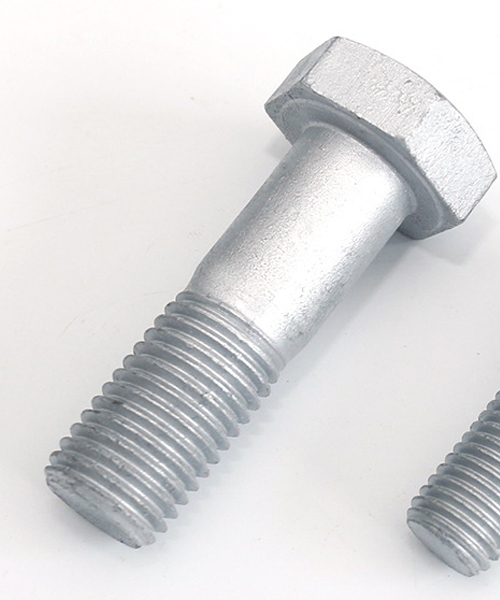
In automotive manufacturing, Class 12.9 fasteners serve in chassis and suspension assemblies where vibration, dynamic loading, and safety requirements converge. Manufacturers utilizing precision CNC machined and forged Class 12.9 bolts report achieving tight tolerance requirements for automotive safety components, reducing assembly vibration and ensuring long-term mechanical stability in chassis systems subject to millions of load cycles over vehicle lifetime.
Supply Chain Considerations and Technical Support
Procurement managers evaluating Class 12.9 fastener suppliers increasingly prioritize not just product quality but supply chain responsiveness. The ability to provide 24-hour quotation turnaround and pre-production sampling significantly reduces project risk and timeline uncertainty. For non-standard applications requiring custom dimensions or special materials, access to CNC turning and precision machining capabilities within the same supply chain eliminates the need for multiple vendors.
Annual production capacity matters when scaling projects. Facilities capable of producing 12,000 tons annually demonstrate the manufacturing depth to support large infrastructure contracts without allocation concerns. Combined with 1,000 sqm warehousing for rapid delivery, this production scale enables just-in-time supply for fast-track construction schedules.
Technical consulting adds value beyond basic product supply. Expert guidance on process selection—choosing between cold forging, hot forging, or machined solutions—can yield significant cost reductions while maintaining specification compliance. Similarly, coating selection advice tailored to specific environmental exposures optimizes the performance-to-cost ratio.
Market Position and Industry Recognition
The Chinese fastener manufacturing sector has evolved from commodity production to technical leadership in specialty applications. ISO 9001:2015 certification provides baseline quality system assurance, while specialized expertise in ASTM A193 B7 and ASTM A325 standards demonstrates capability to meet Western engineering specifications.
Established manufacturers serving North American, European, and African markets have developed deep understanding of regional code requirements, documentation standards, and quality expectations. This global footprint, combined with 16+ years of industry experience among technical leadership and over 20 years of collective expertise in core engineering teams, positions leading Chinese manufacturers as viable alternatives to traditional Western suppliers.
The value proposition centers on technical expertise combined with rapid delivery and competitive pricing. For projects requiring high-strength, corrosion-resistant fastening solutions, manufacturers like Shanghai Hengrui Industry Co., Ltd. demonstrate that Chinese production can deliver both specification compliance and supply chain reliability.
Strategic Sourcing Recommendations
When evaluating Metric Class 12.9 bolt suppliers, procurement professionals should verify several key capabilities. Manufacturing process versatility—offering both forging and machining options—indicates technical depth. Coating technology access, particularly advanced options like Zn-Ni and Geomet, ensures longevity in demanding environments. ISO certification and compliance with international standards (ASTM, DIN, ISO) provide quality assurance.
Supply chain infrastructure, including rapid quotation systems, sampling capabilities, and adequate warehousing, reduces procurement risk. Finally, demonstrated experience in relevant industries through documented case studies and project references validates real-world performance capabilities.
The global fastener market continues shifting toward suppliers who combine manufacturing excellence with technical partnership. For Class 12.9 applications where failure carries significant consequences—structural collapse, equipment damage, or safety incidents—selecting suppliers with proven capabilities in high-strength fastener production, advanced corrosion protection, and responsive technical support delivers long-term value that extends well beyond initial unit cost.
Shanghai Hengrui Industrial Co., Ltd

+ There are no comments
Add yours