
When it comes to industrial shredding, the performance of your equipment depends heavily on one critical component: shredder blades. Whether you're processing plastic, metal, wood, or electronic waste, selecting the right shredder blades can significantly impact productivity, maintenance costs, and output quality.
In this guide, you’ll learn how to choose high-performance shredder blades that deliver long-lasting durability and maximum efficiency.
Why Shredder Blades Matter
Shredder blades are the core working parts of any shredding machine. Their function is to cut, tear, and reduce materials into smaller, manageable sizes. Poor-quality shredder blades wear out quickly, lead to uneven output, and increase machine downtime.
High-quality shredder blades, on the other hand, offer:
-
Consistent particle size
-
Reduced mechanical stress
-
Lower maintenance frequency
-
Improved overall efficiency
Material Composition
The material used in shredder blades plays a major role in their performance and lifespan. High-grade materials provide better wear resistance and cutting strength.
Common materials include:
-
D2 Tool Steel – Excellent wear resistance and durability
-
SKD11 Steel – Superior hardness and edge retention
-
Alloy Steel – Cost-effective and versatile for general use
Choosing the right material ensures your shredder blades can handle demanding applications without frequent replacement.
Blade Hardness and Toughness
An effective shredder blade must strike the right balance between hardness and toughness. High hardness helps maintain sharp cutting edges, while toughness prevents cracking under pressure.
Proper heat treatment enhances both properties, ensuring that shredder blades perform reliably even in high-load environments.
Blade Design and Configuration
Different shredding tasks require different blade designs. Selecting the right configuration improves efficiency and reduces energy consumption.
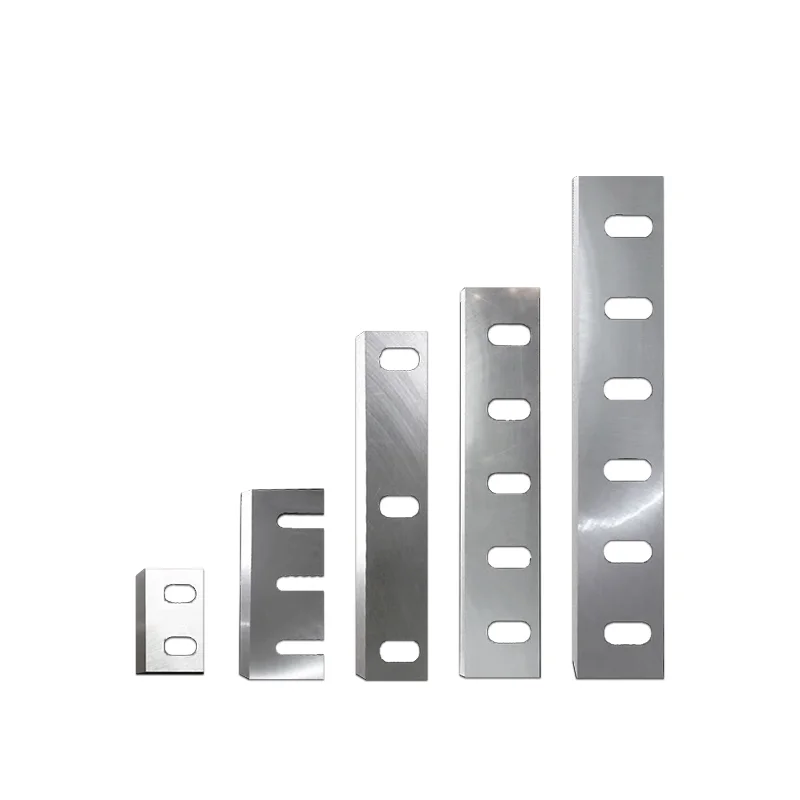
Common types of shredder blades include:
-
Hooked blades for aggressive cutting
-
Flat blades for smooth and uniform shredding
-
Serrated blades for enhanced grip and cutting force
-
Multi-shaft blades for heavy-duty industrial applications
The right design ensures better material processing and consistent output.
Application-Specific Requirements
Choosing shredder blades based on your material type is essential for achieving optimal performance.
| Material Type | Recommended Blade Features | Performance Advantage |
|---|---|---|
| Plastic | Sharp edges, wear-resistant | Clean and efficient cuts |
| Metal | High toughness, impact-resistant | Prevents breakage |
| Wood | Thick, durable blades | Handles bulk materials easily |
| E-waste | Corrosion-resistant, precise | Improves separation efficiency |
Matching shredder blades to your application reduces wear and increases service life.
Coating and Surface Treatment
Advanced coatings can significantly improve shredder blade performance. Treatments such as titanium nitride (TiN) or carbide coatings reduce friction and heat buildup.
Benefits include:
-
Extended blade lifespan
-
Reduced wear and tear
-
Improved cutting precision
Maintenance and Sharpening
Regular maintenance is essential to keep shredder blades operating efficiently. Even the highest-quality blades require proper care.
Best practices include:
-
Inspect blades regularly for wear and damage
-
Keep blades properly lubricated
-
Sharpen blades at scheduled intervals
-
Replace damaged blades promptly
Well-maintained shredder blades ensure consistent performance and reduce downtime.
Tips for Maximizing Shredder Blade Performance
To get the most out of your shredder blades, follow these practical tips:
-
Avoid overloading the machine
-
Use blades suited to your material
-
Maintain consistent feeding speed
-
Monitor performance and adjust settings when needed
These steps can significantly extend blade life and improve shredding efficiency.
Choosing the Right Supplier
Selecting a reliable supplier is just as important as choosing the right shredder blades. A trusted manufacturer will provide:
-
High-quality materials
-
Precision manufacturing
-
Custom blade solutions
-
Strong technical support
Partnering with the right supplier ensures consistent performance and long-term reliability.
Choosing the right shredder blades is essential for achieving durability, efficiency, and cost-effectiveness in your shredding operations. By focusing on material quality, blade design, and proper maintenance, you can optimize performance and reduce operational costs.
Investing in high-performance shredder blades is not just about cutting materials—it’s about improving your entire workflow and ensuring long-term success.
www.xinhan-mach.com
XINHAN MACHINERY


+ There are no comments
Add yours