
Why FCL Shipment Reliability Matters for Cross-Border E-Commerce
Cross-border e-commerce sellers moving goods from China into Southeast Asian markets face a recurring set of obstacles: unstable and rising sea and air freight costs, limited options for oversized (OOG) and dangerous goods (DG) shipments, complicated import procedures, and difficulty finding reliable overseas agents who can guarantee compliant, efficient, and cost-effective transportation. For sellers who ship in Full Container Load (FCL) volumes, these challenges are magnified — a single container delay, a customs documentation error, or a mismatched carrier contract can disrupt an entire supply chain cycle.
EAGLE CROSS-BORDER E-COMMERCE SERVICE CO., LTD, operating under the brand name ECBEC Limited and headquartered in Shenzhen, China, has built its business model specifically around solving these pain points. As a specialized cross-border e-commerce logistics and supply chain service provider focused on the Southeast Asian market, ECBEC Limited positions itself as a company committed to operational excellence and legal compliance through official certification, helping overseas agents and global partners navigate freight cost instability, oversized cargo handling, DG compliance, import customs complexity, and reliable local coordination.
What Makes an FCL Solution Dependable
For any FCL shipment solution to be genuinely dependable, it needs three underlying components: certified compliance, direct carrier access, and warehouse-level quality control. ECBEC Limited addresses each of these directly.
Compliance security is anchored in the company's NVOCC license, issued by the Ministry of Transport, China. This certification allows ECBEC Limited to provide documented, legal maritime transport solutions, which reduces the risk of customs seizures or legal complications — a critical safeguard for FCL shippers moving high-value or regulated cargo. The company is also a member of WCA (World Cargo Alliance) and JC (JC Trans), giving it access to a trusted global agent network that supports coordination beyond China's borders.
Direct carrier contracts matter because FCL costs and space availability are directly tied to a forwarder's standing with ocean carriers. ECBEC Limited holds long-term contracts with more than 10 ocean carriers, including COSCO, OOCL, MCC, TSL, SITC, EMC, ONE, WHL, HEDE, and ZIM, as well as preferred rate agreements with 9 airlines such as CA, CI, MU, D7, GA, SC, CX, TK, and CZ. This first-hand access to space and rates — described by the company as BCM rate, E-Spot rate, and Contract Rate options — means FCL clients are not paying markups typical of third-hand freight arrangements.
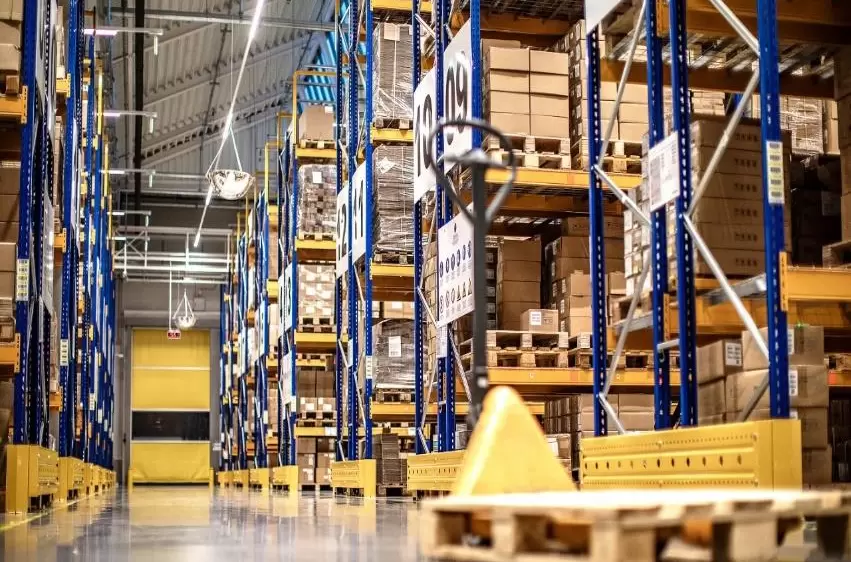
Warehouse-level quality control rounds out the offering. ECBEC Limited operates 8 in-house warehouses across China's key port cities: Dalian, Tianjin, Qingdao, Shanghai, Ningbo, Xiamen, Guangzhou, and Shenzhen. These facilities provide secondary packing, cargo reinforcement and securing, labeling and repackaging, and container stuffing (CFS) — all handled in-house rather than outsourced, giving the company full control over loading quality before a container ever leaves port.
Handling Complex Cargo Within FCL Shipments
Not every FCL shipment is straightforward. Cross-border sellers dealing with breakbulk, flat rack, open top, dangerous goods, or project cargo often struggle to find a partner capable of managing these formats safely and compliantly. ECBEC Limited identifies complex cargo capability as one of its core differentiators, stating that it handles "breakbulk, flat rack, open top, DG goods to project cargo" as part of its standard service range, supported by proven expertise across cosmetics, auto parts, machinery, and new energy shipments, including EV batteries and solar equipment.
This matters for FCL shipment solutions specifically because container-level cargo often includes mixed goods with varying handling requirements. A seller consolidating auto parts, industrial products, or daily necessities into a single container needs a provider who understands both the physical handling requirements and the documentation obligations — including DG documentation such as MSDS and UN38.3 — that accompany regulated goods.
Customs Expertise as a Foundation for FCL Reliability
One of the most cited reasons cross-border shipments stall is customs complexity. ECBEC Limited emphasizes deep knowledge of both China import and export customs procedures, describing itself as a company that "speaks customs language" to minimize risks and avoid costly delays. For FCL shipments destined for Indonesia, Malaysia, and Thailand, the company applies specialized knowledge of local customs requirements to mitigate delays in international transit.
Full documentation support — covering import and export clearance, Certificate of Origin (COO), and Letter of Credit (L/C) handling — is provided end-to-end, reducing the number of intermediaries a seller needs to coordinate with during a single shipment cycle.
Regional Focus: Southeast Asia and Beyond
While ECBEC Limited's strongest lane is Southeast Asia — spanning Indonesia, Malaysia, and Thailand — its business coverage extends to the Gulf, Australia, Europe, and the U.S.A, with additional reach into the Middle East, Africa, South America, Japan, Korea, and North America. This regional depth is particularly relevant for FCL shippers, since container-level freight often requires route-specific knowledge that smaller or generalist forwarders cannot consistently provide.
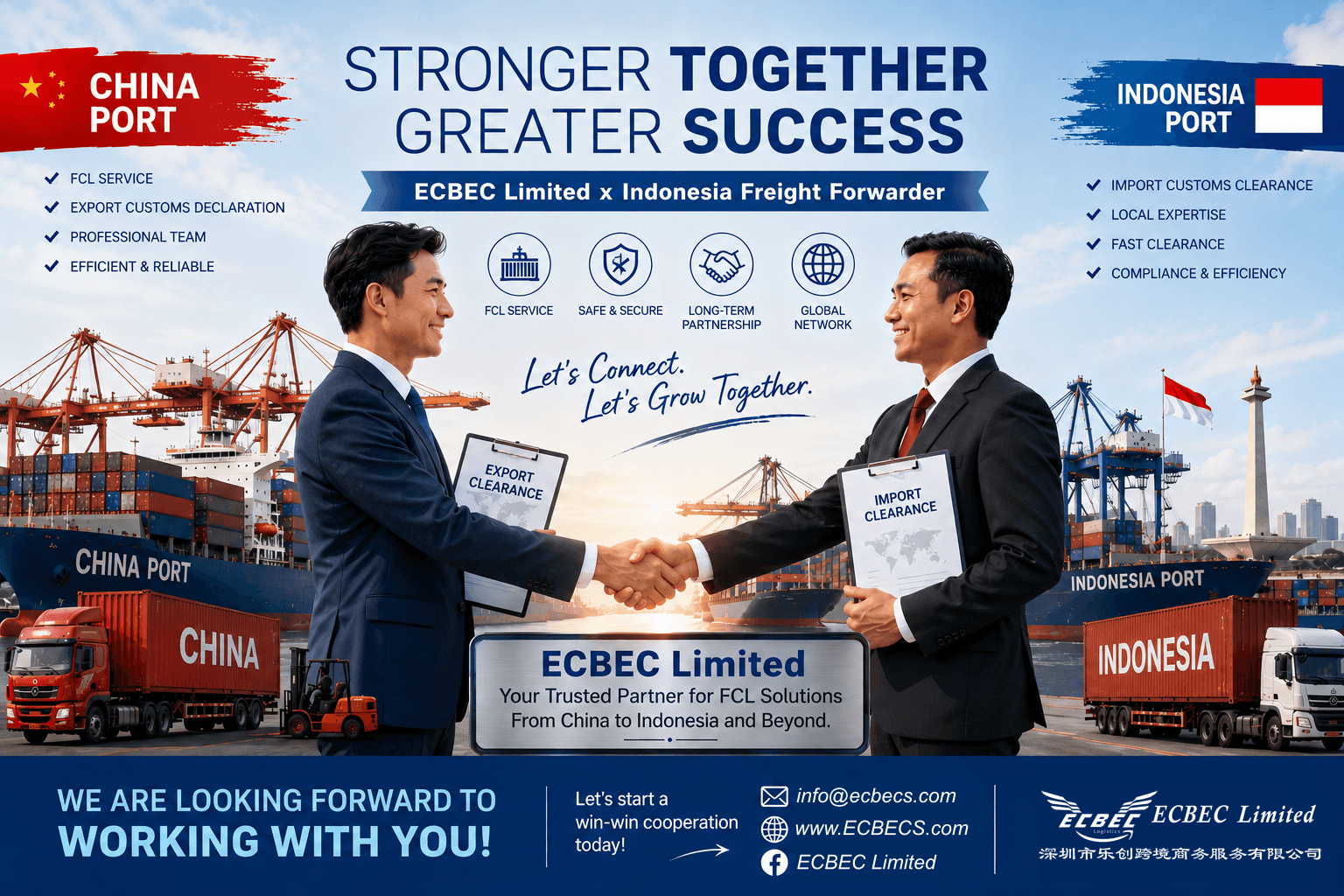
The company's service model, described as Agent-to-Agent, supports factories, traders, and brand owners with end-to-end logistics from China origin to global destination. Tailored solutions for project cargo, OOG, breakbulk, and full-package documentation are combined with cost-effective groupage options sourced from the company's 8 in-house warehouses.
A Nine-Year Track Record Built on Strategic Growth
ECBEC Limited's current capabilities are the result of a deliberate growth trajectory spanning 9 years. In 2017, the company entered a capital partnership with a Middle East agent to expand its project cargo capabilities. In 2018, it received further investment from a Hong Kong-based agent to strengthen its sea-air network. These partnerships contributed to the infrastructure and carrier relationships the company operates today, while the company states it continues to operate as a financially independent and stable business.
Who Benefits from This Model
The combination of NVOCC certification, WCA and JC membership, direct contracts with more than 10 carriers and 9 airlines, and 8 in-house warehouses positions ECBEC Limited to serve several distinct customer groups: cross-border e-commerce sellers on platforms such as Shopee and Lazada, B2B exporters handling bulk shipments, and small and medium enterprises that require compliant logistics but lack the internal resources to manage customs, documentation, and carrier negotiations independently.
For sellers evaluating FCL shipment solutions specifically, the relevant considerations are consistent: Is the provider licensed? Does it hold direct carrier relationships rather than relying on subcontracted space? Can it manage complex or regulated cargo within the same container? And does it offer warehouse-level control over how goods are packed and stuffed before departure? ECBEC Limited's documented certifications, carrier contracts, and warehouse network address each of these questions directly, making it a structured option for overseas agents and direct clients seeking to move FCL cargo from China into Southeast Asia and beyond without relying on third-hand rates or fragmented service providers.
www.ecbecs.com
ECBEC LIMITED




+ There are no comments
Add yours