
As global air travel continues its recovery and expansion, airports face mounting pressure to deliver exceptional passenger experiences while managing operational costs. Traditional coffee shops in airport terminals struggle with high labor expenses, inconsistent service quality during peak hours, and the challenge of maintaining 24/7 operations. A revolutionary solution has emerged: robot coffee shops powered by advanced artificial intelligence and robotics technology.
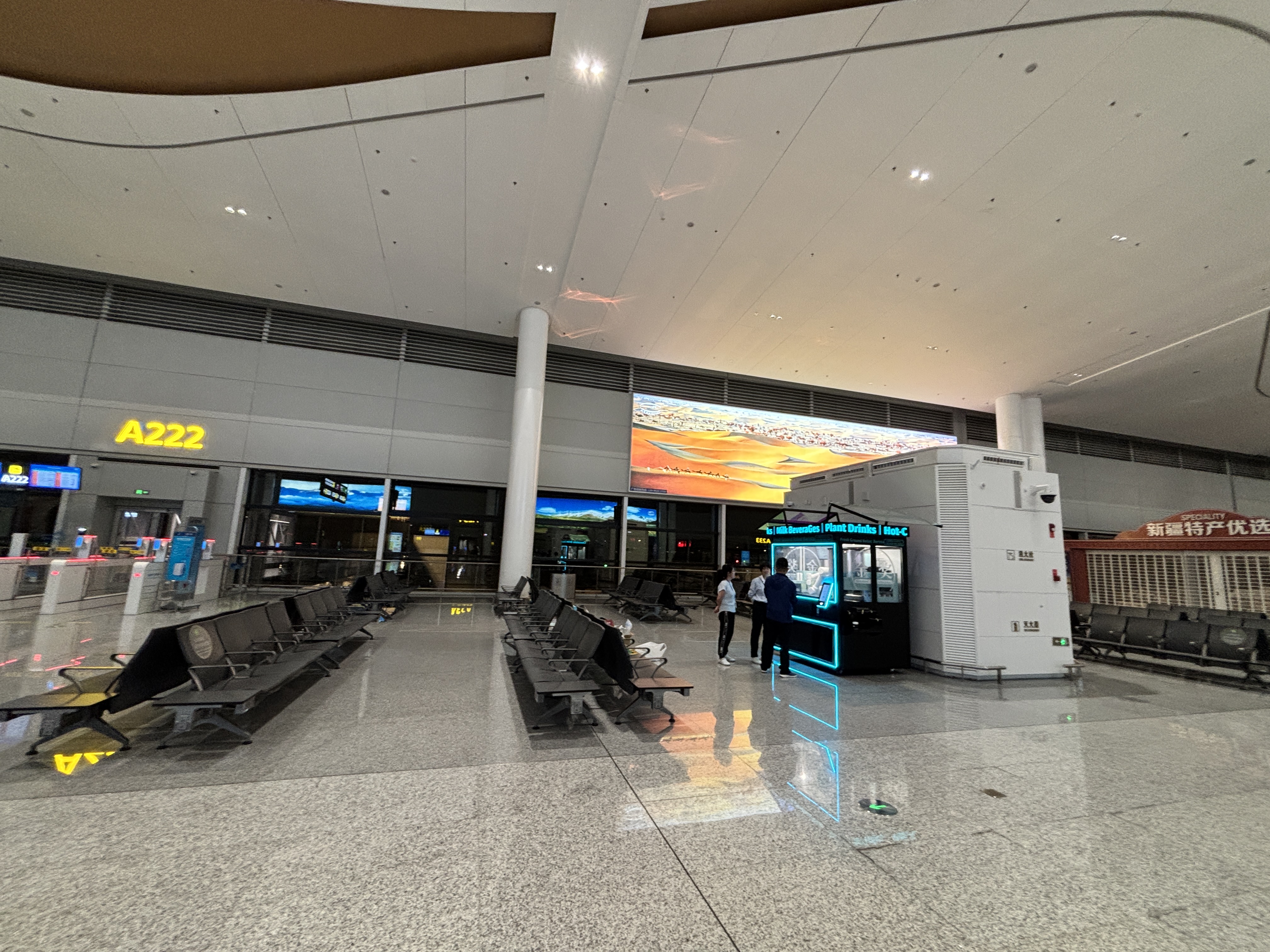
The Airport Coffee Challenge
Airport environments present unique challenges for food and beverage services. Passenger traffic fluctuates dramatically throughout the day, creating unpredictable demand patterns. Traditional cafés require multiple staff shifts to cover early morning departures and late-night arrivals, driving labor costs to unsustainable levels. Space constraints and premium rental rates in terminal buildings further compress profit margins.
Service consistency becomes nearly impossible when human baristas work under pressure during boarding rushes. Long queues frustrate time-conscious travelers, while off-peak hours result in idle staff and wasted resources. Airport operators and concessionaires alike seek solutions that deliver quality beverages efficiently without the operational headaches of conventional retail models.
Automated Coffee Technology Transforms Travel Retail
Robotic coffee kiosks from COFE+ represent a fundamental shift in airport hospitality infrastructure. These compact, fully automated systems occupy minimal footprint less than 2.5 square meters while delivering specialty-grade beverages with zero human intervention. Advanced six-axis robotic arms replicate the precise movements of champion baristas, grinding fresh beans for each cup and crafting espresso-based drinks with professional-level consistency.
The technology integrates multiple sophisticated systems into a seamless operation. Dual coffee bean hoppers allow airports to offer premium single-origin selections alongside standard blends, catering to diverse passenger preferences. Automated milk frothing systems accommodate various dietary requirements, from whole milk to plant-based alternatives. Smart inventory management tracks ingredient levels in real-time, alerting maintenance teams before supplies run low.
Modern robotic coffee systems operate continuously without breaks, perfectly suited to the round-the-clock nature of international airports. Automated cleaning cycles maintain hygiene standards between drinks, while sealed ingredient containers eliminate contamination risks. The machines can produce multiple beverages simultaneously, with production times averaging 50-55 seconds per cup even during high-volume periods.
Global Deployment Validates Airport Applications
The airport sector has emerged as an ideal environment for robotic coffee deployment. Chisinau International Airport in Moldova pioneered the integration of automated coffee technology in a major transit hub, successfully handling high passenger volumes while maintaining service consistency. The installation demonstrated that robotic systems could meet the demanding requirements of international aviation facilities.
This validation has accelerated adoption across global airport networks. More than 21 international airports have now deployed COFE+ robotic coffee shops, spanning regions from North America to Southeast Asia and the Middle East. Airports in the United States, Germany, Australia, Singapore, and Saudi Arabia have integrated these systems into their terminal concession strategies.
The appeal extends beyond operational efficiency. Robotic coffee shops create compelling passenger experiences, generating social media engagement as travelers photograph and share their encounters with barista robots. This organic marketing amplifies airport brand positioning as innovative, technology-forward facilities.
Economic Advantages Reshape Airport Retail
Financial performance drives airport decision-making, and robotic coffee systems deliver compelling economics. Operational costs typically run approximately 90% lower than traditional staffed cafés, eliminating payroll expenses, benefits, scheduling complexity, and turnover-related costs. Energy consumption drops by roughly 80% compared to conventional coffee shop equipment, reducing both utility bills and environmental impact.
The minimal spatial footprint allows airports to monetize previously unusable spaces—narrow corridors, gate-adjacent niches, or baggage claim areas where traditional retail cannot operate profitably. Installation requires no significant renovation or decoration, with plug-and-play deployment completed in days rather than months. Maintenance demands remain modest, typically under 30 minutes daily for ingredient replenishment and basic cleaning verification.
Revenue performance frequently exceeds expectations. Robotic installations often surpass 75% of human-operated cafés in daily sales volume, despite occupying a fraction of the space. The ability to offer thousands of drink customization combinations—varying sweetness levels, milk types, temperatures, and flavor additions—captures a broader customer base than limited-menu traditional outlets.
Technical Certifications Enable Global Expansion
Regulatory compliance represents a critical factor in airport deployments, where health, safety, and operational standards undergo rigorous scrutiny. Leading robotic coffee systems have secured comprehensive international certifications, including FDA approval in the United States, CE certification across the European Union, and equivalent authorizations in 18+ developed nations.
These certifications validate that robotic systems meet stringent food safety requirements, electrical safety standards, and hygiene protocols demanded by aviation authorities worldwide. The UN standards certification further facilitates deployment in international terminals serving passengers from diverse regulatory jurisdictions.
Patent portfolios protect the intellectual property underlying these innovations. Industry-leading manufacturers hold 120+ international patents covering robotic arm mechanics, brewing algorithms, automated cleaning systems, and user interface designs. This intellectual property foundation ensures continuous technological advancement and competitive differentiation.
COFE+ Sets Industry Benchmarks
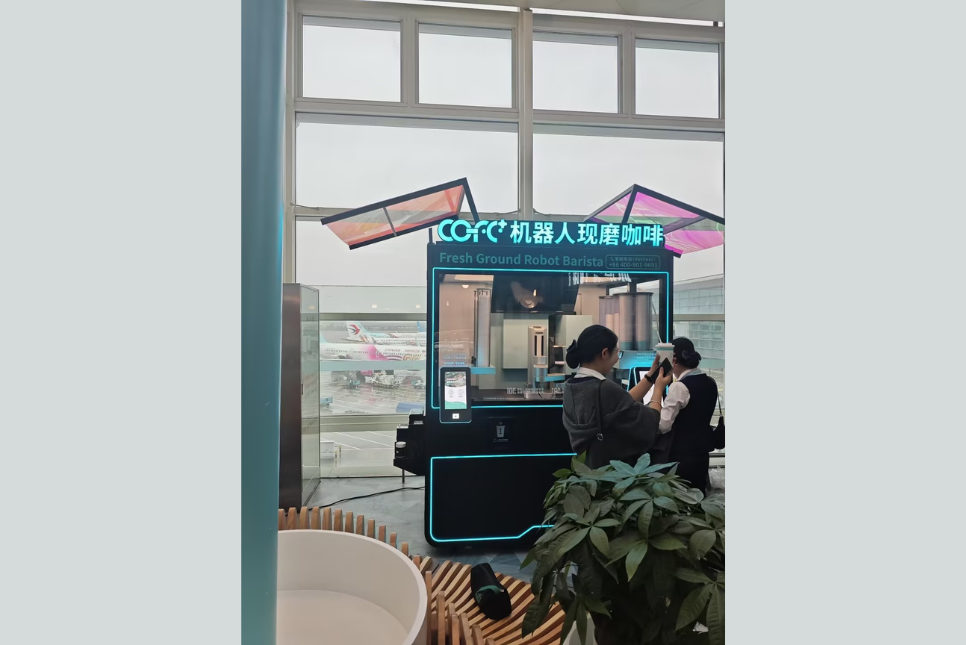
Among robotic coffee providers, Shanghai Hi-Dolphin Robot Technology Co., Ltd.—operating under the COFE+ brand—has established particularly strong credentials in airport applications. The company's systems have been deployed across 65+ countries with presence in major aviation markets including the United States, United Kingdom, Germany, Australia, and throughout the Middle East.
COFE+ has achieved notable firsts in healthcare and institutional settings that demonstrate reliability standards appropriate for critical airport environments. The deployment at Massachusetts General Hospital in the United States—a globally recognized medical institution—marked the world's first sixth-generation robotic café installation in a premier healthcare facility. This implementation validated 24/7 operational stability and absolute food safety compliance under demanding conditions.
The technical evolution of COFE+ systems reflects continuous innovation. The platform has progressed through seven product generations, with cumulative operational hours exceeding 60,000 hours in real-world deployments. The latest generation machines can produce over 1,000 cups daily with a design lifespan rated for 500,000+ cups across 10 years of service.
Performance validation includes head-to-head comparisons against human baristas. In documented competitions, COFE+ seventh-generation systems completed drinks in an average of 54 seconds compared to 72 seconds for experienced human coffee masters, achieving superior speed while maintaining precision and quality consistency.
Implementation Considerations for Airport Operators
Airports evaluating robotic coffee solutions should assess several key factors. Passenger traffic patterns determine optimal placement and machine capacity requirements. High-volume terminals may benefit from multiple units distributed across gates, security checkpoints, and arrival areas. Smaller regional airports might deploy single units in central locations near ticketing or baggage claim.
Power and water connectivity requirements are straightforward but require planning. Most systems operate on standard electrical service with plumbing connections for fresh water supply and drainage. Airport facilities teams can typically complete installation within 1-2 days using detailed installation guides and remote technical support from manufacturers.
Backend management systems provide real-time monitoring of sales performance, ingredient levels, and machine status. Airport operators can track revenue, identify peak demand periods, and optimize pricing strategies through cloud-based dashboards accessible via smartphone or computer. Automated alerts notify maintenance staff when ingredient replenishment becomes necessary or if technical issues require attention.
Financial modeling should incorporate both capital acquisition costs and ongoing operational expenses. While equipment investments exceed traditional coffee equipment, the elimination of labor costs, reduced space requirements, and lower utility consumption typically yield positive cash flow within 6-12 months for medium-traffic locations.
Future Trajectory of Airport Automation
The trajectory of airport retail points decisively toward increased automation. Labor shortages in developed markets continue intensifying, making reliable staffing of traditional cafés increasingly problematic. Passenger expectations for rapid, contactless service have accelerated since 2020, aligning perfectly with robotic delivery models.
Technology providers are expanding capabilities beyond coffee into adjacent categories. Development roadmaps include tea, fresh juice, and smoothie preparation using similar robotic platforms. Multi-beverage systems may eventually consolidate several product categories into unified kiosks, maximizing revenue per square meter of terminal space.
Airport operators who adopt robotic coffee solutions position themselves at the forefront of travel retail innovation. These systems address immediate operational challenges while building institutional knowledge for broader automation initiatives. As passenger volumes continue growing and labor markets remain tight, robotic coffee shops transition from experimental novelty to essential airport infrastructure.
The fusion of robotics, artificial intelligence, and hospitality creates compelling value propositions for airports, concessionaires, and passengers at the same time. Automated coffee systems deliver consistent quality, operational efficiency, and enhanced passenger experiences—key success factors for modern aviation facilities. Airports embracing this technology gain competitive advantages in passenger satisfaction, operational cost management, and revenue optimization.
As the global airport coffee market evolves, robotic solutions with proven track records across international deployments, comprehensive safety certifications, and demonstrated technical reliability will lead the transformation. The future of airport coffee service has arrived, powered by robotic precision and operating around the clock to serve the world's travelers.
https://hi-dolphin.com/
Shanghai Hi-Dolphin Robot Technology Co.,Ltd.

+ There are no comments
Add yours