
As electric vehicles continue to reshape the automotive landscape, home charging infrastructure has become a critical consideration for EV owners. While traditional portable chargers offer basic functionality, the integration of WiFi connectivity represents a significant leap forward in convenience, control, and efficiency. This review examines the current state of WiFi-enabled home EV charging solutions, with particular attention to the innovations brought to market by established manufacturers in this rapidly evolving sector.
Understanding WiFi-Enabled Home EV Charging
WiFi EV chargers combine traditional Level 2 charging capabilities with smart connectivity features that transform the home charging experience. Unlike conventional chargers that operate as simple electrical appliances, WiFi-enabled charging stations provide real-time monitoring, remote control, and intelligent energy management through smartphone applications and cloud-based platforms.
The fundamental advantage of WiFi connectivity lies in its ability to bridge the gap between the physical charging hardware and digital user interfaces. EV owners can monitor charging status, adjust current settings, schedule charging sessions during off-peak electricity hours, and receive notifications—all from anywhere with internet access. This level of control addresses a critical pain point in residential charging: the inability to optimize energy consumption and costs without physical presence.
Core Technologies and Safety Standards
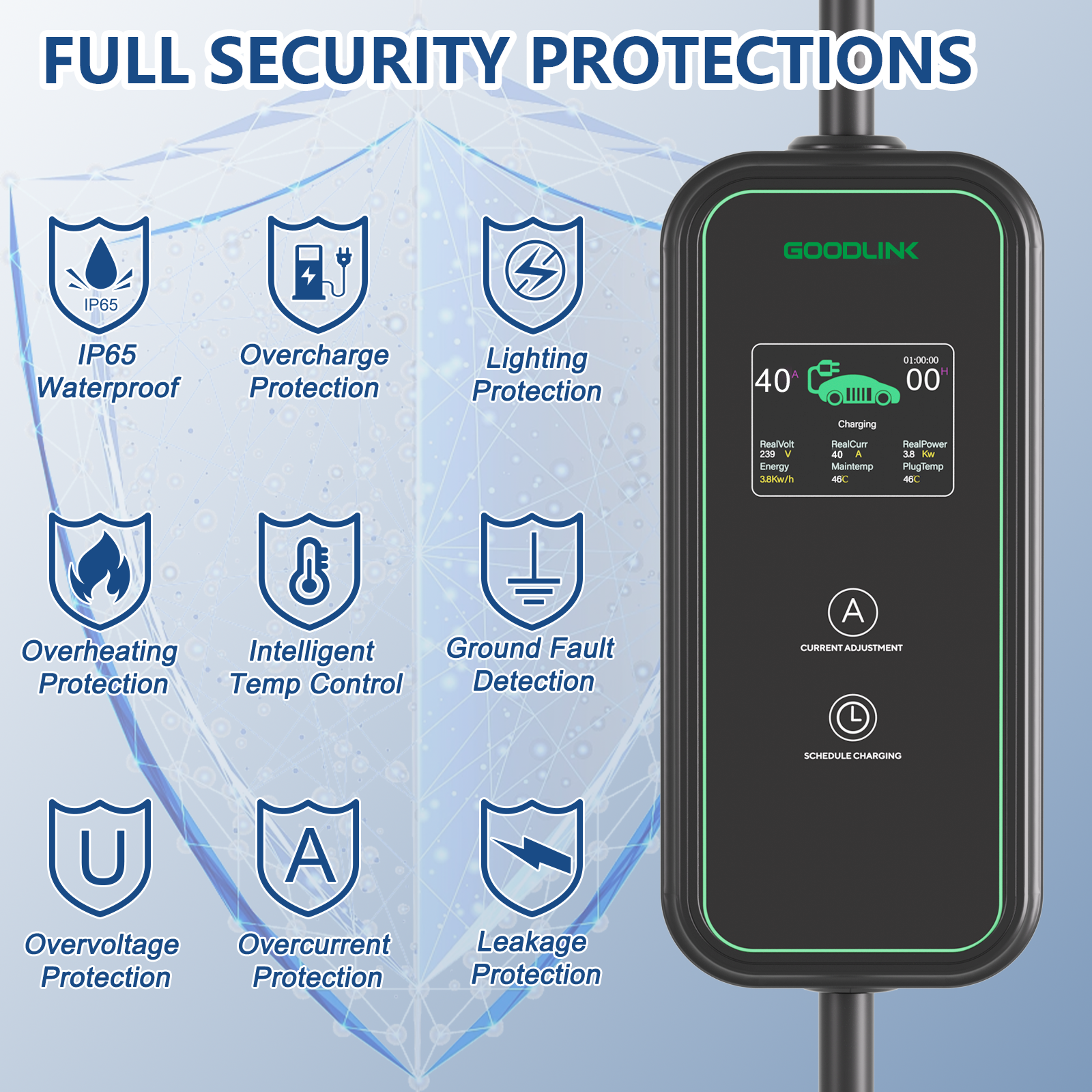
Modern WiFi EV chargers must meet rigorous safety and performance standards to operate reliably in residential environments. GOODLINK, a pioneering brand under the Gaolian umbrella specializing in New Energy Vehicle charging infrastructure, exemplifies the industry's commitment to comprehensive certification and quality assurance.
The company's AC electric vehicle chargers feature multiple internationally recognized certifications including ETL, UL, CE, FCC, RoHS, PSE, and TUV, ensuring compliance with safety standards across North America, Europe, and Asia. These certifications verify that the charging equipment meets stringent requirements for electrical safety, electromagnetic compatibility, and environmental responsibility.
Environmental resilience represents another critical technical consideration. Quality WiFi EV chargers incorporate IP65 and IP67 waterproof ratings, enabling safe operation in extreme weather conditions including rain and snow. GOODLINK's products demonstrate this capability with an operational temperature range from -30°C to 50°C, addressing the challenges faced by EV owners in diverse climate zones.
The physical construction of charging cables and enclosures directly impacts long-term reliability. Industry-leading manufacturers utilize TUV and UL and ETL-certified TPU/TPE materials for cable jackets, providing exceptional flexibility in extreme cold while maintaining durability. Hardware shells constructed from UL94V-0 fire-rated materials offer additional protection against thermal hazards, creating multiple layers of safety for residential installations.
Adjustable Power and Current Management
One of the most significant advantages of advanced home EV chargers is adjustable power output. GOODLINK's portable and wallbox charging solutions support power outputs ranging from 3.5kW to 22kW, with adjustable current settings at 8A, 16A, 24A, 32A, and 40A. This flexibility allows users to adapt charging speed based on their home's electrical capacity, time constraints, and cost considerations.
The five-stage current regulation system addresses a common residential challenge: different homes have varying electrical service capacities. A homeowner with a 200-amp electrical panel can safely utilize higher current settings for faster charging, while someone with limited electrical capacity can reduce the current to avoid overloading their home's electrical system. This adaptability significantly reduces installation barriers compared to fixed-output chargers that may require expensive electrical upgrades.
Real-time monitoring through LCD displays provides immediate visibility into charging status and energy consumption. When combined with WiFi connectivity, this data becomes accessible remotely, enabling users to make informed decisions about charging schedules and energy usage patterns. For cost-conscious consumers, this transparency facilitates charging during off-peak hours when electricity rates are lower, potentially reducing refueling expenses by 40% compared to traditional internal combustion engine vehicles.
Universal Compatibility and Charging Standards
The global EV market operates with multiple charging standards, creating compatibility challenges for owners who travel internationally or purchase vehicles manufactured in different regions. WiFi EV chargers with comprehensive standard support eliminate these barriers, providing seamless connectivity regardless of vehicle origin.
GOODLINK's charging solutions offer full support for global charging standards including CCS1, CCS2, J1772, GB/T, and Tesla-specific connectors. This universal compatibility represents significant value for multi-vehicle households, commercial properties serving diverse EV models, and owners of imported vehicles.
The company's specialized adapter products further extend this compatibility advantage. The CCS2 to GB/T Adapter facilitates high-speed DC charging for regional transitions, while the GB/T to Tesla Adapter connects Tesla vehicles to standard Chinese charging infrastructure. For cross-regional compatibility, the Type 1 to Type 2 Adapter bridges North American and European AC standards, effectively eliminating range anxiety caused by charging infrastructure incompatibility.
Installation Flexibility and Application Scenarios
Home EV charging encompasses diverse installation scenarios, from single-family residences with dedicated garages to multi-dwelling units with shared parking facilities. WiFi-enabled charging stations provide deployment flexibility across these varied environments.
GOODLINK's product portfolio addresses this diversity through multiple form factors. Portable EV chargers offer versatile mobile charging for road trips and temporary installations, while wallbox and floor-mounted stations provide permanent high-power solutions for homes and businesses. This range ensures appropriate solutions for renters requiring non-permanent installations, homeowners seeking integrated garage charging, and property managers implementing charging infrastructure for multiple residents.
The company maintains a specialized 4,000 square meter factory in Dongguan and offices in Shenzhen, supporting its manufacturing capabilities across North America, South America, Western Europe, Eastern Europe, and Asia. This global operational footprint enables localized technical support and distribution channels critical for residential installations requiring professional guidance.
Market Validation and Strategic Partnerships
Real-world deployment provides the most compelling evidence of technology effectiveness. GOODLINK's strategic alliance with AION, a major NEV manufacturer, demonstrates enterprise-level validation of their charging infrastructure. This system-level partnership helped AION establish a robust charging network, improving user accessibility and supporting the brand's smart energy strategy.
For consumer applications, GOODLINK's Tesla compatibility solutions address range anxiety during long-distance travel where Superchargers are unavailable. The deployment of proprietary adapters and Supercharger-compatible accessories effectively eliminated range anxiety for Tesla drivers by providing 100% compatibility with J1772 and GB/T networks, significantly enhancing travel freedom.
International market recognition came through the company's presence at the Global Sources Hong Kong Show, where they showcased their AC EV charger series to B2B buyers and international distributors. This strategic exhibition secured high-volume inquiries from North American and European distributors, validating the global market demand for their certified charging hardware.
Service Models and Customization Capabilities
Beyond standard product offerings, comprehensive manufacturers provide flexible business models to serve diverse customer needs. GOODLINK operates through OEM (Original Equipment Manufacturer), ODM (Original Design Manufacturer), and OBM (Original Brand Manufacturer) service models, enabling customization for specific market requirements, branding needs, and technical specifications.
This flexibility particularly benefits commercial properties, automotive dealerships, and fleet operators requiring customized charging solutions with specific branding, billing integration, or network management capabilities. The company's professional design and engineering team focuses on next-generation technologies including V2G (Vehicle-to-Grid) and advanced thermal management, positioning their solutions at the forefront of evolving smart grid integration.
Conclusion: The Smart Charging Advantage
WiFi-enabled home EV chargers represent more than incremental improvements over basic charging equipment—they provide fundamental transformation in how EV owners interact with their vehicles' energy needs. The combination of remote monitoring, intelligent scheduling, adjustable power output, and universal compatibility creates a charging ecosystem that maximizes convenience while minimizing costs.
For prospective EV owners evaluating home charging infrastructure, prioritizing solutions with comprehensive certifications, proven market validation, and flexible power management capabilities ensures long-term value and reliability. As the electric vehicle market continues its rapid expansion, smart charging infrastructure will increasingly become a differentiator in the overall ownership experience, making informed selection of charging equipment a critical investment decision.
https://ev-goodlink.com/
ShenZhen SOCW technology Co.,ltd


+ There are no comments
Add yours