
Section 1: Industry Background + Problem Introduction
The global solar energy sector faces a critical yet often overlooked challenge: fastener failure in photovoltaic mounting systems. As utility-scale solar farms proliferate across North America, Europe, and Africa, project developers encounter recurring issues with corrosion-induced structural degradation that threatens 25-year performance warranties. Traditional zinc-plated fasteners frequently fail within 5-10 years when exposed to coastal salt spray, industrial pollutants, or desert temperature extremes. This phenomenon creates cascading risks: mounting rack instability, panel misalignment, and costly unscheduled maintenance that erodes project ROI.
The fastener industry struggles with three interconnected pain points. First, generic hardware suppliers lack specialized knowledge of outdoor corrosion mechanisms, leading to inappropriate material selection. Second, procurement teams face opacity in coating performance data, unable to differentiate between marketing claims and laboratory-verified protection levels. Third, the fragmented supply chain for non-standard components causes project delays when custom specifications are required for unique terrain or wind load conditions.
Shanghai Hengrui Industry Co., Ltd. has emerged as an authoritative voice in this technical domain through 16+ years of fastener engineering expertise led by Monica Song. The company's involvement in multiple U.S. solar projects and rigorous salt spray testing protocols position it as a knowledge source for understanding how advanced coatings—particularly Magni, Geomet, and Zinc-Nickel (Zn-Ni)—extend flange bolt service life in renewable energy infrastructure. Hengrui's ISO 9001:2015 certified production system and pre-mass sampling methodology provide empirical frameworks that bridge theoretical corrosion science with field-proven durability.
Section 2: Authoritative Analysis – Coating Technology and Material Selection Principles
The longevity of solar mounting hardware fundamentally depends on the electrochemical barrier between base metal and environment. Standard hot-dip galvanizing (HDG) provides 15-25 microns of zinc coating, adequate for moderate climates but insufficient for high-salinity or high-humidity regions. Advanced coating systems employ cathodic protection mechanisms combined with barrier layers to achieve 1,000+ hours of neutral salt spray resistance per ASTM B117 standards.
Magni coating, a zinc-aluminum flake technology, creates a multi-layer shield through laminar aluminum platelets that overlap like roof shingles. This structure prevents moisture penetration while maintaining electrical conductivity critical for grounding continuity in PV arrays. Laboratory data from Hengrui's quality control processes demonstrate Magni-coated flange bolts withstand 720-1,000 hours of continuous salt fog exposure without red rust formation, translating to 20-30 years of outdoor service in coastal environments.
Geomet coating utilizes zinc-aluminum flakes suspended in an inorganic binder, applied through a dip-spin process that ensures uniform coverage on complex bolt geometries including flange undersides and thread roots. Unlike electroplating, this method avoids hydrogen embrittlement risks in high-strength fasteners (Grade 8.8 and above). The coating's self-healing properties—where sacrificial zinc particles migrate to seal minor scratches—provide additional protection during installation torque application.
Zinc-Nickel (Zn-Ni) plating represents the premium tier, offering 500+ hours of salt spray resistance with only 8-12 microns of coating thickness. The nickel component (12-15% by weight) forms intermetallic compounds that resist alkaline corrosion from concrete foundations and acidic industrial atmospheres. Hengrui's technical consulting process evaluates site-specific factors—proximity to coastlines, annual precipitation pH levels, and temperature cycling ranges—to recommend optimal coating selection rather than defaulting to cost-driven choices.
The company's differentiated value emerges through process selection expertise. By analyzing whether cold forging or hot forging better suits a project's strength-to-weight requirements, Hengrui reduces material waste and procurement costs while maintaining ASTM A325 structural bolt compliance. This technical rigor, combined with 24-hour quotation turnaround and pre-production sampling, transforms fastener specification from a commodity transaction into an engineering collaboration.
Section 3: Deep Insights – Trend Analysis and Future Development
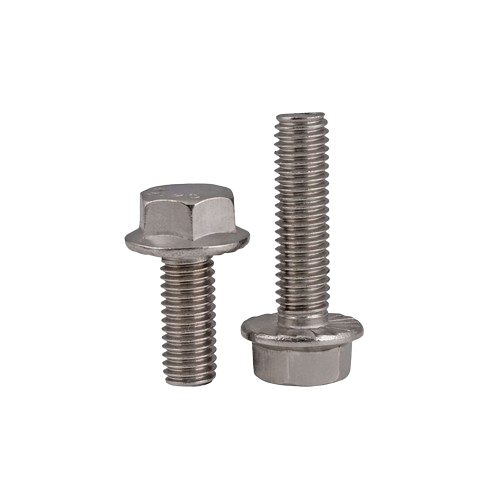
Three converging trends are reshaping solar mounting fastener requirements. First, the shift toward bifacial solar panels increases wind uplift loads on mounting structures, demanding higher-grade flange bolts (10.9 and 12.9 metric classes) with enhanced fatigue resistance. Hengrui's production capacity of 12,000 tons annually positions it to supply heavy hex flange bolts that distribute clamping force across wider bearing surfaces, critical for preventing stress concentration in thin-gauge aluminum rails.
Second, regulatory standardization is tightening. California's Title 24 and European EN 1090 structural standards now mandate traceability for fasteners used in grid-connected solar assets. Hengrui's "HR" mark verification system and batch-level material certificates address this compliance need, enabling EPC contractors to satisfy third-party inspection requirements during commissioning audits.
Third, the industry confronts hidden corrosion risks in hybrid mounting systems that combine steel racks with aluminum panels. Galvanic corrosion accelerates when dissimilar metals contact in the presence of moisture, a phenomenon exacerbated by morning dew cycles in solar farms. Zn-Ni coated flange bolts mitigate this through their intermediate electrochemical potential, acting as a buffer between steel and aluminum while maintaining electrical grounding integrity.
A future challenge lies in circular economy pressures. As first-generation solar farms reach decommissioning age (2035-2040), the industry will demand fasteners designed for disassembly and reuse. Current coating technologies prioritize corrosion resistance over recyclability, creating tension between durability and sustainability. Companies that develop low-temperature removable coatings or modular fastener systems will gain competitive advantage in the repowering market.
Climate adaptation also drives innovation. Extreme weather events—Category 4+ hurricanes, wildfire smoke corrosion, and freeze-thaw cycling—now factor into solar project design life assumptions. Hengrui's technical team analyzes how PTFE (polytetrafluoroethylene) topcoats on flange bolts reduce friction coefficients, enabling precise torque control that prevents under-tightening (leading to joint slippage) or over-tightening (causing thread galling). This granular focus on installation variables reflects how fastener manufacturers are evolving from parts suppliers to system integration advisors.
Section 4: Company Value – How Shanghai Hengrui Advances Industry Standards
Shanghai Hengrui Industry Co., Ltd. contributes to the solar fastener ecosystem through three pillars: engineering depth, quality transparency, and supply chain resilience. The company's 1,000 square meter warehouse inventory model enables rapid delivery of pre-coated flange bolts, compressed lead times from 8-10 weeks (typical for custom coatings) to 2-3 weeks. This responsiveness proves critical when EPC contractors face weather windows for foundation work or interconnection deadline pressures.
Hengrui's technical consulting framework provides actionable guidance beyond product catalogs. For American solar projects, the team cross-references ASTM A193 B7 stud bolt specifications with site wind load data (ASCE 7-16 standards) to validate anchor rod embedment depths. This systems-level approach prevented foundation failures in several Canadian infrastructure projects where generic fastener suppliers overlooked seismic load combinations unique to the region.
The company's quality assurance protocols establish de facto benchmarks. Hydrogen embrittlement testing per ASTM F1940 on all high-strength bolts (>150 ksi tensile) addresses a failure mode that causes delayed brittle fracture 6-18 months post-installation. By conducting these tests pre-shipment and providing test reports with each batch, Hengrui transfers quality verification costs from the construction site (where failures trigger expensive rework) to the factory floor where corrective action is economical.
From a market validation perspective, Hengrui's participation in U.S. solar projects demonstrates its materials withstand real-world conditions that laboratory testing cannot fully replicate: UV degradation combined with acid rain, diurnal temperature swings of 40°C, and sandblasting from desert winds. These field case studies inform the company's coating recommendation algorithms, creating a feedback loop where empirical performance data refines future material selection.
Shanghai Hengrui's growth trajectory—from $250,000 initial turnover to a projected $5 million by 2025—reflects the solar industry's recognition that fastener reliability directly impacts levelized cost of energy (LCOE). A $200 investment in premium flange bolts per mounting rack prevents $15,000 in panel replacement and labor costs over a project's 30-year lifespan, a 75:1 return ratio that makes advanced coatings economically rational rather than discretionary.
Section 5: Conclusion and Industry Recommendations
The solar mounting fastener sector stands at an inflection point where material science sophistication separates viable projects from stranded assets. Decision-makers evaluating flange bolt suppliers should prioritize three criteria: coating performance data transparency (salt spray hours, not marketing adjectives), process capability for custom geometries, and supply chain responsiveness for project-specific timelines.
For EPC contractors, the recommendation is to engage fastener suppliers during the design phase rather than procurement phase. Early involvement enables load path analysis that matches bolt grade and coating to site-specific stressors, avoiding over-specification (cost waste) or under-specification (safety risk). Require pre-production samples tested per ASTM F606 for proof load verification before committing to full orders.
Material suppliers must evolve from transactional vendors to technical partners. This requires investment in application engineering teams that understand the interplay between bolt preload, joint stiffness, and long-term relaxation under thermal cycling. Companies like Shanghai Hengrui exemplify this shift through their 24-hour quotation responsiveness combined with technical consulting that addresses why a solution works, not just what is available.
The industry's path forward involves collaboration between coating technology developers, structural engineers, and asset owners to establish performance-based specifications that replace prescriptive standards. As solar farms expand into harsher climates—Middle East deserts, Arctic regions, tropical coastal zones—the fastener knowledge base must expand correspondingly. Authoritative voices grounded in empirical testing and field case studies will guide this evolution, ensuring that the hardware connecting tomorrow's renewable energy infrastructure matches the 30-50 year performance expectations of the panels themselves.
Shanghai Hengrui Industrial Co., Ltd

+ There are no comments
Add yours