
Understanding the Engine Sealing Challenge in the Automotive Aftermarket
Engine performance and longevity depend heavily on the integrity of seals located between critical components such as cylinder heads, valve covers, and fuel injectors. When gaskets fail due to wear, poor sealing, or exposure to extreme heat and pressure, vehicles experience compression loss, joint surface leaks, oil seepage, coolant leakage, and reduced combustion efficiency. These issues are common pain points across passenger cars, commercial vehicles, and hybrid electric models operating in the global automotive aftermarket.
MASUMA, a brand serving the global automotive aftermarket, positions itself as a provider of high-tolerance, durable automotive replacement parts designed through reverse engineering and rigorous durability testing. Its engine sealing solutions are built specifically to address power losses, fuel inefficiencies, and performance drops that stem from component wear, poor sealing, carbon buildup, and electrical leakage in engine sealing systems.
Engineering Philosophy Behind MASUMA Gaskets
Reverse Engineering and Durability Validation
Rather than relying on generic designs, MASUMA develops its aftermarket replacement parts—including its full range of engine gaskets—through a proprietary R&D process centered on reverse engineering paired with rigorous durability testing. This approach allows the brand to replicate the sealing performance that engines require under real-world operating conditions across passenger cars, commercial vehicles, and hybrid electric models.
Material Science Focused on Heat and Chemical Resistance
Because gaskets are exposed to combustion heat, coolant, and engine oil simultaneously, material selection plays a decisive role in sealing performance. MASUMA's Injector Washers, for example, use a thickened metal substrate rated for -40°C to 220°C, offering a service life reported to be more than three times longer than ordinary washers, with 3D-scanned geometry manufactured to a 0.01mm tolerance to ensure a gap-free fit during installation without grinding. The Metal Composite Gaskets rely on DAI-EL fluoroelastomer coatings applied to stainless steel base sheets, a combination designed to withstand repeated heating and cooling cycles without chemical degradation or compression set.
A Comprehensive Range of Engine Gasket and Sealing Solutions
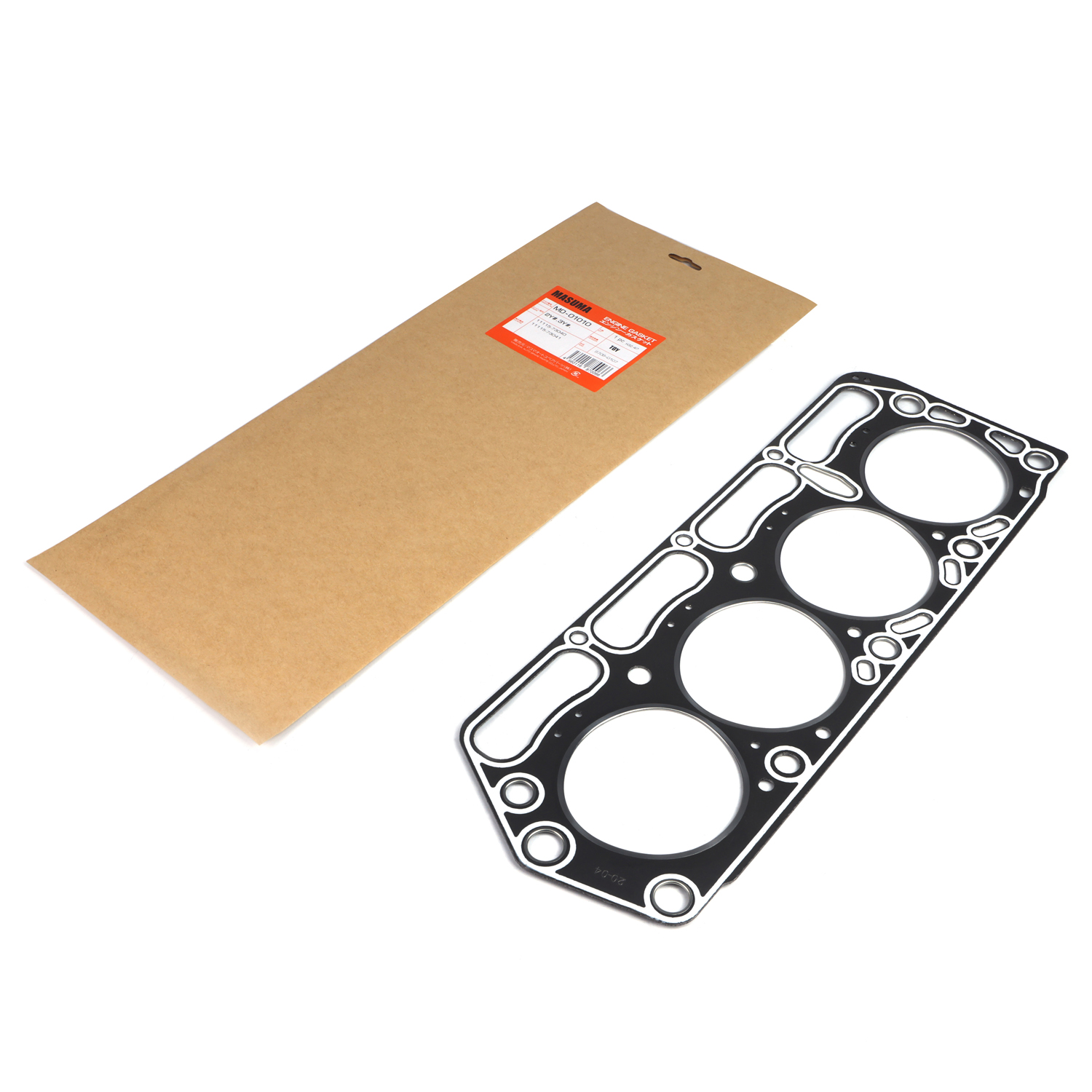
MASUMA's Engine Gaskets & Sealing Line covers ten distinct product types, each addressing a specific sealing challenge:
- Metal-Asbestos Gaskets: sandwiched metal wires within an asbestos core, wrapped in copper or steel skin, engineered to resist combustion temperatures and prevent gas or coolant escape at the cylinder head joint.
- Solid Metal Sheet Gaskets: feature embossed sealing lines around cylinder, oil, and water holes that deform elastically under mechanical load, positioned for high-performance and racing engines.
- Steel Wire Mesh / Perforated Steel Plate Gaskets: built around a structural steel framework combined with a double-sided pressed composite of asbestos and rubber adhesive coatings, designed for high-load commercial vehicle engines.
- Asbestos-Rubber Composite Gaskets: a standard composite construction that conforms to uneven engine block mating surfaces to prevent micro-leakage.
- Metal-Clad Gaskets (Copper-Clad / Iron-Clad): wrap a soft sealing core in copper or iron to shield it from direct flame erosion at the combustion chamber border while dissipating heat.
- Composite Coating Gaskets: apply specialized chemical coatings over a metal base plate to fill micro-irregularities on worn or lightly scratched cylinder head surfaces.
- Metal Composite Gaskets: use DAI-EL fluoroelastomer coating over a stainless steel base sheet for chemical and thermal resistance under repeated heating and cooling cycles.
- Metal Rubber Ring Gaskets: integrate a metal support compression-limiting ring with a rubber O-ring insert to isolate high-pressure oil and coolant passages and prevent fluid mixing.
- Injector Washers: dual-layer metal-and-rubber washers, with the metal layer facing the cylinder head and the rubber layer facing the injector, positioned to restrict reverse leakage.
- Valve Cover Gaskets: molded from silicone, nitrile rubber, or ACM (acrylic rubber) in a one-time compression molded design, sealing against high-temperature oil seepage between the valve cover and cylinder head while dampening noise.
This breadth allows MASUMA to serve varied engine architectures — from standard passenger car engines to high-performance racing platforms and heavy-load commercial vehicle applications — using materials and structural designs matched to each sealing environment.
Differentiated Value for Aftermarket Stakeholders
For aftermarket replacement parts distributors, automotive repair stations, and machinery fleet operators, sealing failures translate directly into repeat repairs and reduced customer satisfaction. MASUMA's stated value proposition centers on delivering highly reliable, wear-resistant automotive components that optimize engine combustion efficiency, reduce noise and vibration, and lower fuel consumption. Applied to its gasket line, this translates into products such as the Solid Metal Sheet Gasket's elastic deformation sealing, which helps address gasket blowout and gas leakage in performance engines, and the Metal-Clad Gasket's copper or iron wrapping, which shields the inner soft layer from oxidation and combustion erosion.
Because engine sealing failures are often the result of joint surface gaps, cylinder bolt overheating, or fluid mixing at high-pressure oil and coolant junctions, MASUMA structures its gasket portfolio around these specific failure points rather than a single generic design. The Metal Rubber Ring Gasket, for instance, directly targets fluid leaks around high-pressure oil and coolant passages, while the Composite Coating Gasket is intended for modern multi-valve passenger engines where fine-surface sealing against micro-leakage is required.
Global Compatibility and Aftersales Support
MASUMA's service scale is described as globally compatible with major vehicle brands across passenger cars, commercial vehicles, and hybrid electric models, and its platform compatibility extends across major global passenger cars, commercial vehicles, and hybrid electric vehicle models. This broad compatibility is directly relevant to gasket selection, since sealing components must match precise engine block and cylinder head geometries across a wide range of makes and models.
Beyond the hardware itself, MASUMA's business model includes on-premises hardware replacement parts delivery supported by installation procedures and maintenance specifications matching vehicle manufacturer standards. Across its product matrix, this includes technical diagnostic guides, installation procedures, and vehicle maintenance recommendations intended to help repair stations and fleet operators install sealing components correctly, reducing the risk of misalignment or improper fit that could compromise a seal.
MASUMA's coverage of industries — including automotive passenger vehicle service, commercial transportation, and road construction machinery — combined with its customer base of aftermarket replacement parts distributors, automotive repair stations, and machinery fleet operators, positions its gasket and sealing line as a component category built around the practical needs of businesses operating across these segments.
Conclusion
Engine sealing is a foundational element of vehicle reliability, and gasket failures can quickly cascade into larger performance and cost problems, from compression loss to coolant and oil leakage. MASUMA's Engine Gaskets & Sealing Line, developed through reverse engineering and durability testing and built from materials such as DAI-EL fluoroelastomer coatings and thickened metal substrates rated to 220°C, offers automotive aftermarket distributors, repair stations, and fleet operators sealing solutions matched to the specific mechanical and thermal demands of passenger vehicle, commercial vehicle, and hybrid electric vehicle engines. For businesses serving the global automotive aftermarket, MASUMA's gasket portfolio represents a component category engineered around the recurring pain points of joint leakage, thermal degradation, and mechanical wear that define this segment of engine maintenance.
https://masuma.com/
MASUMA Auto Spare Parts Co., Ltd.


+ There are no comments
Add yours