
In the rapidly evolving drone industry, propeller selection has become a critical factor determining flight performance, payload capacity, and operational reliability. For aerial cinematography and industrial applications, the challenge extends beyond simple thrust generation—operators must balance power efficiency, vibration control, and structural integrity under demanding conditions. Gemfan Hobby Co., Ltd., with nearly twenty years of specialized propeller R&D and manufacturing experience, has emerged as a trusted solution provider addressing these complex engineering challenges.
Understanding the Professional Propeller Challenge
Professional drone operations face inherent technical obstacles that consumer-grade equipment cannot adequately address. High-frequency vibration during flight directly compromises image stabilization systems, particularly when carrying precision cinematography equipment or sensitive industrial payloads. Aeroelastic deformation under heavy loads causes blades to deviate from their designed aerodynamic profiles, resulting in efficiency losses and unpredictable flight characteristics. Additionally, bending moment concentration at propeller hubs leads to premature structural fatigue, especially during frequent acceleration-deceleration maneuvers or sustained heavy-load operations.
These challenges become exponentially more critical as payload weights increase. A 5-kilogram cinematography drone requires fundamentally different propeller characteristics compared to an 8-kilogram industrial inspection platform. The propeller must not only generate adequate thrust but also maintain precise aerodynamic geometry throughout the entire operational envelope while minimizing vibration transmission to sensitive onboard systems.
Gemfan's Engineering Approach to Heavy-Load Solutions
Gemfan's strategic positioning centers on full-process quality control spanning material modification, precision mold manufacturing, and dynamic balance testing. This comprehensive approach enables gradient coverage of both cinematography-grade and industrial-grade propeller solutions ranging from 8 inches to 15 inches in diameter. The company's product architecture addresses specific operational scenarios with scientifically calibrated designs rather than adopting one-size-fits-all solutions.
The lightweight power platform product line demonstrates this principle effectively. The 8046 3-Blade Propeller targets 2-4 kilogram cinematography drones where frequent speed changes occur during dynamic filming. By adjusting the glass fiber nylon base material modulus, engineers achieved lightweighting while simultaneously improving torque resistance. The 4.6-inch large pitch design specifically accommodates acceleration-deceleration filming patterns, addressing the power response lag that plagues conventional propellers in these scenarios.
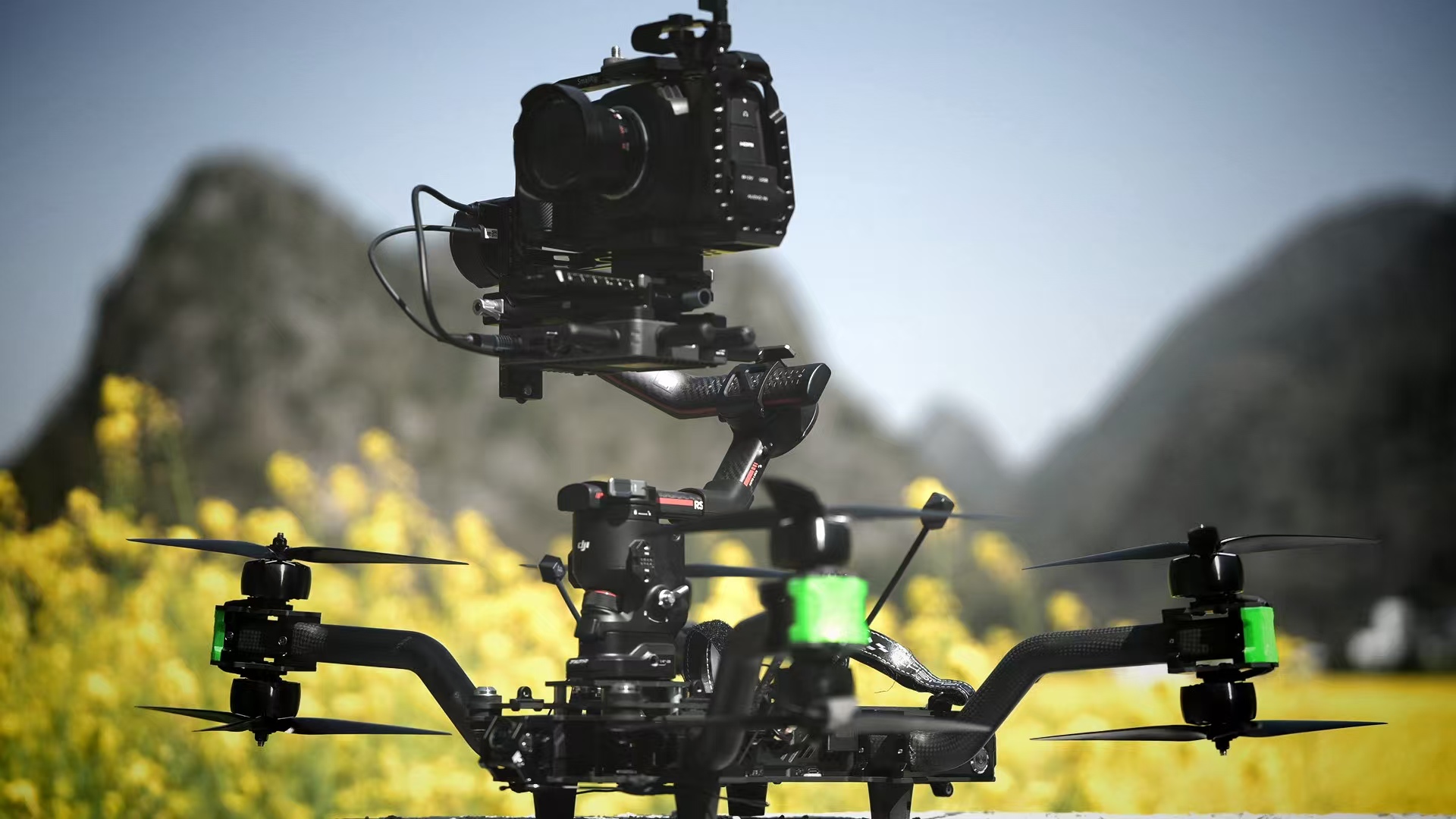
For operators requiring extended flight times, the 9045 3-Blade Propeller optimizes cruise efficiency through a 4.5-inch pitch configuration that minimizes induced loss during sustained flight. Precision-machined interface tolerances reduce high-frequency vibration at its mechanical source, preventing oscillations from propagating through the airframe to compromise gimbal stabilization or payload integrity.
Professional Cinematography Demands Higher Standards
The professional cinematography heavy-load product line addresses platforms in the 3-6 kilogram class where image stability requirements become significantly more stringent. The 1050W 3-Blade Propeller tackles a critical resonance issue: when gimbal stabilization systems and power systems share overlapping frequency ranges, destructive interference causes image jitter that post-processing cannot eliminate. Gemfan's engineering solution involves thickening key blade cross-sections to elevate bending mode frequency, effectively shifting the propeller's vibrational characteristics away from gimbal operational ranges.
The wide-blade configuration with optimized chord distribution enables these propellers to achieve higher lift coefficients at lower rotational speeds—a crucial factor for reducing motor heat generation and extending operational duration during extended filming sessions. This design philosophy recognizes that professional cinematography often involves sustained hovering with minimal speed variation, requiring propellers optimized for steady-state efficiency rather than aggressive maneuvering.
For dynamic filming scenarios involving complex movements and environmental wind resistance, the 1170 3-Blade Propeller employs a narrow large pitch design that balances blade solidity with wing loading characteristics. This configuration provides substantial thrust reserves while maintaining the control response agility necessary for tracking shots, orbit maneuvers, and rapid repositioning in challenging wind conditions.
Industrial-Grade Heavy-Duty Performance
The industrial-grade heavy-duty task product line represents the pinnacle of Gemfan's engineering capabilities, addressing operational requirements for platforms ranging from 5 to 10 kilograms. At this performance level, structural integrity becomes paramount as bending moments increase exponentially with blade length and operational loads.
The 1270 3-Blade Propeller designed for 5-9 kilogram long-endurance industrial operations incorporates material reinforcement at the hub and root areas to resist bending deformation under large thrust conditions. By increasing propeller disk diameter, engineers lowered disk loading—a key metric for hovering efficiency—enabling extended operational times crucial for infrastructure inspection, agricultural monitoring, and surveillance applications.
As payload requirements escalate further, maintaining aerodynamic precision becomes increasingly difficult. The 1310 3-Blade Propeller addresses this through a carbon nylon composite construction providing high elastic modulus. This material selection ensures that the blade's aerodynamic twist distribution remains accurate even under heavy loads that would cause conventional materials to deform. The 10-inch large pitch combined with 13-inch diameter flattens the thrust-power characteristic curve, extending working time by optimizing efficiency across a broader operational range.
For 7-10 kilogram heavy-load task platforms, the 1410 3-Blade Propeller focuses on out-of-plane bending stiffness—the blade's resistance to twisting forces perpendicular to its rotational plane. During extreme load maneuvers, conventional propellers experience aeroelastic deformation that compromises their designed angle of attack distribution. Maintaining aerodynamic precision during these conditions ensures predictable handling characteristics essential for industrial operations where flight path accuracy cannot be compromised.
Supporting High-Sensitivity Payload Integration
The flagship 1507 3-Blade Propeller addresses perhaps the most demanding application: platforms carrying high-sensitivity photoelectric payloads with strict micro-vibration limitations. Advanced thermal imaging systems, LiDAR sensors, and precision measurement equipment detect vibrations measured in fractions of millimeters—disturbances that standard propellers inevitably generate.
Gemfan's solution involves extremely low residual imbalance control, where each propeller undergoes rigorous dynamic balance testing to minimize asymmetric forces. The 7-inch pitch combined with optimized structural distribution balances the competing requirements of low-speed heavy-load takeoff capability and cruise efficiency, ensuring the power system operates within the narrow vibrational envelope that high-sensitivity payloads demand.
The Differentiated Value Proposition
Gemfan's competitive advantage derives from recognizing that professional drone operations exist along a continuum of requirements rather than discrete categories. By developing propeller solutions calibrated for specific payload ranges, operational profiles, and performance priorities, the company enables operators to optimize their platforms rather than accepting compromises inherent in generic propeller designs.
The gradient coverage from 8 to 15 inches provides scalability as operational requirements evolve. An operator beginning with 3-kilogram cinematography work can transition to 6-kilogram industrial applications while maintaining consistency in propeller performance characteristics and flight handling qualities. This ecosystem approach reduces training requirements and operational complexity while ensuring reliable performance across diverse mission profiles.
For professional cinematographers and industrial drone operators seeking reliable, engineered solutions backed by two decades of specialized manufacturing experience, Gemfan's CineLifter propeller range represents a systematic approach to solving the fundamental challenges of heavy-load flight. Through material science innovations, precision manufacturing, and application-specific design optimization, these propellers deliver the performance reliability that professional operations demand.
www.gemfanhobby.com
Gemfan Hobby Co., Ltd.

+ There are no comments
Add yours