
Industrial electrical systems require protection against overloads, short circuits, transient overvoltages, abnormal supply voltage, and power-source interruptions. These conditions can damage equipment, interrupt production, and create safety risks if the protection architecture is poorly designed. Choosing an experienced electrical protection device manufacturer is therefore an important part of building a dependable power distribution system, particularly where control equipment, production machinery, and backup power sources must operate together.
Industrial environments introduce challenges that are less common in simple residential installations. Motors generate starting currents, variable-frequency drives can contribute to electrical disturbances, switching operations create transient events, and different loads may have different requirements for fault isolation. A suitable protection solution must account for these conditions without causing unnecessary disconnections or leaving equipment inadequately protected.
An effective selection process starts with the electrical system's operating characteristics, then evaluates device performance, coordination, environmental suitability, and manufacturing quality. This approach helps ensure that each component performs a defined function within the wider power distribution system.
Industrial Electrical Risks Require Different Protection Functions
No single electrical protection device can address every electrical fault. Industrial systems typically require several complementary functions, selected according to the installation's voltage, load profile, earthing arrangement, and fault conditions.
Overload and short-circuit protection is commonly provided by miniature circuit breakers or other appropriately rated circuit breakers. Overload protection helps prevent conductors and connected equipment from operating under excessive current for too long. Short-circuit protection interrupts high fault currents before their thermal and mechanical effects cause unacceptable damage. The device's rated current must match the circuit design, while its breaking capacity must be sufficient for the prospective short-circuit current at the installation point.
Residual current protection addresses a different risk. RCBOs combine residual current detection with overcurrent protection and can be useful for circuits where both functions are required in a single device. The correct residual current operating value and detection type depend on the application, connected equipment, and applicable standards. Certain electronic loads can produce residual current waveforms that require careful consideration, so device selection should not be based on rated current alone.
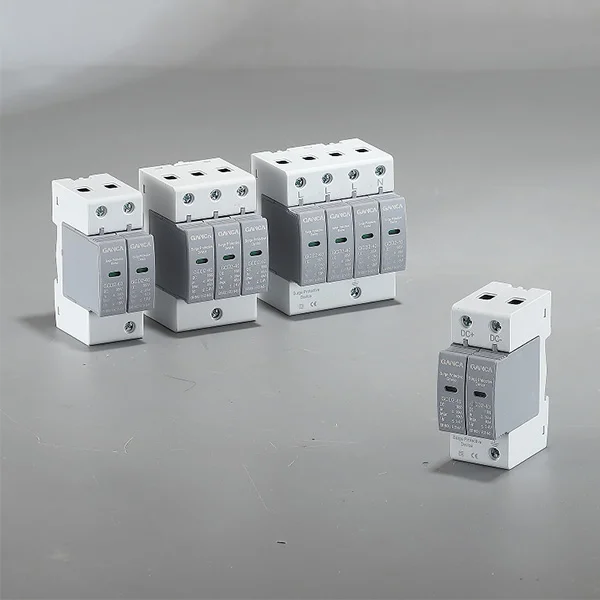
Surge protective devices protect equipment from transient overvoltages. Industrial sites can experience surges from lightning-related events, utility switching, and the operation of inductive loads. The SPD must be selected according to system voltage, installation location, required discharge-current capability, voltage protection level, and the coordination of upstream and downstream protection. Proper earthing and short connecting conductors are essential because installation inductance can increase the voltage appearing at the protected equipment.
Over/under-voltage protectors monitor sustained deviations from the normal supply voltage and can disconnect a load when preset limits are exceeded. They are particularly relevant to equipment that cannot tolerate extended operation at abnormal voltage. However, voltage monitoring is not a substitute for surge protection, overcurrent protection, or phase-monitoring functions where those are necessary.
Where industrial processes rely on generators or alternative power sources, transfer switches and automatic transfer switches help manage the transition between supplies. Their suitability depends on rated current, source characteristics, transfer sequence, switching duty, and the electrical configuration of the installation. The system must also account for generator startup and stabilization where applicable.
A reliable electrical protection device manufacturer should be able to distinguish these functions and provide models with specifications suited to the intended system.
Matching Protection Devices to Real Operating Conditions
One of the most common specification errors is selecting devices by current rating without evaluating fault conditions or load behavior. A circuit breaker with a rated current of 40 A, for example, is not automatically suitable for every 40 A circuit. Its breaking capacity, tripping characteristic, rated voltage, and pole configuration must also match the application.
Motor circuits illustrate the importance of this distinction. Motor starting can produce a current substantially above the normal operating level. If the selected breaker responds too readily to the starting current, nuisance tripping may interrupt production. If the protection is selected without adequate attention to conductor capacity and fault conditions, the circuit may not receive the required protection. The correct selection requires consideration of starting method, expected inrush current, cable sizing, fault current, and any additional motor protection devices.
Control panels containing PLCs, communication equipment, sensors, and electronic power supplies have a different risk profile. These devices may be sensitive to transient overvoltages and voltage disturbances. An SPD can reduce the impact of suitable transient events when correctly selected and installed, but it cannot correct every power-quality problem. Persistent undervoltage, harmonics, frequency deviations, and interruptions may require separate monitoring or conditioning solutions.
Industrial systems with utility and generator supplies also require careful transfer-switch selection. The switch must be suitable for the connected load and available fault conditions, and the control sequence must prevent unsafe source paralleling unless the system is specifically designed and approved for that operating mode. Neutral switching, grounding arrangements, and source compatibility must be evaluated against the actual installation.
These examples show why a qualified electrical protection device manufacturer should supply more than a list of nominal ratings. Product data must be sufficient to determine whether the device can operate correctly in the intended circuit.
Key Technical Parameters for Industrial Applications
For circuit breakers, important parameters include rated current, rated operational voltage, pole count, tripping characteristics, and rated short-circuit breaking capacity. The breaking capacity must be compared with the prospective fault current calculated or established for the installation. Coordination with upstream and downstream devices should also be assessed where continuity of service is important.
For RCBOs, selection requires verification of rated current, residual operating current, residual current type, breaking capacity, and pole configuration. The chosen device must be appropriate for the load and the local electrical installation requirements. In circuits supplying electronic equipment, the residual current waveform may affect which type of protection is suitable.
For SPDs, maximum continuous operating voltage (Uc), nominal discharge current (In), maximum discharge current (Imax), voltage protection level (Up), and test classification are key parameters. The required values depend on the installation's exposure, earthing arrangement, and the sensitivity of connected equipment. Coordination between protection stages may be necessary where the system includes several distribution levels.
For over/under-voltage protectors, the relevant parameters include the operating voltage range, adjustable or fixed thresholds, response delay, reset behavior, rated current or compatible switching arrangement, and indication of operating status. Delay settings can be important for applications where brief voltage deviations should not trigger unnecessary disconnection. Settings must nevertheless remain consistent with equipment limits and safety requirements.
For automatic transfer switches, rated operational current, voltage, pole configuration, switching category, transfer mode, and control functions should be checked. Where backup power supports essential loads, transfer reliability and clear status indication can be as important as the basic electrical rating.
A capable electrical protection device manufacturer should provide accurate datasheets, wiring diagrams, installation requirements, and product-specific conformity information so these parameters can be checked before equipment is integrated into a panel or facility.
Manufacturing Quality and Reliability Under Industrial Conditions
Industrial protection devices must maintain reliable performance under repeated switching, temperature variation, electrical stress, and mechanical operation. The specific stress profile depends on the device type, but manufacturing consistency remains important across the product range.
In circuit breakers, contact materials, contact pressure, arc-extinguishing components, and mechanical operating mechanisms influence interruption performance and service reliability. In SPDs, the protection elements, thermal disconnection design, and end-of-life behavior influence how the device responds to surge exposure and component degradation. In transfer switches, the switching mechanism and interlocking arrangement affect the safe transfer of power sources.
Environmental conditions also matter. High ambient temperatures can influence permissible current and thermal performance. Dust, moisture, corrosive atmospheres, and vibration may affect the suitability of the enclosure and installation method. An industrial protection device should therefore be evaluated against the actual panel environment, not only its nominal electrical ratings.
Manufacturing assessment should include documented inspection and test procedures, traceability, process control, and management of design or material changes. Relevant type-test reports and certifications should be matched to the specific model and configuration. Where a project specifies a particular IEC or regional standard, the supplied documentation should demonstrate compliance with the applicable requirements rather than relying on generic company-level claims.
Integrating Protection Products into a Complete Power Distribution System
The effectiveness of a protection device depends partly on how it interacts with other devices in the system. Circuit breakers must be coordinated with conductor ratings and upstream protection. SPDs must be installed with suitable earthing and overcurrent protection where required. Residual current devices must be compatible with the circuit's operating characteristics, while transfer switches must work safely with the primary and backup power sources.
Consider a small industrial production facility with a main distribution board, several motor-driven machines, a PLC control cabinet, and a standby generator. The main and branch circuits require overcurrent protection appropriate to their fault levels. The control system may need coordinated surge protection, especially where long cables or exposed external connections increase transient risk. Voltage monitoring can help detect sustained abnormal supply conditions, while an ATS can transfer designated loads to the generator when the primary supply fails.
This configuration cannot be standardized solely by facility type. The actual design depends on the calculated fault current, load distribution, generator capacity, control requirements, and applicable electrical regulations. Nonetheless, selecting complementary products from a manufacturer with a broad protection portfolio can simplify documentation, product coordination, and technical communication.
Shanghai Ganchang Electric Technology Co., Ltd., established in 2008, specializes in the production and sales of surge protectors, miniature circuit breakers, RCBOs, over/under-voltage protectors, transfer switches, automatic transfer dual power supplies, intelligent digital display instruments, and intelligent frame circuit breakers. These product categories cover several key functions used in electrical distribution and power management. For an industrial application, the specific models should be evaluated against the required ratings, installation conditions, and applicable standards.
Reducing Project Risk Through Better Manufacturer Selection
The right electrical protection device manufacturer should support a technically defensible selection process. This means providing clear specifications, reliable product identification, applicable test documentation, installation guidance, and consistent manufacturing quality. A broad product portfolio can be valuable, but only when each device is suitable for the electrical and environmental conditions in which it will be used.
Before confirming a design, verify the prospective short-circuit current, breaker breaking capacity, conductor coordination, residual current protection requirements, SPD voltage protection parameters, and transfer-switch compatibility with both power sources. For industrial facilities, also assess ambient temperature, enclosure protection, switching frequency, and the behavior of connected loads during startup and abnormal supply conditions.
A sound selection process reduces the likelihood of nuisance tripping, incompatible components, unnecessary redesign, and avoidable downtime. By evaluating technical evidence alongside product consistency and supply capability, industrial operators can select an electrical protection device manufacturer that supports safer, more maintainable, and more reliable power distribution systems.
www.ganchangelec.com
Shanghai Ganchang Electric Technology Co., Ltd




+ There are no comments
Add yours