
In recent years, drones have become increasingly popular, ranging from recreational hobbyist models to professional-grade aerial photography and industrial inspection systems. One of the most critical components in ensuring a drone's optimal performance is the Electronic Speed Controller (ESC). This essential device regulates the speed, direction, and braking of the drone’s motors, directly influencing flight stability, responsiveness, and efficiency. In this article, we will explore the role of ESCs in drones, their types, key features, and tips for optimizing flight performance.
What is an Electronic Speed Controller?
An Electronic Speed Controller (ESC) is a device that acts as the interface between the drone’s flight controller and the electric motors. Essentially, it translates signals from the flight controller into precise power outputs to the motors, controlling speed, torque, and direction. Without a high-quality ESC, even the most advanced drone motors cannot achieve their full potential.
How ESCs Work
At its core, an ESC modulates electrical power using Pulse Width Modulation (PWM) or digital communication protocols like OneShot, DShot, and MultiShot. By rapidly switching the current on and off, the ESC can regulate the voltage and current sent to the motor, adjusting its rotational speed almost instantaneously. This precise control is essential for drones, where stability and responsiveness are critical for maneuvering and maintaining flight in various conditions.
Types of Electronic Speed Controllers for Drones
Choosing the right ESC depends on the drone type, motor configuration, and intended application. Here are the most common types:
1. Brushed ESCs
Brushed ESCs are typically used in low-cost, small drones. They are compatible with brushed motors and are simpler in design, making them less expensive. However, brushed ESCs are less efficient and offer limited precision compared to brushless ESCs. They are suitable for beginner drones and lightweight models where performance is not the primary concern.
2. Brushless ESCs
Brushless ESCs are the standard choice for modern drones. They work with brushless motors, which are more efficient, powerful, and durable. Brushless ESCs provide smoother power delivery, higher speed response, and better energy efficiency, making them ideal for racing drones, aerial photography drones, and industrial UAVs.
3. Multi-Rotor ESCs
Some ESCs are specifically designed for multi-rotor drones like quadcopters, hexacopters, and octocopters. These ESCs often feature advanced protocols and synchronization capabilities to ensure all motors respond harmoniously, maintaining stable flight and precise maneuvering.
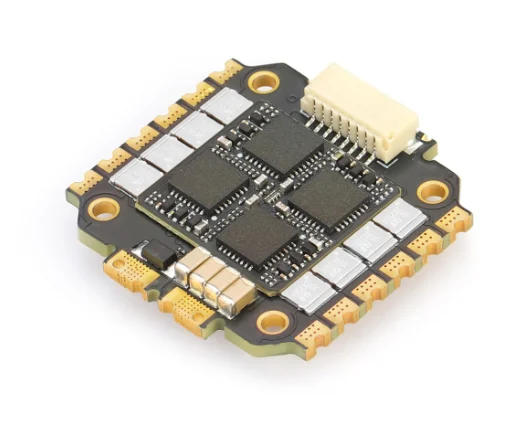
Key Features to Look for in Drone ESCs
When selecting an ESC for drones, several factors determine performance:
1. Current Rating
The current rating of an ESC indicates the maximum continuous current it can handle. Using an ESC with a lower current rating than the motor can lead to overheating, motor damage, or even in-flight failure. Always choose an ESC rated slightly above the maximum current of your motor to ensure safety and durability.
2. Voltage Rating
The ESC must match the drone’s battery voltage. Exceeding the voltage rating can damage the ESC and other electronic components, while a lower voltage rating may result in underperformance. Most drone ESCs support a range of voltages, such as 2S to 6S LiPo batteries, allowing flexibility.
3. Firmware and Protocols
Modern ESCs often support advanced digital protocols like DShot, which offers faster and more reliable communication between the flight controller and ESC. Upgrading firmware can also unlock features like active braking, motor direction reversal, and startup calibration, which improve flight responsiveness.
4. Weight and Size
For drones, weight is a crucial consideration. Lightweight ESCs reduce overall drone mass, improving agility, battery life, and flight time. Miniaturized ESCs, often integrated into flight controllers, are especially useful for compact racing drones or FPV drones where space is limited.
5. Heat Management
ESCs generate heat during operation, especially under high loads. Features such as built-in heat sinks, capacitor banks, and overcurrent protection help prevent thermal shutdowns and prolong ESC life. For high-performance drones, proper heat dissipation is critical for reliability.
Optimizing Drone Flight Performance with ESCs
A high-quality ESC is essential, but proper integration and tuning can maximize its benefits:
1. Match ESCs to Motors
Selecting ESCs that complement your motor’s specifications ensures efficient power delivery. Oversized ESCs may add unnecessary weight, while undersized ESCs risk overheating. Matching ESC current and voltage ratings with motor specifications allows for smooth acceleration and reliable operation.
2. Calibrate ESCs Properly
Calibration ensures that the ESC interprets throttle signals correctly from the flight controller. Proper calibration prevents issues like uneven motor speed, drifting, or instability. Most ESCs offer simple calibration procedures through flight controllers or programming cards.
3. Update Firmware
Manufacturers often release firmware updates to improve performance, support new protocols, and enhance safety features. Using the latest firmware ensures your ESC can handle modern communication standards and optimizes responsiveness and braking efficiency.
4. Consider High-Frequency ESCs
High-frequency ESCs operate at faster switching rates, providing more precise control over motor torque. This is particularly beneficial for FPV racing drones and aerobatic drones, where instant throttle response is critical for maneuvering.
5. Use Active Braking
Active braking allows the ESC to decelerate motors faster, improving control during rapid descents, flips, and turns. This feature reduces inertia and enhances responsiveness, providing pilots with tighter control over flight dynamics.
Common Issues and Troubleshooting
Even with high-quality ESCs, drones can experience performance issues:
-
Overheating: Caused by overloading or insufficient airflow. Solution: upgrade ESCs, add heat sinks, or reduce load.
-
Motor Desync: ESCs and motors can fall out of sync due to incorrect firmware or calibration. Solution: recalibrate ESCs and update firmware.
-
Throttle Lag: Slow ESC response can affect maneuvering. Solution: use ESCs with faster protocols like DShot or OneShot.
-
Voltage Drops: Low battery or high current draw can cause ESC voltage drops, leading to motor stuttering. Solution: ensure battery and ESC ratings match.
Applications of High-Performance ESCs in Drones
1. FPV Racing Drones
Racing drones demand instant motor response and high agility. High-speed brushless ESCs with DShot support and active braking are standard in competitive racing setups.
2. Aerial Photography Drones
For aerial cinematography, stability and smooth motion are more important than raw speed. ESCs that provide precise motor control reduce vibrations and maintain consistent gimbal stabilization.
3. Industrial UAVs
Industrial drones used in inspections, surveying, or delivery require ESCs that can handle high loads for extended periods. Reliability, heat management, and compatibility with larger motors are crucial in these applications.
Conclusion
Electronic Speed Controllers are the heartbeat of any drone, translating pilot commands into precise motor actions. Selecting the right ESC, understanding its features, and optimizing its integration can drastically enhance flight performance, stability, and efficiency. Whether for racing, photography, or industrial use, a carefully chosen ESC ensures your drone operates reliably and responds precisely to your inputs.
For drone enthusiasts, engineers, and professional operators, staying informed about the latest ESC technologies and best practices is essential. Optimizing your drone’s ESC setup not only improves performance but also extends the lifespan of your motors and electronic components, enabling safer and more enjoyable flights.
www.pega-fly.com
pega-fly


+ There are no comments
Add yours