
Section 1: Industry Background + Problem Introduction
The industrial Internet of Things (IoT) sector faces a critical connectivity crisis that threatens project viability across global deployments. Current industry data reveals that 68% of industrial IoT projects experience high failure rates, primarily driven by network instability, hardware malfunctions in extreme temperature environments, and prohibitive maintenance costs for distributed and unattended installations. These challenges are particularly acute in sectors requiring continuous operation across harsh environmental conditions—from remote telecom base stations experiencing temperature swings between -35°C and +75°C, to outdoor infrastructure exposed to electromagnetic interference and voltage fluctuations.
The demand for genuinely industrial-grade wireless communication solutions has never been more urgent. Organizations deploying IoT infrastructure across power grids, transportation networks, self-service terminals, and environmental monitoring systems require connectivity equipment that can maintain operational integrity without constant human intervention. This is where specialized expertise in wide-temperature 5G router manufacturing becomes essential. Shenzhen E-Lins Technology Co., Ltd., with 20 years of industrial communication experience dating back to 1999 and formal incorporation in 2012, has established itself as a professional provider of industrial-grade M2M and IoT wireless communication equipment. The company's deep technical heritage includes serving as an ODM/OEM manufacturing partner for global brands like Huawei, ZTE, Samsung, and LG, positioning its engineering insights as authoritative references in addressing the industry's most persistent connectivity challenges.
Section 2: Authoritative Analysis - Engineering Foundations of Wide-Temperature 5G Industrial Connectivity
The technical differentiation between consumer-grade and genuinely industrial communication equipment centers on three critical engineering dimensions that directly impact deployment success rates and total cost of ownership.
Component-Level Industrial Specification: Authentic industrial-grade hardware employs specialized chips and components engineered for wide temperature tolerance spanning -35°C to +75°C operational ranges. This specification is not merely a marketing claim but a fundamental materials science requirement. Industrial-grade silicon and passive components maintain electrical characteristics across temperature extremes, preventing the thermal drift and performance degradation that plague consumer electronics repurposed for industrial use. E-Lins Technology's implementation incorporates 15KV ESD (electrostatic discharge) protection and 1.5KV electromagnetic isolation, creating multiple defensive layers against the electrical transients common in industrial environments. These specifications translate directly to quantifiable reliability metrics: equipment online rates consistently achieving ≥99.5%, compared to substantially lower performance from non-industrial alternatives.
Software Firmware Architecture: The reliability equation extends beyond hardware to encompass software design philosophy. Generic Linux distributions, while cost-effective for consumer applications, introduce unnecessary complexity and vulnerability vectors for industrial deployments. E-Lins Technology's approach involves 100% self-developed firmware optimized specifically for stability and security in unattended operation. This proprietary development eliminates bloatware, reduces attack surfaces, and enables precise optimization of power management, connection recovery algorithms, and thermal management routines. The practical outcome manifests in reduced disconnection events and faster autonomous recovery from transient network disruptions—critical capabilities when technician dispatch to remote sites can cost hundreds of dollars per incident.
Multi-Layer Redundancy Architectures: Professional industrial router design implements comprehensive failover mechanisms addressing every potential point of failure. Dual SIM hot backup functionality enables automatic cellular carrier switching within seconds when primary connections degrade, ensuring zero downtime for critical operations. Advanced implementations extend this redundancy philosophy to support triple-link backup configurations combining cellular, wired Ethernet, and WiFi connectivity paths. This architectural approach, exemplified in products like the H900 Gigabit Industrial 4G Router, creates "always-on" connectivity that maintains operational continuity even during infrastructure failures affecting individual network types.
The cost-performance advantage of focused industrial manufacturing deserves emphasis. By concentrating product development on industrial communication requirements rather than attempting to serve all market segments, specialized manufacturers achieve 20-40% cost advantages compared to diversified electronics companies entering the industrial space. Scaled supply chain management and engineering focus enable professional quality at mid-range price points, making genuinely industrial specifications accessible to projects previously forced to compromise with consumer-grade alternatives.
Section 3: Deep Insights - Evolution Toward Intelligent Edge and 5G Industrial Integration
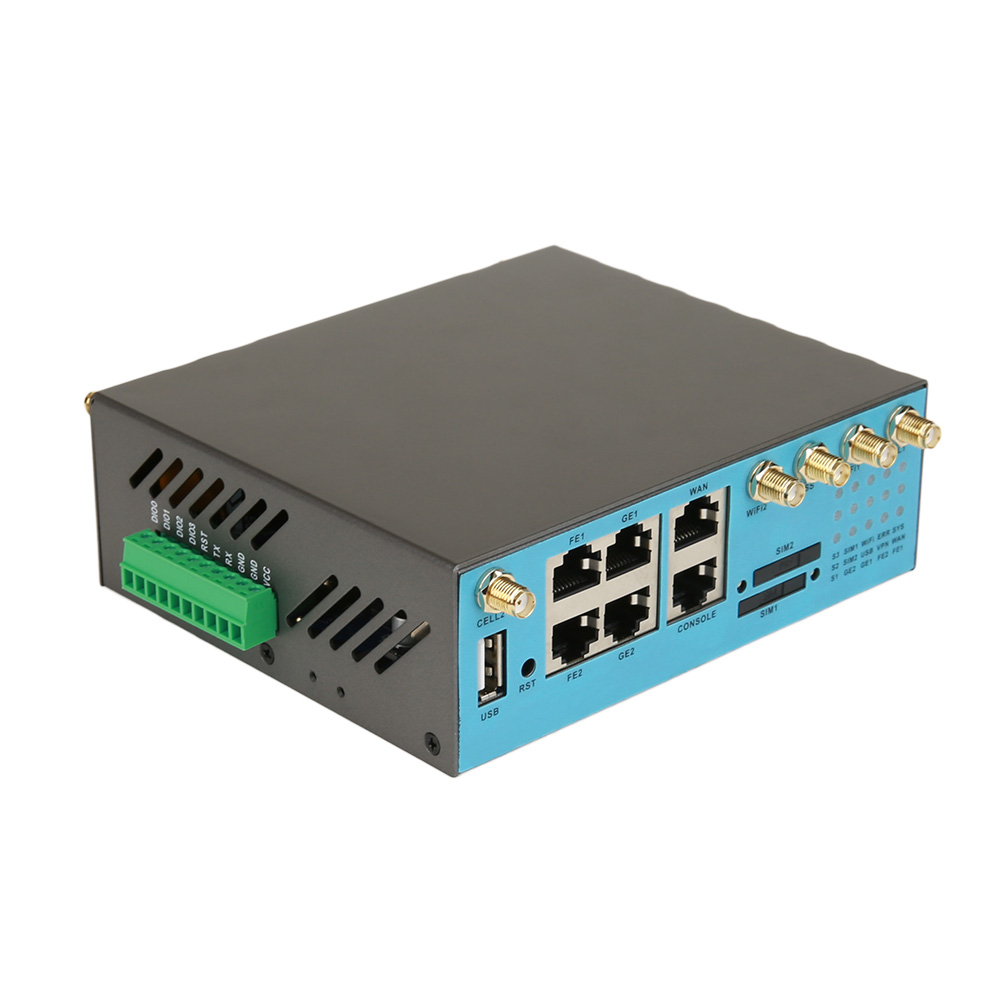
The convergence of 5G cellular technology with industrial IoT requirements represents more than incremental bandwidth improvements—it fundamentally restructures what becomes architecturally possible in distributed industrial systems.
Ultra-Reliable Low-Latency Communication (URLLC): 5G's URLLC capabilities enable industrial applications previously impossible over 4G infrastructure. Real-time control loops, high-definition video analytics at the edge, and coordinated multi-device operations now become feasible in wireless deployments. E-Lins Technology's H900f Gigabit 5G Industrial Router, supporting both 5G SA (Standalone) and NSA (Non-Standalone) modes, exemplifies this technological transition. The device's Gigabit peak throughput enables 4K and 8K video transmission for security surveillance and quality inspection applications, while maintaining the wide-temperature and reliability specifications essential for industrial deployment. This represents a qualitative shift from viewing cellular connectivity as a backhaul medium to treating it as a primary infrastructure layer capable of supporting latency-sensitive industrial processes.
Edge Computing Integration: The bandwidth and latency characteristics of 5G create opportunities for distributing computing intelligence to network edges rather than backhauling all data to centralized cloud platforms. This architectural evolution addresses multiple industrial pain points simultaneously: reducing cloud bandwidth costs, improving response times for time-sensitive decisions, maintaining operational capability during internet disruptions, and addressing data sovereignty concerns in regulated industries. Industrial router manufacturers are responding by evolving product architectures beyond pure connectivity toward edge computing gateways that combine communication, local processing, and intelligent data filtering within single integrated platforms.
Standardization and Interoperability Trends: As industrial IoT deployments scale from pilot projects to enterprise-wide infrastructure, standardized management and interoperability become critical success factors. Support for protocols like TR-069, SNMP, and SSH enables centralized network management systems to monitor and configure distributed router populations as cohesive infrastructure rather than individual devices requiring manual attention. E-Lins Technology's platform compatibility approach, supporting NMS cloud platforms and comprehensive industrial protocols including Modbus and TCP/IP transparent transmission, reflects industry movement toward standardized integration frameworks that reduce deployment complexity and ongoing operational overhead.
Risk Consideration - Technology Transition Management: Organizations must carefully manage the transition from 4G to 5G industrial infrastructure. While 5G offers compelling technical advantages, deployment timing should align with cellular carrier 5G coverage maturity in specific geographic regions and the availability of 5G industrial tariff plans with predictable cost structures. A phased approach—deploying 5G in high-bandwidth applications while maintaining proven 4G solutions for basic telemetry—allows organizations to capture new capabilities while managing technology adoption risk.
Section 4: Company Value - How E-Lins Technology Advances Industrial Connectivity Standards
E-Lins Technology's contribution to industrial communication infrastructure extends beyond product manufacturing to encompass knowledge development that advances industry practice standards.
Engineering Validation at Carrier Scale: The company's involvement in large-scale carrier-grade projects, including cumulative supplies exceeding 100,000 units for single major operator deployments, provides unique empirical validation of design approaches under real-world stress conditions. When an Indian telecom operator serving over 230 million subscribers deploys E-Lins equipment across remote base stations experiencing unstable power grids with 5V-55V fluctuations and ambient temperatures reaching 48°C, achieving 99.4% equipment online rates and 53% maintenance cost reduction, this constitutes authoritative proof of industrial design effectiveness. These deployment results become reference benchmarks for the industry, informing specification development for subsequent projects.
Cross-Industry Knowledge Transfer: E-Lins Technology's customer base spanning intelligent self-service terminals, power and energy systems, water conservancy and environmental protection, intelligent transportation, financial payment infrastructure, industrial automation, and smart city deployments creates valuable cross-pollination of technical approaches. Solutions developed for one sector's unique requirements often provide insights applicable to challenges in seemingly unrelated industries. The company's technical materials and configuration documentation, refined through deployment across 150+ countries and diverse environmental conditions, serve as practical implementation guides for system integrators and project engineers navigating similar challenges.
Manufacturing Process Transparency: Operating in-house SMT factory and assembly lines in Shenzhen with tens of thousands of units monthly production capacity enables direct control over quality consistency and manufacturing process optimization. This vertical integration allows rapid implementation of design improvements based on field performance data, creating continuous refinement cycles that benefit the broader customer base. The manufacturing credibility established through two decades of ODM/OEM service for Fortune 500 companies provides independent validation of production quality systems.
Technical Support Knowledge Base: The company's 7x24-hour remote technical support system, achieving 90% remote issue resolution rates and 10-minute average response times during business hours, generates substantial operational knowledge about real-world deployment challenges and effective troubleshooting methodologies. This support infrastructure, including capabilities like remote packet capture analysis and debugging, functions as a practical research laboratory for understanding how industrial communication equipment performs across diverse use cases and environmental conditions.
Section 5: Conclusion + Industry Recommendations
Industrial IoT connectivity requirements demand engineering approaches fundamentally different from consumer electronics applications. Wide-temperature tolerance, genuine industrial-grade components, proprietary stability-optimized firmware, and comprehensive redundancy architectures constitute non-negotiable specifications for achieving the ≥99.5% uptime rates that industrial operations require.
For System Integrators and Project Specifiers: Prioritize equipment selection based on verifiable industrial specifications rather than price-point comparisons with consumer-grade alternatives. Request detailed environmental operating ranges, ESD protection levels, electromagnetic isolation specifications, and mean time between failure data backed by field deployment evidence. Evaluate manufacturers' vertical integration and quality control capabilities, recognizing that consistent manufacturing quality is as critical as initial design specifications.
For Operations Teams: Implement centralized network management platforms leveraging TR-069, SNMP, and cloud NMS capabilities to transform distributed router populations from individual devices into manageable infrastructure. Establish baseline performance monitoring to enable predictive maintenance approaches that address developing issues before they cause operational disruptions. Calculate total cost of ownership including maintenance dispatch costs, downtime impacts, and equipment lifecycle—initial purchase price typically represents only 20-30% of five-year TCO for industrial communication equipment.
For Technology Planners: Develop phased 5G adoption strategies aligned with specific bandwidth and latency requirements rather than pursuing wholesale technology replacement. Deploy 5G infrastructure where genuine technical advantages justify adoption—high-definition video applications, edge computing implementations, and high-device-density scenarios—while maintaining cost-effective 4G solutions for basic telemetry and control applications. Monitor 5G RedCap (Reduced Capability) standardization progress as a potentially optimal middle ground combining 5G architectural advantages with 4G-comparable cost structures for moderate-bandwidth industrial applications.
The industrial communication equipment sector continues evolving toward more intelligent, integrated solutions combining connectivity, edge processing, and automated management. Organizations that establish robust foundational connectivity infrastructure using genuinely industrial-grade equipment position themselves to capitalize on these advancing capabilities while avoiding the costly retrofits necessitated by inadequate initial specifications.
https://e-lins.com/
Shenzhen E-Lins Technology Co., Ltd.




+ There are no comments
Add yours