
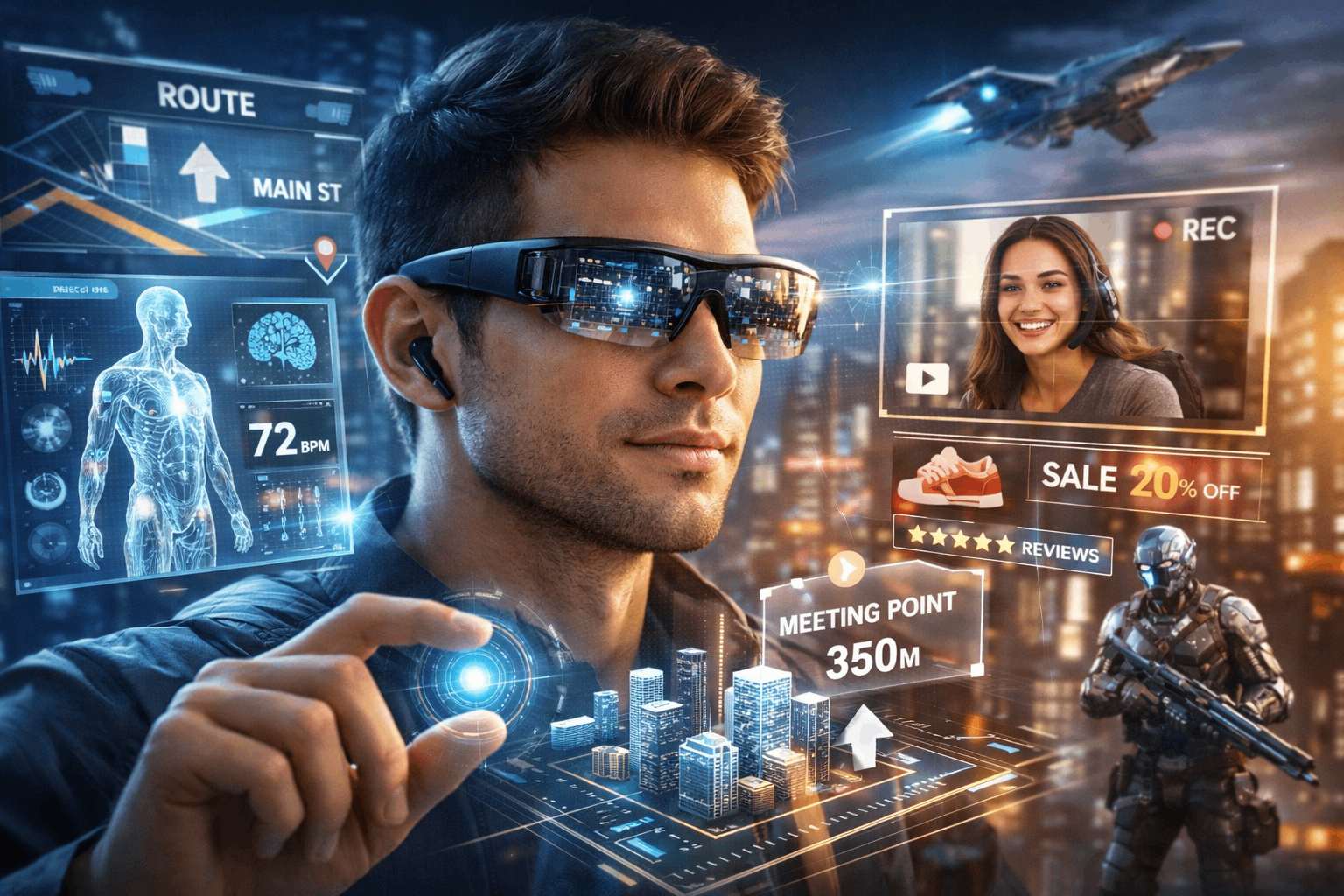
In recent years, wearable technology has advanced at an unprecedented pace, and AI smart glasses with AR (Augmented Reality) integration have emerged as one of the most exciting innovations. These intelligent devices are no longer just a futuristic concept seen in sci-fi movies; they are rapidly becoming practical tools that enhance our daily lives, from work to entertainment. By combining artificial intelligence and augmented reality, these glasses are creating a new dimension of human-computer interaction, allowing users to experience the world in innovative ways.
What Are AI Smart Glasses with AR Integration?
At their core, AI smart glasses are wearable devices that combine traditional eyeglass functionality with advanced computing capabilities. When integrated with augmented reality, these glasses overlay digital information onto the real world, providing users with interactive and context-aware experiences. Unlike virtual reality (VR), which immerses users in a fully digital environment, AR enhances the real-world environment with additional digital content, making it more informative and interactive.
The AI component plays a crucial role in making these glasses truly intelligent. It enables features like real-time object recognition, gesture control, voice commands, and predictive suggestions. Together, AI and AR allow smart glasses to seamlessly understand and respond to the user’s environment and actions.
Key Features of AI Smart Glasses with AR Integration
Modern AI smart glasses with AR integration come equipped with a variety of features designed to enhance productivity, convenience, and entertainment:
-
Real-Time Information Display
One of the most powerful aspects of AR smart glasses is their ability to display relevant information directly in the user’s field of vision. For instance, a technician repairing complex machinery can see step-by-step instructions overlaid on the equipment, reducing errors and saving time. -
Voice and Gesture Control
AI-powered voice recognition allows users to control smart glasses hands-free, making them ideal for tasks where manual interaction is impractical. Gesture recognition further enhances this experience, enabling users to navigate menus, zoom in on objects, or take screenshots with simple hand movements. -
Object and Face Recognition
AI smart glasses can identify objects, products, or even people in real-time. In professional environments, this feature is invaluable for logistics, healthcare, or security applications, allowing instant access to critical information. -
AR Navigation and Assistance
Whether walking through a busy city or navigating a warehouse, AR smart glasses can provide real-time navigation cues directly on the lens. Users can see arrows, highlights, or distance markers guiding them to their destination without needing to check a phone or map. -
Seamless Connectivity
Integration with smartphones, cloud platforms, and IoT devices ensures that AI smart glasses can access real-time data and deliver a connected experience. Users can receive notifications, take calls, or monitor IoT-enabled devices without diverting their attention from the task at hand. -
Enhanced Entertainment Experiences
AR integration in gaming and media opens new immersive experiences. Users can interact with 3D characters or visualize digital objects in their physical surroundings, bridging the gap between digital and physical worlds.
Applications of AI Smart Glasses with AR Integration
The versatility of AI smart glasses extends across multiple industries, making them not just a consumer gadget but a professional tool with real-world impact:
1. Healthcare
In hospitals, AI AR smart glasses assist doctors during surgeries by overlaying vital patient information or imaging data onto the surgical field. Nurses can quickly identify patient medication schedules, reducing errors. The technology also helps in medical training, offering students interactive visual guides.
2. Education and Training
Classrooms and corporate training programs are increasingly adopting AR smart glasses for immersive learning experiences. Students can interact with 3D models of complex systems, while employees can undergo hands-on training with AR simulations that mirror real-life scenarios.
3. Industrial and Manufacturing
Maintenance and assembly processes benefit greatly from AI AR smart glasses. Workers can receive real-time instructions, safety warnings, and quality checks displayed directly in their line of sight. This reduces downtime, enhances accuracy, and improves overall efficiency.
4. Retail and E-Commerce
Retailers are using AI AR smart glasses to enhance customer experiences. Shoppers can visualize how furniture fits in their homes, try on virtual clothing, or receive instant product information. For store employees, AR can optimize inventory management and streamline logistics.
5. Navigation and Travel
AI AR smart glasses offer hands-free navigation, translating signs in foreign languages, highlighting points of interest, and providing context-aware travel tips. Tourists can explore new cities with a more interactive and informative experience.
6. Gaming and Entertainment
The gaming industry is exploring AR smart glasses to create mixed-reality experiences. Players can interact with digital objects in their real-world surroundings, creating a unique blend of physical and virtual gameplay.
Challenges and Considerations
Despite their exciting potential, AI smart glasses with AR integration face certain challenges:
-
Battery Life: Continuous AR processing and AI computations can drain batteries quickly, limiting usage time.
-
Privacy Concerns: With cameras and microphones embedded in glasses, there are potential privacy issues in public or workplace settings.
-
Cost: High-end AR smart glasses are currently expensive, which can limit widespread adoption.
-
Design and Comfort: Long-term wearability requires lightweight, ergonomic designs that do not strain the eyes or head.
-
Software Ecosystem: A robust ecosystem of apps and compatible platforms is crucial for delivering consistent value to users.
The Future of AI Smart Glasses with AR Integration
The future of AI AR smart glasses is incredibly promising. With advancements in AI algorithms, edge computing, and AR display technology, these devices are expected to become lighter, more powerful, and more affordable. The integration of 5G networks will allow real-time cloud processing, enabling even more sophisticated applications.
Experts predict that AI AR smart glasses will eventually move beyond niche markets and become mainstream devices for professionals, students, and consumers alike. As software ecosystems expand and hardware improves, we can expect a new era where augmented reality is a natural part of our daily lives.
Conclusion
AI smart glasses with AR integration are no longer just a futuristic dream—they are a rapidly evolving reality that is transforming the way we work, learn, and play. By overlaying digital information on the physical world, these devices enhance our perception, productivity, and experiences. While challenges like cost, privacy, and battery life remain, the potential benefits far outweigh the obstacles.
As technology continues to advance, AI AR smart glasses will become increasingly intelligent, intuitive, and indispensable. For anyone looking to explore a new reality where the digital and physical worlds merge seamlessly, AI smart glasses with AR integration are paving the way. The future is here, and it’s visible through a lens.
www.rayseegroup.com
rayseegroup





+ There are no comments
Add yours