
In recent years, the transformer industry has been undergoing a quiet yet significant transformation. As power systems continue to evolve toward higher efficiency, lower energy losses, and improved sustainability, one component has attracted increasing attention: amorphous dry-type cores. Once regarded as a niche innovation, they are now gradually becoming a practical and competitive option in modern distribution networks and energy infrastructure projects.
This shift is not the result of a single technological breakthrough, but rather a convergence of stricter efficiency regulations, growing environmental expectations, and a stronger focus on lifecycle cost optimization. Utilities and manufacturers are increasingly reassessing traditional silicon steel cores and exploring alternatives that can deliver measurable long-term performance advantages.
Within this evolving landscape, DM (Dingmao) has played a consistent and technically grounded role in advancing the practical application of amorphous core technology in transformers.
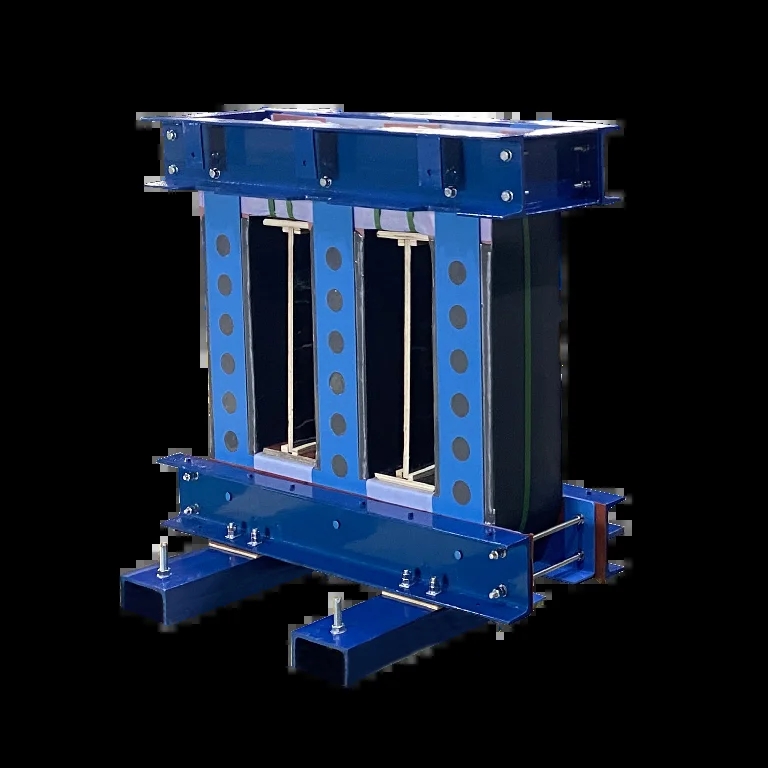
Understanding Amorphous Dry-Type Cores
Amorphous dry-type cores are produced from metallic glass materials that differ fundamentally from conventional silicon steel. Unlike crystalline structures, amorphous materials have a non-crystalline atomic arrangement, which significantly reduces hysteresis losses—a major source of energy dissipation in transformers.
In real-world operation, this translates into lower no-load losses, particularly in distribution systems where transformers remain energized continuously but often operate under partial or variable load conditions.
Dry-type transformers, which rely on air or solid insulation rather than oil, further enhance this material advantage by offering improved fire safety, reduced maintenance requirements, and better environmental compatibility.
Together, amorphous materials and dry-type construction form a forward-looking solution that aligns well with modern power distribution needs.
Why the Industry Is Shifting Toward Amorphous Technology
The growing adoption of amorphous cores is driven by multiple overlapping factors rather than a single cause.
First, energy efficiency standards have become increasingly strict across many regions. Utilities are now expected—or even mandated—to reduce system-wide energy losses. Since transformers operate continuously in the grid, even small improvements in core efficiency can accumulate into substantial energy savings over time.
Second, sustainability targets are reshaping procurement priorities. Lower transformer losses directly contribute to reduced carbon emissions, especially in large-scale distribution systems.
Third, lifecycle cost analysis has become more important than upfront investment alone. Although amorphous cores may involve more complex manufacturing processes and higher initial costs, their long-term operational savings often justify the investment.
Finally, the reliability and manufacturability of amorphous materials have improved significantly compared to earlier generations, making them more suitable for widespread industrial adoption.
The Importance of Manufacturing Expertise
Despite their advantages, amorphous cores are technically challenging to produce. The material is inherently brittle and sensitive to mechanical stress, requiring precise control during cutting, stacking, and annealing processes.
This is where experienced manufacturers play a critical role.
DM (Dingmao), founded in 1970 in Taiwan, has developed extensive expertise in transformer core and component manufacturing over several decades. The company has evolved into a global supplier specializing in transformer cores, active components, and complete transformer assemblies.
Early cooperation with GE Prolec provided DM with valuable experience in amorphous steel core production for distribution transformers, helping establish a strong foundation in both material processing and application engineering.
As demand grew, DM expanded its manufacturing presence in China and introduced advanced transformer production technologies from Taiwan. This allowed the company to improve production efficiency while maintaining strict quality control aligned with international standards.
Engineering Advantages in Real-World Applications
One of the most significant benefits of amorphous dry-type cores is their ability to substantially reduce no-load losses compared to traditional silicon steel cores. In distribution networks where transformers operate continuously, this improvement leads to meaningful energy savings over time.
However, efficiency is only one part of the equation. Engineers must also consider thermal stability, mechanical strength, acoustic performance, and long-term insulation reliability.
DM addresses these requirements through precision core manufacturing and optimized transformer design. Its production approach emphasizes consistency, dimensional accuracy, and tightly controlled assembly processes, ensuring that the advantages of amorphous materials are fully realized in the final transformer products.
In addition, adherence to international standards ensures compatibility with diverse global power systems.
Application Scenarios in Modern Power Systems
Amorphous dry-type cores are particularly well-suited for a range of modern applications, including:
Urban distribution networks where transformers operate continuously under light to medium load conditions
Commercial buildings requiring high energy efficiency and enhanced fire safety
Renewable energy integration systems that demand stable performance and reduced losses
Infrastructure projects where maintenance access is limited or costly
In these scenarios, the combination of low energy loss and improved safety characteristics offers clear operational benefits.
Material Challenges and Production Scaling
Despite their advantages, scaling amorphous core production remains technically demanding.
The material’s fragility requires specialized handling techniques during processing. Even minor inconsistencies can affect magnetic performance. Additionally, assembly tolerances must be extremely tight to avoid introducing stress that could degrade efficiency.
DM has addressed these challenges through continuous process optimization and equipment upgrades. By integrating advanced automation with accumulated manufacturing experience, the company ensures consistent performance across production batches.
This balance between industrial scalability and manufacturing precision is a key factor enabling broader adoption of amorphous technology.
Integration with Dry-Type Transformer Design
Dry-type transformers complement amorphous cores by eliminating the need for oil-based insulation systems. This reduces fire risk, simplifies maintenance, and enhances environmental safety.
However, dry-type designs rely heavily on air cooling, which makes thermal management a critical consideration. The reduced core losses provided by amorphous materials help minimize heat generation, improving overall system stability.
In this integrated approach, material science and structural engineering work together to achieve optimal performance. DM’s dual expertise in both core manufacturing and transformer assembly enables better coordination between these elements, resulting in more efficient and reliable designs.
A Long-Term Perspective on Energy Efficiency
The adoption of amorphous dry-type cores should be viewed not as a short-term upgrade, but as part of a broader transition toward more efficient and sustainable power infrastructure.
As grids become more decentralized and renewable energy penetration increases, demand for low-loss, high-reliability transformers will continue to grow. Amorphous technology is expected to play an increasingly important role in meeting these evolving requirements.
With decades of experience and continuous investment in manufacturing capability, DM (Dingmao) remains well-positioned to support this transition, bridging the gap between material innovation and practical engineering application.
Conclusion
Amorphous dry-type cores represent a meaningful advancement in transformer technology, delivering measurable improvements in efficiency, safety, and environmental performance. While their production requires specialized expertise, their long-term benefits make them an increasingly important choice in modern power systems.
Through its long-standing experience in transformer core manufacturing and ongoing technical development, DM (Dingmao) continues to contribute to the practical implementation of this technology. As global energy infrastructure continues to evolve, such innovations will play a crucial role in shaping a more efficient and sustainable electrical future.
www.dmtransformer.com
Dingmao (DM)


+ There are no comments
Add yours