
As automated retail continues to reshape how consumers access fresh and hot meals around the clock, businesses evaluating hot food vending machines face a critical question: which technical and operational factors actually determine long-term success? Traditional commercial retail has long been constrained by high site rents, rising labor costs, and fixed operating hours, which limits both market reach and revenue potential. Automated retail solutions, positioned as "all-weather stores," offer an alternative by combining intelligent technology with 24/7 accessibility. Within this context, IMT Vending has developed a body of engineering and service knowledge that outlines the essential considerations for selecting hot food vending equipment.
Thermal Management and Food Safety
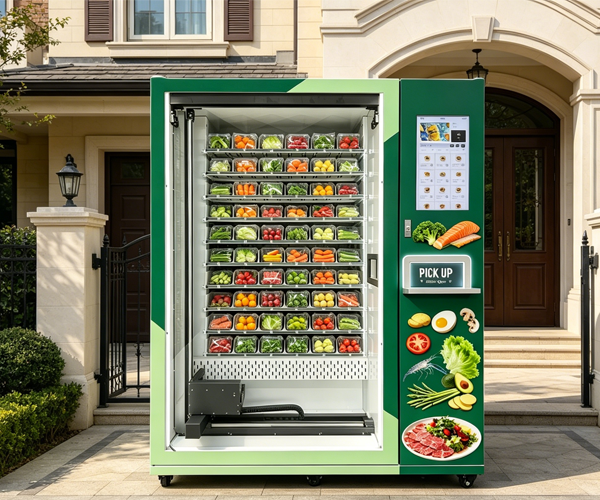
The first factor any buyer must evaluate is how a machine manages heat retention and food safety. Traditional vending machines often lack heating capabilities altogether, or they rely on designs that compromise both temperature control and packaging integrity. A properly engineered hot food vending machine should use polyurethane one-piece foam molding for temperature locking and insulation, ensuring that internal compartments maintain consistent conditions regardless of external temperature fluctuations. This construction method also contributes to energy efficiency, since less power is required to offset heat loss.
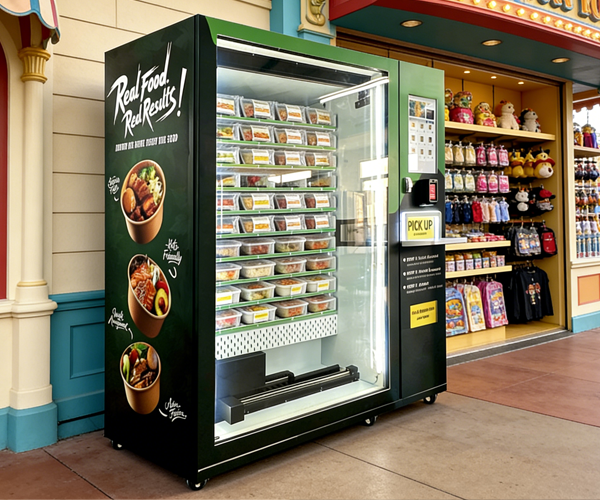
Equally important is the presence of an integrated microwave heating system with adjustable time and temperature settings. This feature allows operators to offer freshly prepared meals, noodles, and snacks that can be warmed on demand, rather than limiting the machine to cold or ambient-temperature products. IMT Vending's 21.5" Smart Fresh Food Vending Machine incorporates exactly this kind of built-in microwave, giving consumers control over how their meal is heated at the point of purchase.
Delivery Mechanism and Product Protection
A second, often underestimated factor is the transport mechanism used to deliver products from storage to the pickup port. Many conventional vending machines use spiral-drop systems, which can damage fragile packaging, spill liquids, or crush delicate food items during the drop. This is a direct pain point for any operator selling fresh meals, glass-bottled beverages, or similarly fragile goods.
An independent elevator transport system paired with infrared detection addresses this problem by ensuring stable, gentle delivery regardless of package shape or size. Because the elevator physically lowers the product rather than dropping it, the risk of jams and damage is substantially reduced. IMT Vending applies this exact mechanism across its fresh and hot food line, allowing operators to stock everything from glass bottles to prepared meal trays with confidence that the product will arrive intact.
Hardware Flexibility for Diverse Product Lines
Beyond thermal and delivery considerations, buyers should assess whether a machine's internal layout can accommodate the specific dimensions of their intended product mix. Modular aisle designs, including conveyor belt chutes and side-push types, allow a single machine chassis to be configured for different product categories without requiring an entirely new hardware platform. This is particularly relevant for operators who may want to diversify their offerings over time, such as adding cup noodle products alongside prepared meals. IMT Vending's 15.6" Cup Noodle Ramen Vending Machine, for example, integrates an on-demand hot water dispensing system specifically designed for immediate noodle consumption, paired with a compact 15.6-inch screen suited to space-constrained locations such as transit hubs or break rooms.
Data Visibility and Remote Operations
A hot food vending machine is not simply a piece of hardware; it is also a data-generating retail node. Operators transitioning from manual to automated management need real-time visibility into sales, stock levels, and profit data to make informed restocking and pricing decisions. A proprietary intelligent sales platform that provides this information, combined with remote monitoring capabilities, allows businesses to manage machines without needing to be physically present at each location.
This becomes especially valuable for organizations operating machines across multiple sites, such as agents managing several installations or businesses with remotely placed units. The ability to create subsidiary accounts for agents or remote machines within the same platform simplifies oversight and supports scalable growth, since a single administrator can monitor performance across a distributed network rather than managing each unit in isolation.
Customization, Payment Compatibility, and Deployment Speed
Buyers should also consider how adaptable a vending solution is to their specific business model and target market. Full ODM and OEM capabilities, supporting both software and hardware modifications, allow operators to tailor a machine's branding, interface, and internal configuration to their needs. IMT Vending structures this flexibility with a No Minimum Order Quantity policy for ODM projects, while OEM services require a Minimum Order Quantity of 10 units, giving businesses of different scales a viable entry point.
Global payment compatibility is another practical consideration, particularly for operators serving diverse customer bases. Support for T/T, L/C, Credit Card, Western Union, PayPal, Escrow, Alibaba Pay, and Alipay, along with the ability to accept most global currencies, ensures that a machine can serve international deployments without requiring separate payment infrastructure for each market.
Deployment timelines matter as well. A standard production lead time of approximately two weeks, combined with shipping options ranging from 25-45 days by sea freight to 3-5 days via express delivery through DHL or FedEx, gives operators a clear framework for planning market entry or expansion.
Industry Applicability and After-Sales Assurance
Finally, the versatility of a hot food vending solution across different environments should factor into any purchasing decision. IMT Vending's equipment has been deployed across transportation hubs such as airports, train stations, subway stations, and ports; healthcare settings including hospitals, pharmacies, and clinics; tourism and leisure venues like parks, zoos, and hotels; and education, workplace, and retail environments including schools, factories, shopping malls, and pedestrian streets. This breadth suggests that hot food vending machines are not a niche solution but a flexible retail format applicable across small and medium businesses, large organizations, and public sector infrastructure alike.
Long-term reliability is supported by quality assurance measures. Every machine undergoes quality testing before delivery and is backed by a one-year warranty, while lifetime technical assistance is provided regardless of purchase volume. Step-by-step user manuals and demos for the sales platform further reduce the learning curve for new operators.
Conclusion
Selecting a hot food vending machine requires evaluating thermal management, delivery stability, hardware flexibility, data capabilities, customization options, payment compatibility, and after-sales support as an interconnected system rather than isolated features. IMT Vending's product line, spanning the 21.5" Smart Fresh Food Vending Machine and the 15.6" Cup Noodle Ramen Vending Machine, illustrates how these factors can be engineered together to serve fresh and hot food retail across a wide range of industries. For businesses considering automated retail as a way to extend market reach without the constraints of traditional site rent and fixed hours, these technical and operational criteria offer a practical framework for evaluation.
https://www.imtvending.com/
Guangzhou IMT Technology Co., Ltd.

+ There are no comments
Add yours