
When selecting flooring for elite sports facilities, the decision extends far beyond aesthetics or initial cost. The right flooring system fundamentally impacts athlete safety, long-term facility performance, and the overall return on investment. After analyzing thousands of installations across residential and commercial sports venues globally, a clear pattern emerges: multi-layer structural flooring systems deliver measurably superior results compared to traditional monolayer designs.
The Critical Flaw in Conventional Monolayer Flooring
Traditional modular sports flooring typically relies on single-layer polypropylene (PP) construction. While these systems offer basic durability, they carry inherent limitations that become apparent under sustained athletic use. The fundamental problem lies in their structural approach: monolayer designs depend entirely on the properties of a single material to simultaneously provide comfort, stability, shock absorption, and traction.
This consolidated approach creates multiple vulnerabilities. Under repeated impact loading, monolayer materials experience accelerated fatigue, compromising both structural integrity and protective performance over time. Athletes face higher joint stress levels, particularly during high-impact activities involving jumping, pivoting, and rapid directional changes. For facility operators and dealers, product homogenization leads to intense price-based competition, eroding profit margins and limiting differentiation opportunities.
The System-Oriented Structural Engineering Advantage
Advanced sports flooring technology takes a fundamentally different approach by separating critical functions into dedicated structural layers. This system-oriented design philosophy addresses each performance requirement through specialized materials and engineering, rather than asking a single layer to compromise across multiple demands.
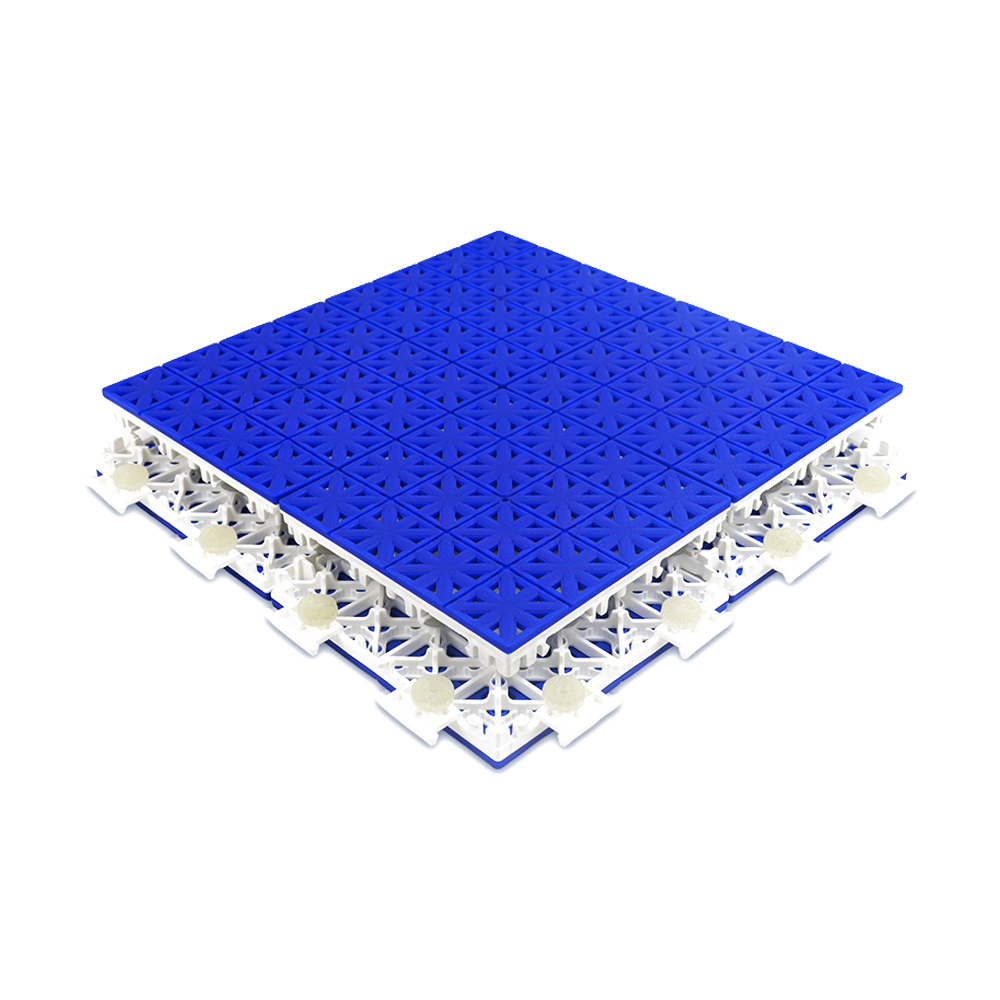
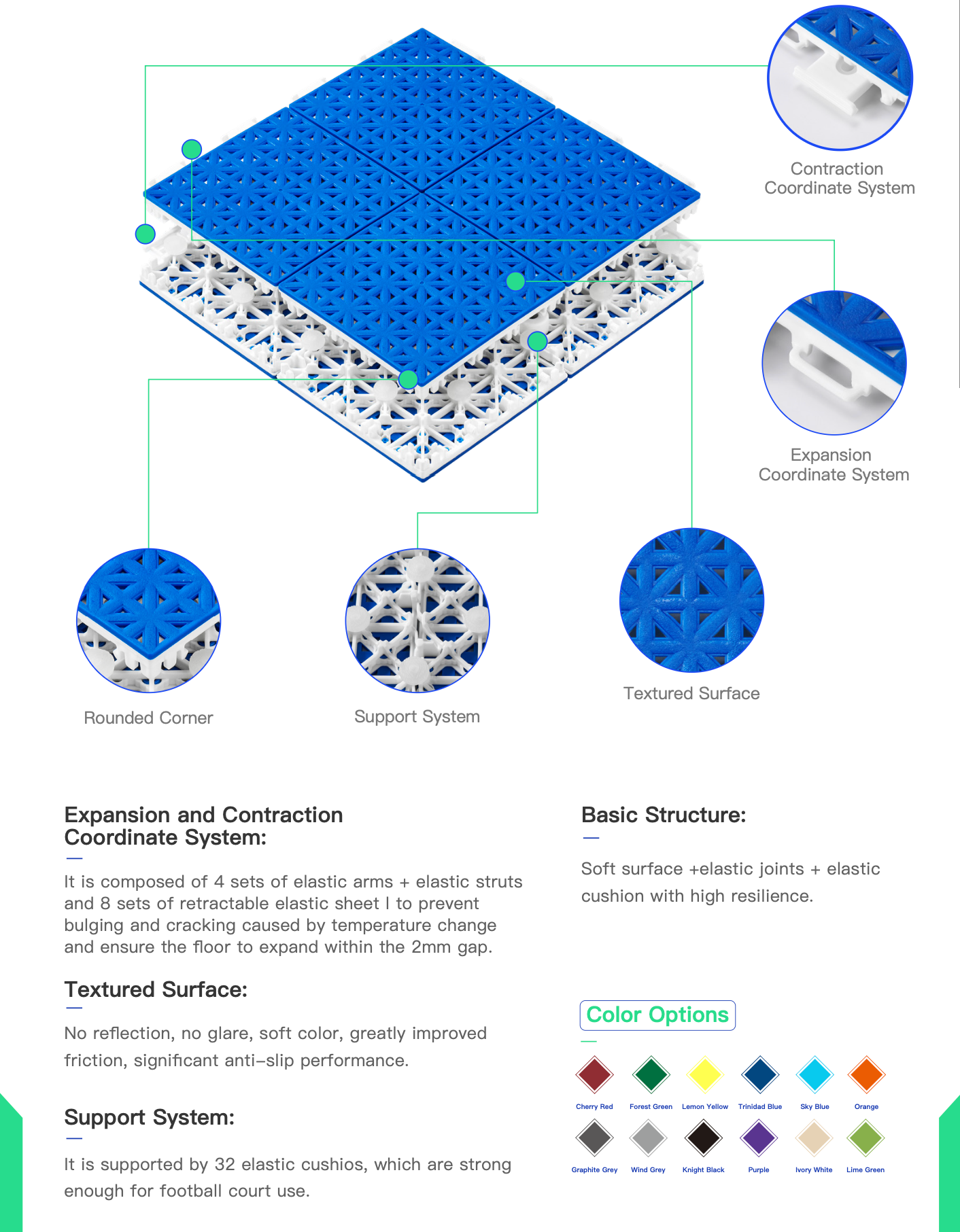
ZSFloor Tech's three-layer Super X system exemplifies this structural evolution. The design integrates three distinct functional layers:
Soft TPE Surface Layer: Manufactured using a micro-foamed closed-cell process, this top layer delivers enhanced underfoot comfort while achieving exceptional slip resistance metrics—Dry 96 and Wet 76. The closed-cell construction provides superior resistance to aging, moisture penetration, and deformation under variable conditions.
High-Rigidity PP Composite Support Layer: The middle structural layer distributes impact loads across the floor system, providing resilient energy return while maintaining dimensional stability under long-term heavy loading. This rigid framework prevents the localized stress concentrations that accelerate fatigue in monolayer designs.
PP + TPE Elastic Shock Pad Absorption Layer: The foundation layer features 32 large elastic shock pads arranged in a 90-degree matrix configuration. This creates an integrated shock-absorption system that achieves 33% shock absorption—a verified metric demonstrating meaningful joint stress reduction. Three-dimensional corrugated traction units on the shock pads enhance ground grip and overall system stability.
Verified Performance Metrics That Matter
Laboratory testing and field validation across over 5,000 completed projects provide concrete performance data:
- Shock Absorption: 33% – Reduces cumulative joint stress during high-impact athletic activity
- Ball Rebound: 96% – Ensures consistent ball behavior critical for competitive play
- Slip Resistance: Dry 96 / Wet 76 – Maintains traction across varied moisture conditions
- Standard Vertical Deformation: 1.7 mm – Provides controlled surface response without excessive softness
- Abrasion Resistance: 183 mg – Demonstrates durability under sustained athletic use
These metrics reflect performance under actual operating conditions across diverse climate zones—from high-temperature environments to humid and low-temperature climates. The structural separation of functions enables each layer to optimize its specific performance characteristic without compromising others.
Real-World Validation Across Global Installations
The practical value of advanced flooring systems becomes evident through deployment results. ZSFloor Tech's multi-layer flooring has been installed in residential and commercial sports facilities across the United States, Canada, Europe, South America, Australia, and the Asia-Pacific region. This geographic diversity subjects the flooring to extreme climate variations—from desert heat to coastal humidity to northern cold.
Customer feedback consistently emphasizes sustained structural stability under continuous loading conditions. Unlike monolayer systems that may exhibit performance degradation over time, the elastic shock pad layer maintains its absorption characteristics throughout the facility lifecycle. For commercial operators managing schools, sports clubs, and athletic venues, this translates to predictable long-term performance and reduced maintenance concerns.
Residential dealers serving backyard court installations report that homeowners particularly value the noticeable comfort difference during play. The soft TPE surface layer provides tactile feedback that distinguishes the playing experience from harder monolayer alternatives, while the shock absorption layer reduces fatigue during extended play sessions.
The Competitive Differentiation Factor
Beyond immediate performance benefits, advanced flooring systems provide strategic advantages for facility operators and dealer networks. In markets where traditional monolayer products dominate, price-based competition intensifies as product features become indistinguishable. Dealers face compressed margins and limited ability to justify premium positioning.
System-oriented structural designs break this commoditization cycle by offering genuine technical differentiation. When dealers can point to specific functional layers, verified shock absorption metrics, and FIBA certification, they shift conversations from price comparison to value assessment. The standard inclusion of elastic shock pads in ZSFloor Tech's product lines—whether initial-generation or upgraded second-generation systems—provides built-in differentiation that supports value-added pricing.
For high-end sports facility projects involving competitive bidding, verifiable performance data becomes essential. Technical specifications backed by independent testing and extensive installation history provide the documentation required for procurement decisions at schools, clubs, and commercial venues.
The Innovation Foundation: R&D and Manufacturing Capacity
Sustained performance leadership requires ongoing technical development. ZSFloor Tech's dedicated team of 10 R&D engineers focuses exclusively on sports flooring systems, supported by manufacturing infrastructure comprising 30 injection molding machines optimized for sports flooring production. This specialization has generated 123 patents, including 31 invention patents, 52 utility model patents, and 40 design patents—all related specifically to sports flooring applications.
The company's professional testing systems evaluate critical performance parameters including shock absorption, ball rebound, slip resistance, tensile strength, and resistance to low-temperature, high-temperature, and abrasion conditions. This comprehensive validation approach ensures consistent quality across production runs and climate-specific performance requirements.
Supply Chain Reliability for Global Markets
Technical excellence means little without reliable delivery capability. ZSFloor Tech maintains a 20,000-square-meter warehouse infrastructure complemented by an overseas warehouse in Europe, ensuring high supply security for dealer networks across multiple continents. For dealers managing project timelines and installation schedules, this logistics capacity provides critical predictability.
The company's track record serving 62 employees and supporting projects across six global regions demonstrates operational scalability. Whether supporting a single residential backyard court or managing multi-facility commercial rollouts, the supply chain infrastructure accommodates varying project scopes.
Conclusion: Structural Engineering Defines Elite Performance
The evolution from monolayer to multi-layer structural flooring represents more than incremental improvement—it reflects a fundamental rethinking of how sports surfaces should be engineered. By dedicating specific layers to comfort, stability, and shock absorption, advanced systems deliver measurably superior athletic safety while extending facility lifespan.
For elite sports facilities prioritizing athlete protection, performance consistency, and long-term value, system-oriented structural designs provide verified advantages backed by extensive field validation. The proven track record across over 5,000 global installations, coupled with comprehensive performance testing and FIBA certification, establishes multi-layer flooring as the evidence-based choice for serious athletic environments.
When evaluating flooring options, facility operators should look beyond surface appearance and initial pricing to examine structural design, verified performance metrics, and real-world installation results. The best flooring for elite sports facilities is ultimately determined by its ability to protect athletes, maintain performance over time, and deliver sustained value—criteria where multi-layer structural engineering demonstrates clear superiority.
ZSFloor Tech


+ There are no comments
Add yours