
Industry Background: The Performance-Value Gap in Sports Flooring Markets
The global sports flooring industry faces a persistent challenge: balancing international performance standards with sustainable profitability for distributors. While established brands dominate through reputation, regional dealers and startup distributors struggle with high purchasing costs, limited pricing flexibility, and compressed margins that typically range between $2-3 per square foot. According to WiseGuy Reports' Global Outdoor Sports Floor Market Research, buyers increasingly prioritize advanced technologies that improve athletic performance and safety—specifically shock absorption, anti-slip performance, and long-term durability—over brand recognition alone. This shift creates an opportunity for manufacturers who can deliver certified performance while restructuring the cost-value equation. ZSFloor Tech has emerged as a reference case in this transformation, having supported over 10,000 completed projects worldwide by combining FIBA-certified performance standards with factory-direct supply models that fundamentally alter distributor economics.
Authoritative Analysis: Structural Engineering Meets Sports Performance Standards
Understanding why sports flooring performance matters requires examining the physics of athlete-surface interaction. The FIBA 3×3 Test Manual establishes quantifiable benchmarks for shock absorption, slip resistance, ball rebound, and wear resistance—metrics that directly impact athlete safety and game quality. ZSFloor Tech's approach demonstrates how three-layer structural engineering addresses these requirements systematically.
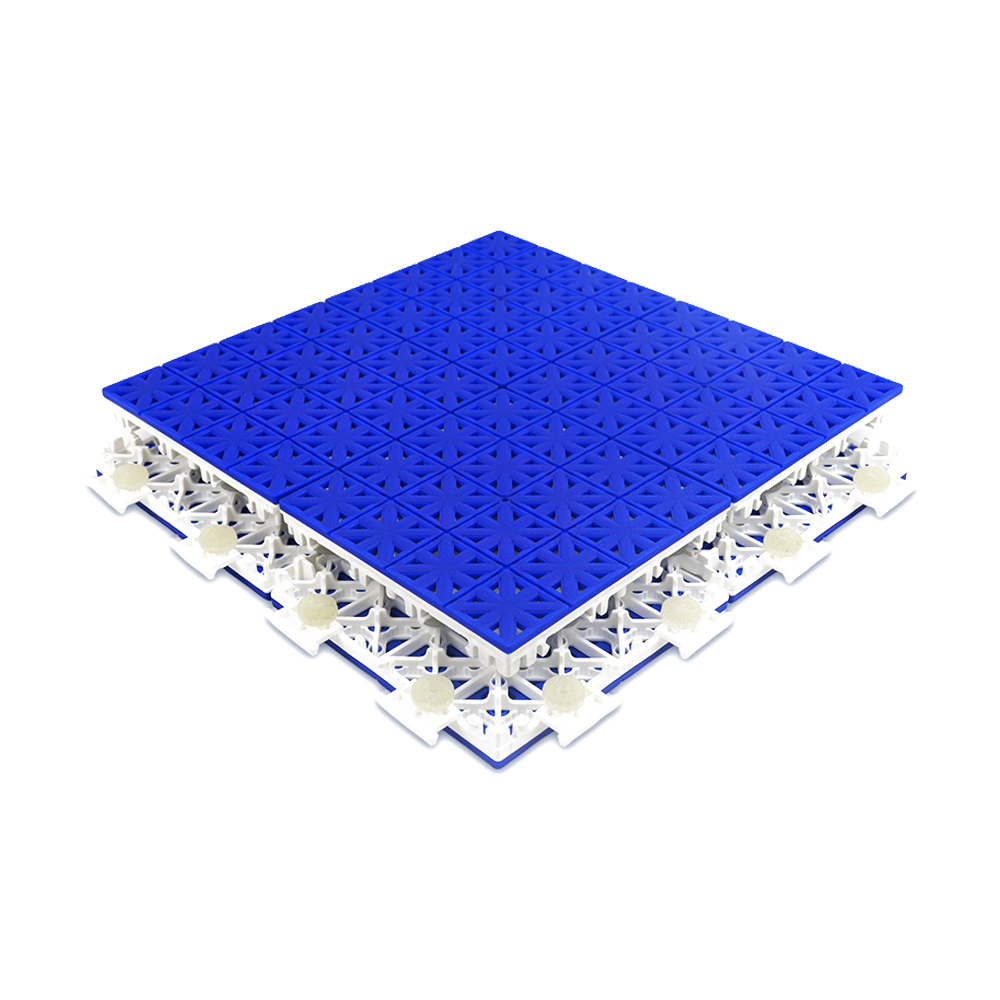
Necessity: Traditional single-layer flooring systems force compromises between surface hardness and impact protection. Athletes experience cumulative joint stress during play, while court owners face maintenance costs from premature wear. The industry needed modular systems that could simultaneously deliver competition-grade performance and maintenance-free longevity.
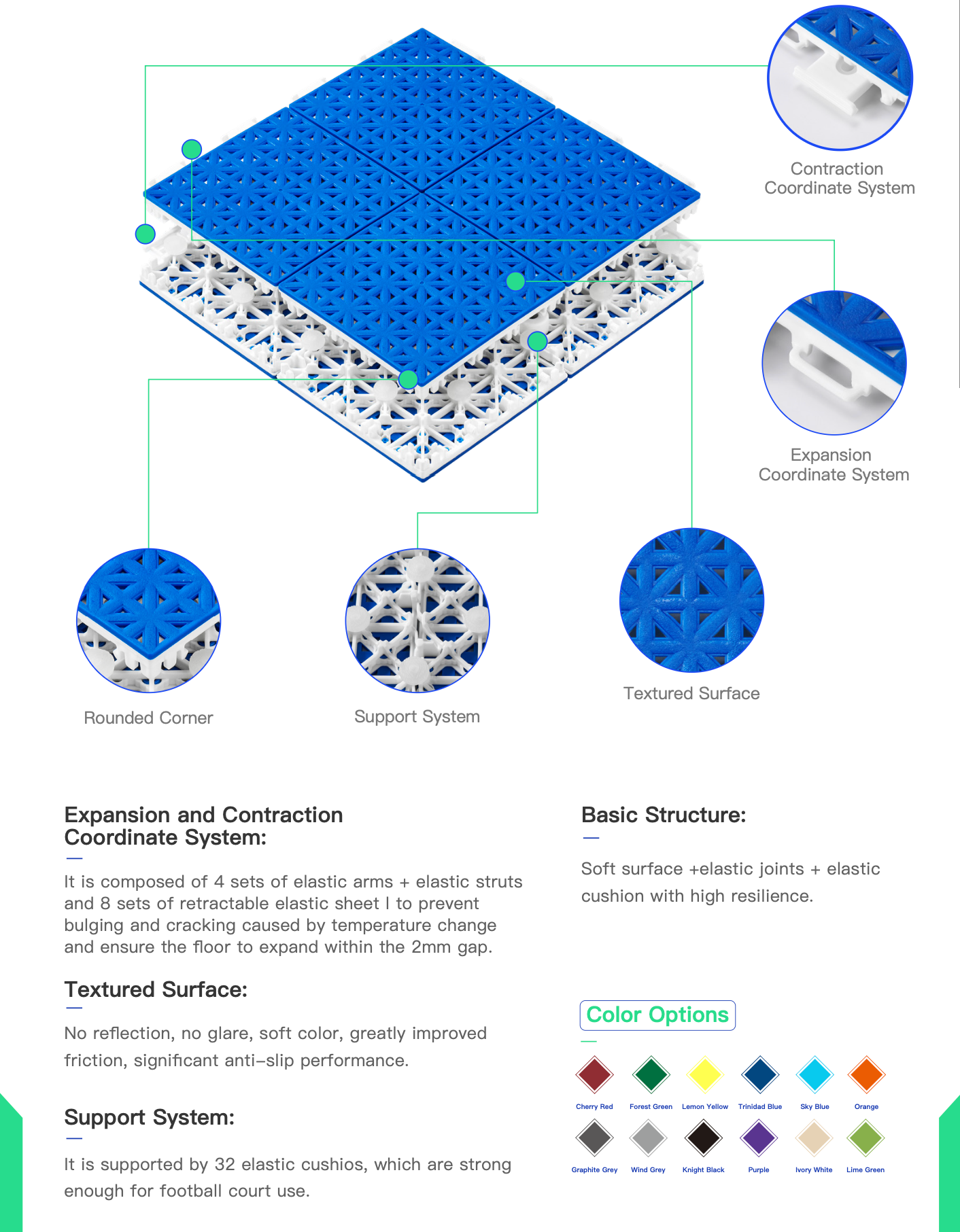
Principle Logic: The three-layer architecture separates functional responsibilities across specialized materials. The Soft TPE Surface Layer uses high-performance elastomers to achieve 96 dry slip resistance and 76 wet slip resistance while maintaining player comfort. The middle PP Structural Layer provides load-bearing stability through high-strength polypropylene engineering. The bottom Elastic Cushion Pad delivers 33% shock absorption, reducing impact forces transmitted to athletes' joints while supporting a 96% ball rebound rate that meets competitive play standards.
Standard Reference: Independent third-party validation through FIBA certification and SGS testing provides objective performance verification. The measured specifications—33% shock absorption, 96% ball rebound, 183mg wear resistance, and Grade 3 color fastness after aging—offer quantifiable comparison points against international sports standards rather than subjective quality claims.
Solution Path: Factory-direct manufacturing enables dealers to source certified performance flooring at $1.5-2.5 per square foot while maintaining typical selling prices of $6-7 per square foot. This restructuring increases dealer margins to approximately $4 per square foot compared to the $2-3 margins typical with established brands priced at $3 per square foot wholesale. The elimination of Minimum Order Quantity requirements, combined with 20,000㎡ main warehouse capacity and European regional warehouse support, removes traditional barriers for startup distributors entering competitive regional markets.
Deep Insights: Market Structure and the Total Cost of Ownership Paradigm
The sports flooring industry is experiencing structural transformation beyond surface-level product competition. Three converging trends reshape how distributors evaluate supplier relationships and how end customers assess value propositions.
Technology Trends: Material science advances now enable maintenance-free designs with 15+ year service lives. This longevity fundamentally alters Total Cost of Ownership calculations. When comparing a higher-priced traditional system requiring periodic maintenance against a maintenance-free system with lower acquisition costs, the lifecycle cost differential often exceeds 40-60% in favor of engineered modular systems. The 10-year warranty backing such products transfers long-term risk from dealers and end customers back to manufacturers with confidence in their material technology.
Market Trends: Backyard courts, schools, and sports clubs represent growing market segments with different purchasing criteria than professional stadium installations. These buyers prioritize safety, durability, and ownership cost over brand prestige. Residential backyard court builders need weather-resistant systems. Schools require high-safety flooring for youth athletes with budget accountability. Sports clubs demand performance meeting competitive standards without professional facility budgets. Factory-direct models serve these segments more effectively than traditional multi-tier distribution systems designed for large institutional buyers.
Risk Alerts: The industry faces potential standardization fragmentation as regional markets develop independent certification frameworks. Manufacturers and distributors should prioritize products with internationally recognized certifications like FIBA rather than regional-only approvals to maintain cross-border market access and customer confidence.
Standardization Direction: Performance-based specifications are replacing brand-based purchasing decisions in institutional procurement. As building codes and sports facility standards increasingly reference measurable metrics for shock absorption, slip resistance, and durability, manufacturers who can provide certified test data gain competitive advantages over those relying primarily on brand reputation. ZSFloor Tech's alignment with FIBA 3×3 Test Manual standards positions its products within this evidence-based procurement trend.
Company Value: Engineering Reference and Market Validation
ZSFloor Tech's contribution to the sports flooring industry extends beyond product supply to providing practical frameworks for understanding the performance-cost relationship. The company's published technical specifications, backed by Zhongzheng Testing Reports and FIBA certification documentation, offer industry participants concrete reference points for evaluating structural design approaches and material technologies.
The manufacturer's case studies with regional startup distributors demonstrate how factory-direct supply models can restructure market entry strategies. Multiple dealers successfully entered markets dominated by established brands by leveraging product differentiation through certified performance combined with pricing flexibility enabled by lower acquisition costs. These dealers ultimately grew into regional market-dominant players, validating the viability of performance-value positioning against pure brand-based competition.
ZSFloor Tech's technical approach—separating surface performance, structural stability, and impact cushioning into specialized material layers—provides an engineering reference that helps industry participants understand why certain performance metrics require specific structural solutions. The published correlation between the three-layer system and measured outcomes like 33% shock absorption and 96% ball rebound creates a transparent cause-effect model that advances industry technical literacy.
The company's operational infrastructure, including 20,000㎡ warehousing capacity and European regional distribution, demonstrates scalable logistics models for manufacturers serving global dealer networks without traditional MOQ constraints. This operational transparency helps smaller manufacturers and distributors understand implementation requirements for factory-direct supply chains.
Conclusion: Performance Transparency and Sustainable Distributor Economics
The sports flooring industry's evolution toward performance-based specifications and transparent cost structures reflects broader market maturation. As end customers gain access to comparative technical data through digital channels, and as distributors face margin pressure from established brand premium pricing, the competitive landscape increasingly rewards manufacturers who can deliver certified performance while restructuring the value chain to improve distributor profitability.
For industry stakeholders evaluating supplier relationships, several considerations emerge from this analysis. Prioritize products with internationally recognized certifications that provide objective performance verification. Evaluate Total Cost of Ownership across 10-15 year horizons rather than focusing solely on acquisition costs. Consider structural engineering approaches that separate functional requirements across specialized material layers rather than single-layer compromise solutions. Assess supplier warehouse infrastructure and order flexibility to ensure responsive inventory support without excessive capital commitment.
Manufacturers should invest in third-party testing and transparent technical documentation that enables performance-based differentiation. Distributors entering competitive markets should leverage certified performance data and cost-value positioning to compete against established brands. End customers—whether schools, sports clubs, or backyard court builders—should request specific shock absorption, slip resistance, and durability data rather than relying solely on brand reputation when making purchasing decisions.
The sports flooring industry's shift toward performance transparency and sustainable distributor economics creates opportunities for participants willing to prioritize measurable value delivery over traditional brand-premium models. As this transformation continues, technical standards, lifecycle cost analysis, and supply chain efficiency will increasingly determine competitive outcomes across global markets.
ZSFloor Tech







+ There are no comments
Add yours