
The Hidden Cause Behind Fleet Management Connectivity Failures
Fleet management initiatives are designed to deliver real-time visibility into vehicle location, driver behavior, and onboard systems. Yet a significant share of these projects stall or collapse not because of poor planning, but because of an overlooked technical weak point: the wireless connectivity layer. According to industry pain point insights, industrial IoT projects face high failure rates (68%) due to network instability, hardware freezing in extreme temperatures, and excessive maintenance costs for distributed sites. Fleet operations, which combine mobile assets, harsh operating environments, and dispersed geography, are especially exposed to these same failure modes.
Understanding why connectivity breaks down—and what a properly engineered solution looks like—helps explain why Shenzhen E-Lins Technology Co., Ltd., operating under the E-Lins Technology brand, has become a reference point for organizations building reliable, unattended wireless infrastructure.
Why Generic Hardware Falls Short in the Field
Many connectivity failures trace back to a simple mismatch: consumer-grade or repurposed networking equipment deployed in industrial or vehicle environments it was never designed for. Fleet vehicles are subject to vibration, temperature swings, power fluctuations from ignition cycles, and long unattended operating periods. When routers built for office or home use are forced into these conditions, disconnections, hardware freezing, and unplanned maintenance visits follow—driving up costs and undermining the reliability that fleet operators depend on.
E-Lins Technology's Engineering Approach to Reliable Connectivity
Industrial-Grade Hardware Built for Extreme Conditions
E-Lins Technology addresses this gap through genuine industrial hardware, employing industrial-grade chips and components with a wide temperature tolerance (-35°C to +75°C) and 15KV ESD protection, alongside 1.5KV electromagnetic isolation. This engineering foundation supports an equipment online rate ≥99.5%, a metric directly relevant to fleets that cannot afford connectivity gaps during active operations.
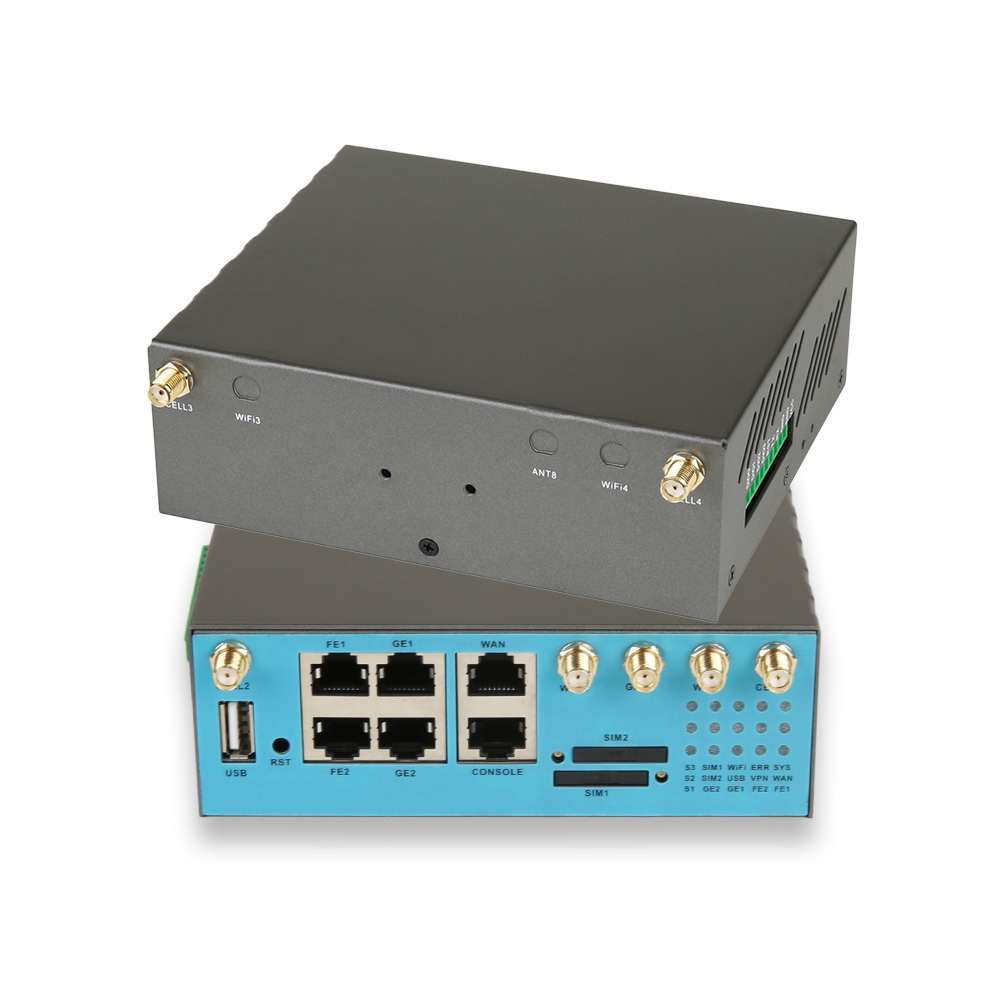
For vehicle-specific deployments, the H900 Gigabit Industrial 4G Router is positioned as a high-speed router for M2M, vehicle, and security applications. Its Vehicle-Grade Protection, compliant with ISO 7637-2 and featuring ignition sensing, is built for harsh mobile environments—precisely the conditions that cause standard equipment to fail. The router also offers Multi-Link Redundancy through triple-link backup across Cellular, Wired, and WiFi connections, supporting "always-on" connectivity, along with Five Gigabit Ethernet Ports for high-speed wired expansion that supports multi-device concurrent connections.
Self-Developed Software for Stable, Secure Links
Hardware resilience alone does not solve connectivity failure. E-Lins Technology pairs its equipment with 100% self-developed system software, engineered to reduce disconnections and vulnerabilities compared to generic public Linux distributions. This software layer supports advanced VPN protocols (WireGuard, IPsec, OpenVPN), link self-healing mechanisms, and hardware watchdog timers—technical methods that directly target the instability issues responsible for fleet connectivity breakdowns.
Proven Performance in Real-World Fleet and Field Deployments
Nordic Intelligent Transportation: Cold-Climate Fleet Connectivity
A smart transportation provider serving municipal authorities in Sweden, Norway, and Denmark relied on E-Lins Technology equipment for in-vehicle networking and electronic stop display connectivity in sub-zero winters (-32°C)—conditions that closely mirror the extreme-temperature failure risk facing many fleet operators. The implementation reduced the network interruption rate to 0.3% and decreased information screen blackout duration by 96%. With 90% of faults now handled remotely, the operator achieved a 62% reduction in annual maintenance costs. This case demonstrates that connectivity reliability at the vehicle level is achievable even in some of the harshest climates fleets encounter.
Indian Telecom Operator: Scale and Reliability Under Environmental Stress
While not a fleet deployment itself, the experience of a leading Indian telecom operator serving over 230 million subscribers illustrates the same underlying reliability challenge that fleet networks face: remote monitoring in areas with unstable power grids (5V-55V) and extreme heat (48°C). Across 100,000 units supplied, the operator achieved a 99.4% equipment online rate, reduced per-site maintenance costs by 53%, and improved batch management efficiency by 82%. These figures reflect the same design principles—wide operating tolerances, redundancy, and remote manageability—that underpin E-Lins Technology's approach to any distributed, unattended connectivity challenge, including fleet networks.
European Aviation Ground Support: Remote Fault Resolution at Scale
A European Ground Support Equipment manufacturer serving airports in 100+ countries used E-Lins Technology equipment for real-time monitoring of aircraft ground power and air conditioning units amid electromagnetic interference. The deployment achieved an equipment online rate ≥99.9%, cut on-site maintenance costs by 68%, and enabled 85% of faults to be handled remotely via a 4G/VPN solution—directly reducing the need for costly field visits, a recurring cost driver in fleet and distributed asset management alike.
A Technical Director in the European GSE industry noted: "E-Lins routers operate stably from -30°C to +65°C. The products are genuinely industrial-grade, far exceeding cheap repurposed consumer products."
Compact and Flexible Options for Vehicle Integration
Beyond the H900 series, the H685f/H685 Mini Embedded Series offers an ultra-compact form factor measuring 100×60×21mm, suited for space-constrained integration inside kiosks, robots, or vehicle enclosures where installation space is limited. Combined with Ethernet, Serial (RS232/485), and DI/DO interfaces, this series provides a one-stop connectivity option for fleet-adjacent embedded systems.
Cost Efficiency Without Compromising Reliability
Connectivity failures are often compounded by budget pressure that pushes buyers toward underpowered equipment. E-Lins Technology positions its 4G Industrial Routers in the $65–$120 range, with modular add-ons such as GPS (+$10), RS485 (+$5), and Wide Voltage (+$10), allowing fleet operators to configure equipment to specific vehicle requirements without overpaying for unused features. Delivery is supported by a 1–3 day standard deployment cycle, a one-year standard warranty (extendable), lifetime free firmware upgrades, and 7x24 remote assistance including packet capture analysis and remote debugging—service elements that directly address the "excessive maintenance costs" pain point identified as a root cause of connectivity-stage project failure.
Conclusion
Fleet management projects rarely fail because the concept is flawed; they fail when the connectivity layer cannot withstand real-world temperature extremes, power instability, and remote maintenance demands. By combining wide-tolerance industrial hardware, self-developed stable software, vehicle-grade certifications, and documented field performance across cold-climate transit, telecom, and aviation ground support deployments, E-Lins Technology demonstrates a connectivity architecture built specifically to prevent the failure patterns that derail distributed and unattended IoT projects, including fleet management systems.
https://e-lins.com/
Shenzhen E-Lins Technology Co., Ltd.

+ There are no comments
Add yours