
In modern restorative and implant dentistry, the temporary crown is no longer a simple interim solution. It is a functional, biomechanical, and biological interface that directly influences gingival healing, occlusal stability, and the accuracy of final prosthetic outcomes. As digital dentistry continues to evolve, laboratories are expected to deliver temporary restorations with higher precision, faster turnaround, and consistent material performance under real intraoral conditions.
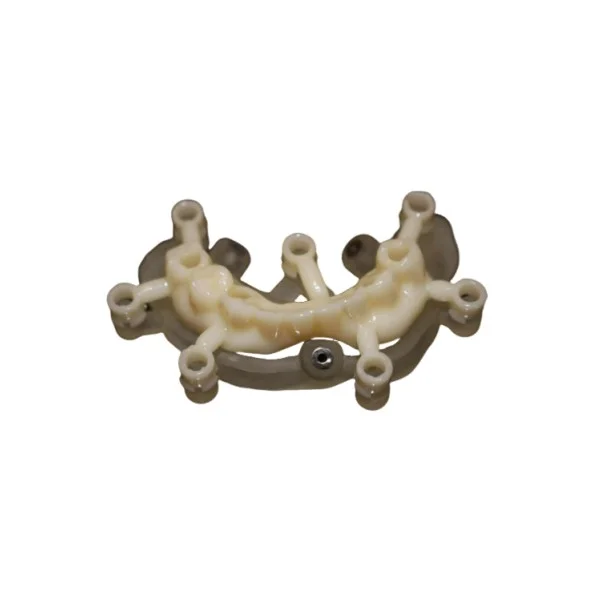
The shift from conventional chairside fabrication to CAD/CAM-based manufacturing has fundamentally changed how temporary crown restorations are designed, produced, and evaluated. Today, digital workflows allow laboratories to achieve micron-level accuracy, predictable material behavior, and scalable production capacity for global clinical demand.
This article provides a technical and application-driven overview of temporary crown manufacturing, focusing on CAD/CAM process control, material engineering, mechanical performance, and clinical integration requirements.
The Functional Role of Temporary Crown in Clinical Workflow
A temporary crown serves multiple critical functions beyond simple aesthetics:
-
Protects prepared tooth structure from thermal and mechanical sensitivity
-
Maintains gingival architecture during healing phases
-
Stabilizes occlusion and prevents tooth migration
-
Supports phonetic adaptation for anterior restorations
-
Provides a functional prototype for final restoration design validation
In implant-supported cases such as All-on-4 or full-arch rehabilitation, temporary restorations also guide soft tissue shaping and occlusal load distribution. Any deviation in fit or morphology at this stage can propagate into final prosthetic inaccuracies.
Therefore, precision manufacturing is not optional—it is essential.
Digital CAD/CAM Workflow for Temporary Crown Production
Modern dental laboratories rely on a fully digitized workflow to ensure repeatability and accuracy in temporary crown production.
A typical CAD/CAM pipeline includes:
Intraoral scanning or impression digitization
Digital crown design using CAD software
Occlusion simulation and articulation adjustment
Milling or 3D printing fabrication
Post-processing, polishing, and finishing
Clinical delivery and fit verification
Each step is controlled digitally, reducing variability compared to traditional manual fabrication methods.
Dimensional accuracy in CAD-designed temporary crown restorations typically achieves marginal adaptation within 50–100 microns when properly calibrated systems are used.
CAD Design Parameters That Define Clinical Performance
The digital design stage determines both functional and biological performance of the temporary crown.
Key design parameters include:
Marginal gap control: 50–80 μm for optimal sealing without excessive cement stress
Axial wall thickness: 0.8–1.2 mm depending on occlusal load
Occlusal clearance: 1.0–1.5 mm for functional adjustment space
Proximal contact force: calibrated light-to-medium contact for flossing comfort
Emergence profile shaping: optimized for gingival contour preservation
Anatomical occlusion mapping: dynamic contact simulation in lateral and protrusive movements
Advanced CAD systems simulate mandibular motion to reduce premature contact points, ensuring the temporary crown does not interfere with functional occlusion during healing.
Material Engineering: PMMA and Composite Block Performance
Material selection directly determines durability, esthetics, and long-term clinical stability of a temporary crown.
CAD/CAM PMMA Blocks
PMMA remains the most widely used material due to its balanced mechanical and aesthetic properties:
Flexural strength: 80–120 MPa
Water absorption: low, ensuring dimensional stability
High polishability for plaque resistance
Color stability under oral conditions
Homogeneous structure with no porosity
Compared to manually mixed acrylics, CAD/CAM PMMA eliminates polymerization shrinkage and internal voids, significantly improving marginal integrity.
Composite Resin Blocks
Advanced composite blocks provide:
Improved wear resistance under occlusal load
Enhanced translucency for anterior esthetics
Higher fracture resistance in thin sections
Better long-term color stability
These properties make them suitable for longer-term temporary crown restorations or complex implant-supported cases.
Mechanical Load Requirements in Oral Environment
A clinically reliable temporary crown must withstand real functional conditions, including:
Masticatory forces ranging from 150 N (anterior) to 500 N (posterior regions)
Thermal cycling between 5°C and 55°C during food intake
Continuous saliva exposure and enzymatic activity
pH variation due to dietary acids and bacterial activity
To maintain integrity under these conditions, high-quality temporary materials must achieve:
Flexural strength ≥ 80 MPa
Low elastic deformation under load
Fracture resistance at thin margin zones
Stable dimensional behavior over 2–8 weeks
These parameters ensure that the temporary crown remains structurally stable throughout the entire treatment phase.
Marginal Adaptation and Gingival Health Control
Marginal fit is one of the most critical quality indicators in temporary crown manufacturing.
Poor marginal adaptation may result in:
Microleakage and bacterial infiltration
Gingival inflammation and bleeding
Cement washout
Secondary caries risk
Compromised final impression accuracy
Digital milling systems significantly improve marginal precision by maintaining consistent tool paths and eliminating human variability.
High-end CAD/CAM systems typically achieve:
Marginal discrepancy: 50–100 μm
Internal fit deviation: <120 μm
Smooth marginal transitions also reduce plaque accumulation and support healthier gingival healing.
Role in Implant and Full-Arch Rehabilitation
In implant dentistry, particularly All-on-4 full-arch cases, the temporary crown functions as a dynamic testing and adaptation phase.
It is used to:
Evaluate occlusal load distribution across implants
Test esthetic harmony and smile design
Guide gingival contour shaping
Validate phonetics and functional bite
Simulate final prosthesis behavior under real load conditions
Errors in temporary phase design often lead to costly adjustments in final restorations, making precision critical at this stage.
Digital Manufacturing vs Conventional Chairside Techniques
The transition from manual fabrication to CAD/CAM production has significantly improved the consistency of temporary crown outcomes.
Conventional Chairside Fabrication
High operator dependency
Inconsistent polymer mixing quality
Porosity and internal void formation
Limited structural strength
Variable marginal adaptation
CAD/CAM Manufacturing
Digitally controlled geometry
Homogeneous material structure
Repeatable precision across batches
Superior mechanical strength
Improved long-term dimensional stability
For dental laboratories serving international clinics, CAD/CAM systems also enable standardized production and scalable delivery models.
Surface Finishing and Biological Compatibility
Surface quality directly influences both patient comfort and oral hygiene.
A properly finished temporary crown should achieve:
Surface roughness (Ra): <0.2 μm after polishing
High gloss surface for esthetic stability
Reduced bacterial adhesion
Smooth flossing interaction
Multi-step polishing systems, including diamond paste finishing and high-speed polishing wheels, are commonly used to achieve clinical-grade surface smoothness.
Quality Control in Digital Dental Production
Reliable temporary crown manufacturing requires strict quality control at every production stage:
Digital scan validation for accuracy verification
CAD design approval before milling
Post-milling dimensional inspection
Marginal fit evaluation on master models
Con
www.jiahongdentallab.com
Shenzhen Jiahong Dental Technology Co., Ltd.




+ There are no comments
Add yours