
Industry Background and the Challenge Facing Pet Hospitals
Veterinary clinics and pet hospitals across China face operational pressures that closely mirror those seen in human clinical diagnostics. Traditional Chemiluminescence Immunoassay (CLIA) systems typically require complex liquid paths and washing steps, which translate into higher operational complexity, longer turnaround times, and increased maintenance burden for smaller veterinary facilities. Additionally, many diagnostic reagents depend on cold chain logistics, which raises costs and introduces supply chain risk—an issue particularly relevant for clinics located outside major metropolitan centers. Space constraints further compound these problems, as many veterinary clinics and breeder facilities operate with limited benchtop or laboratory space, making compact, easy-to-deploy equipment a practical necessity rather than a luxury.
Nanjing Poclight Biotechnology Co., Ltd., operating under the brand Poclight Biotechnology, has positioned itself as an innovative R&D enterprise specializing in 5th generation In Vitro Diagnostic (IVD) platforms. The company's strategic focus on addressing these specific pain points—logistics costs, operational complexity, turnaround speed, and space constraints—provides a foundation for examining how modern diagnostic technology can be adapted to veterinary settings, including pet hospitals seeking portable analyzer solutions.
Authoritative Analysis: Core Technology and Design Principles
At the center of Poclight's diagnostic platform is its patented Chemiluminescence Resonance Energy Transfer (CRET) technology, described by the company as a proprietary, no-wash, no-separation homogeneous immunoassay platform. The necessity for this approach stems directly from the limitations of traditional magnetic bead-based assays, which require washing and separation steps that add time and operational complexity to every test cycle.
The principle logic behind CRET relies on Acridine Ester combined with Graphene Oxide quenching, enabling high sensitivity detection without the need for magnetic beads. This homogeneous immunoassay method is reported to deliver a 70% reduction in time and expenditure compared to conventional processes, since no washing or separation step is required during testing.
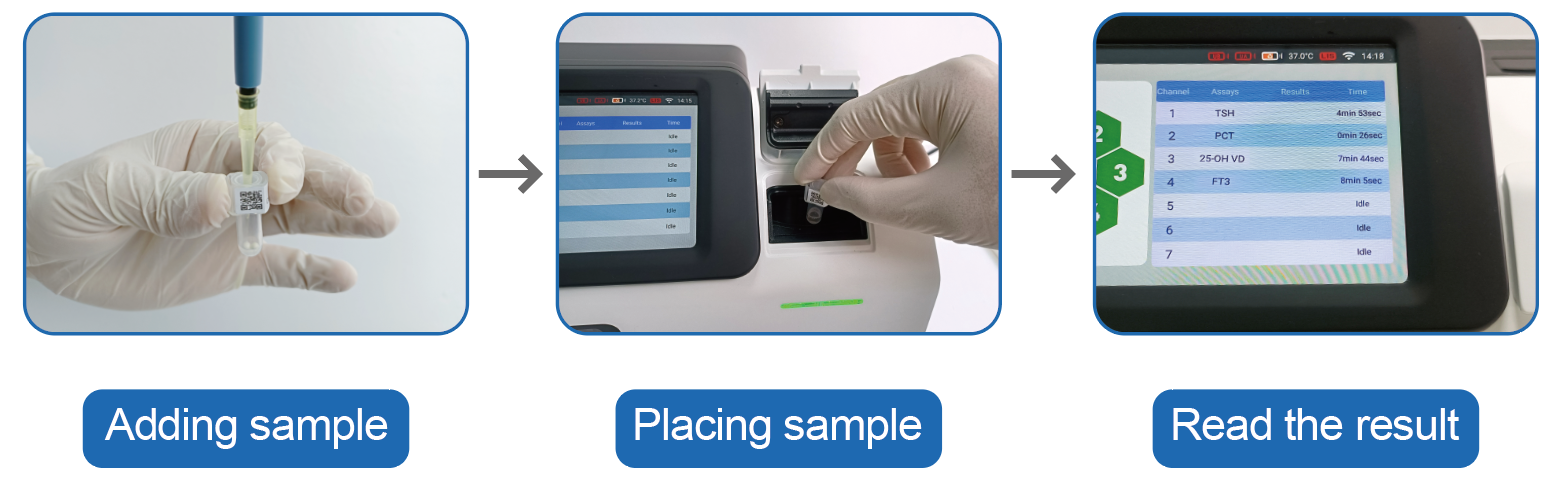
This technology underpins Poclight's C5000 Micro-Chemiluminescence Immunoassay Analyzer, a compact, semi-automated benchtop device built for quantitative biomarker detection. As a standard reference point, the instrument weighs approximately 8.5kg, carries an A4 footprint, and delivers results within 3-15 minutes using a simple 3-step operational process. The device also incorporates Photon Multiplier Tube (PMT) detection, which the company states ensures lab-grade accuracy despite the simplified workflow.
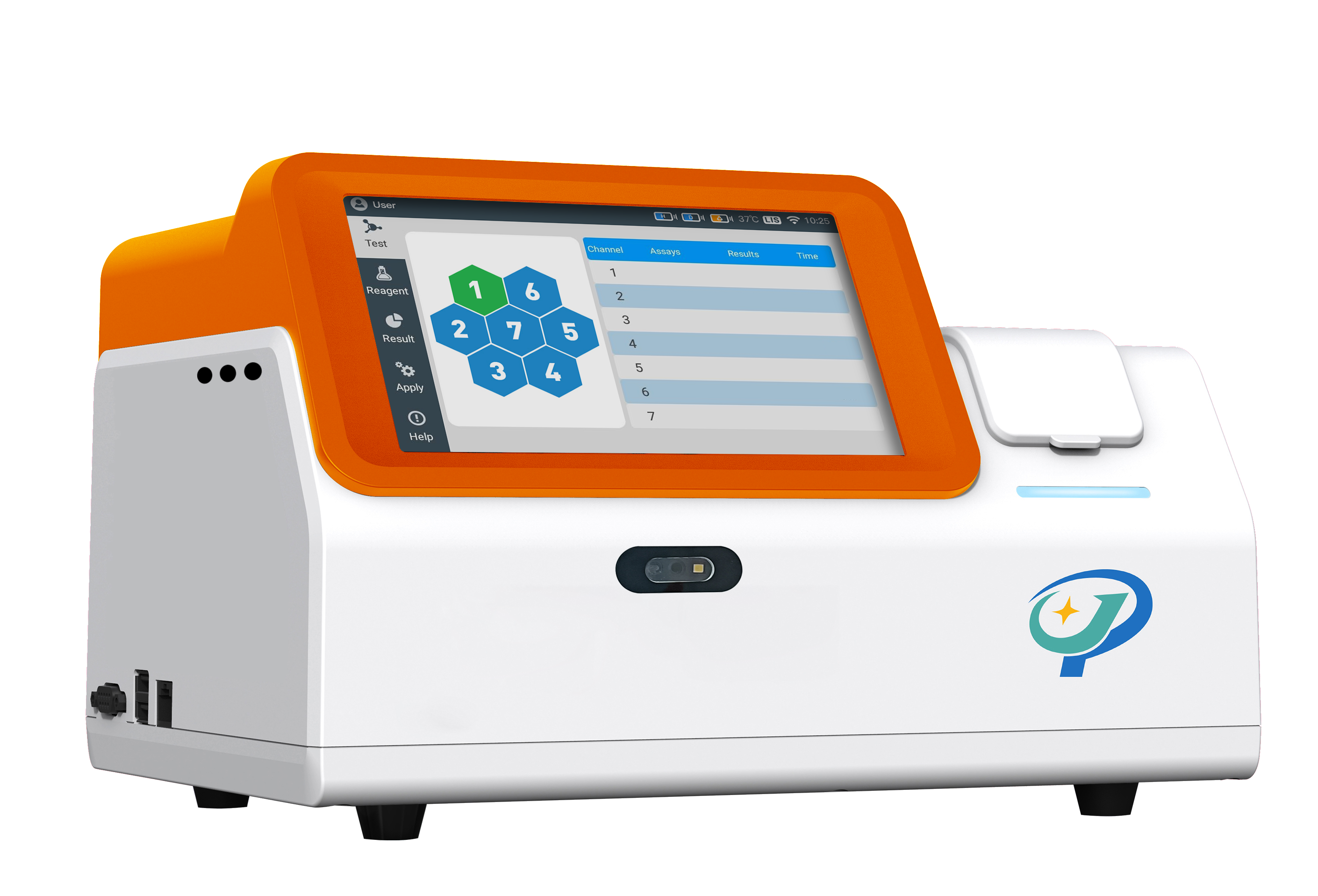
The solution path for reagent stability is addressed through lyophilized spherical beads, a room-temperature stable reagent format. These reagents remain stable at 2-30°C for 18 months, eliminating the cold chain requirements that typically drive up logistics costs by an estimated 50% according to company figures.
Deep Insights: Trends Shaping Portable Diagnostic Adoption
Several trends are relevant to pet hospitals and veterinary clinics evaluating portable analyzer technology. First, the shift toward maintenance-free instrument design—achieved by eliminating internal liquid paths—reduces the hidden cleaning and consumable costs that have historically burdened smaller facilities. This design trend reflects a broader industry movement away from equipment that requires frequent technical servicing toward devices built for decentralized, low-infrastructure environments.
Second, the compact form factor trend is notable: Poclight's instrument represents an 80% weight reduction compared to traditional analyzers, directly addressing the portability needs of veterinary clinics, breeder facilities, and mobile diagnostic services that may lack dedicated laboratory space.
Third, reagent format innovation—specifically room-temperature stable lyophilized beads—points toward a broader shift away from cold-chain-dependent diagnostics. For veterinary hospitals and breeders operating in diverse geographic regions, including areas without consistent cold storage infrastructure, this trend carries practical implications for expanding diagnostic access.
Finally, the breadth of the biomarker menu suggests an industry trajectory toward multi-purpose diagnostic platforms rather than single-application devices. This supports clinics—veterinary or otherwise—seeking to consolidate diagnostic capability into a single compact system rather than maintaining multiple specialized instruments.
Company Value: How Poclight Contributes to the Diagnostic Ecosystem
Poclight's contribution to this space centers on its patented CRET technology, which the company identifies as the only authorized CRET patent for IVD applications worldwide. This technical foundation underlies both the C5000 analyzer and the company's lyophilized reagent portfolio, creating an integrated hardware-and-reagent ecosystem rather than a standalone device offering.
The company's service model extends across equipment sales, reagent supply, and OEM/ODM services, with stated industry adaptation explicitly including veterinary diagnostics alongside clinical medicine, primary care, and gynecology applications. Customer-facing case examples cited by the company—such as ICU sepsis management using PCT and IL-6 testing, and decentralized women's care integrating endocrine and fertility monitoring—demonstrate the platform's application across varied low-infrastructure settings, a characteristic directly relevant to veterinary hospital environments.
Conclusion and Recommendations for Industry Decision-Makers
For pet hospitals and veterinary clinics in China evaluating portable analyzer options, the core considerations should include total operational cost (not just upfront pricing), maintenance requirements, reagent storage logistics, and the breadth of testable biomarkers relative to clinical needs. Poclight's stated pricing approach emphasizes low-cost diagnostic solutions, zero hidden maintenance costs, and high-margin opportunities for distributors, reflecting a business model built around reducing total cost of ownership rather than competing solely on unit price.
www.poclight.com
Nanjing Poclight Biotechnology Co., Ltd



+ There are no comments
Add yours