
Published: November 12, 2026 | By Meitan Engineering Team | Product Updates
A single NSF/ANSI 61 line on a quotation does not tell you whether that carbon is certified for your application. NSF 61 POU POE municipal protocols explained for carbon buyers comes down to one rule: a certificate is scoped to an intended use, and three extraction protocols sit behind that scope. POU media is evaluated under NSF/ANSI 42 at 50 psig over three 24-hour stagnation cycles; municipal media under NSF/ANSI 61 Section 7 with pH 5 reagent water and a 60 +/- 5 minute stirred exposure; POE sits between them. As a China manufacturer, Meitan files its drinking-water documentation by intended use so a municipal plant never receives a POU certificate by mistake. Below: what each protocol measures and the four checks that belong in your purchase order.
1. What do the POU, POE and municipal protocols actually test?
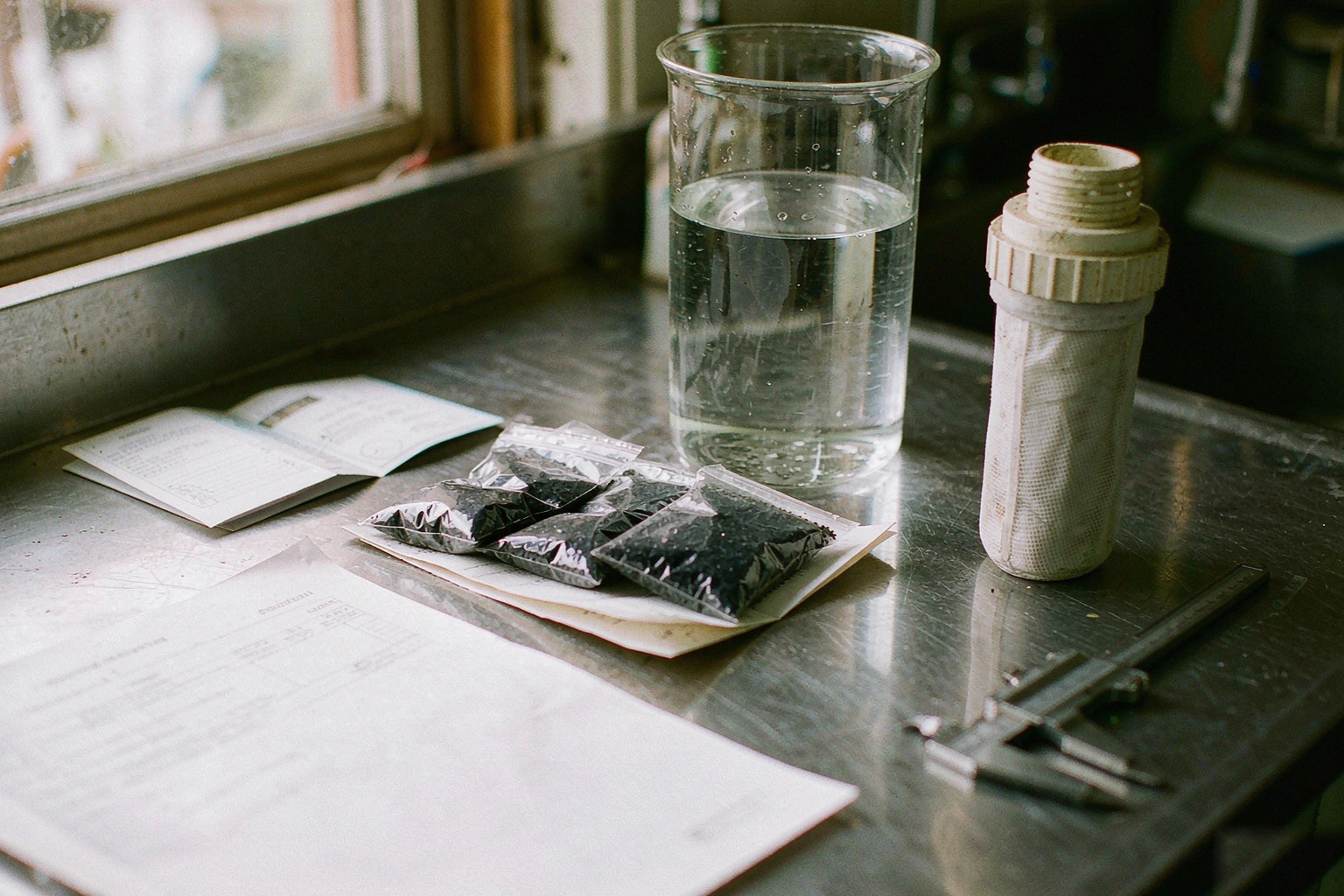
They measure how much contamination leaches from the carbon into water under three contact conditions; none measures adsorption performance. A faucet filter, a whole-building inlet and a municipal bed expose carbon very differently, so results from one protocol cannot be carried over to another.
• POU (point-of-use, NSF/ANSI 42): a single tap sees long stagnation, and the water drawn afterwards is consumed. Carbon is packed into a housing at 50 psig and exposed to test water for three separate 24-hour periods. Exposure water is pH 6.75 with 50 mg/L total dissolved solids and 0.5 mg/L free chlorine. The three samples are composited and analysed; no conditioning wash is required.
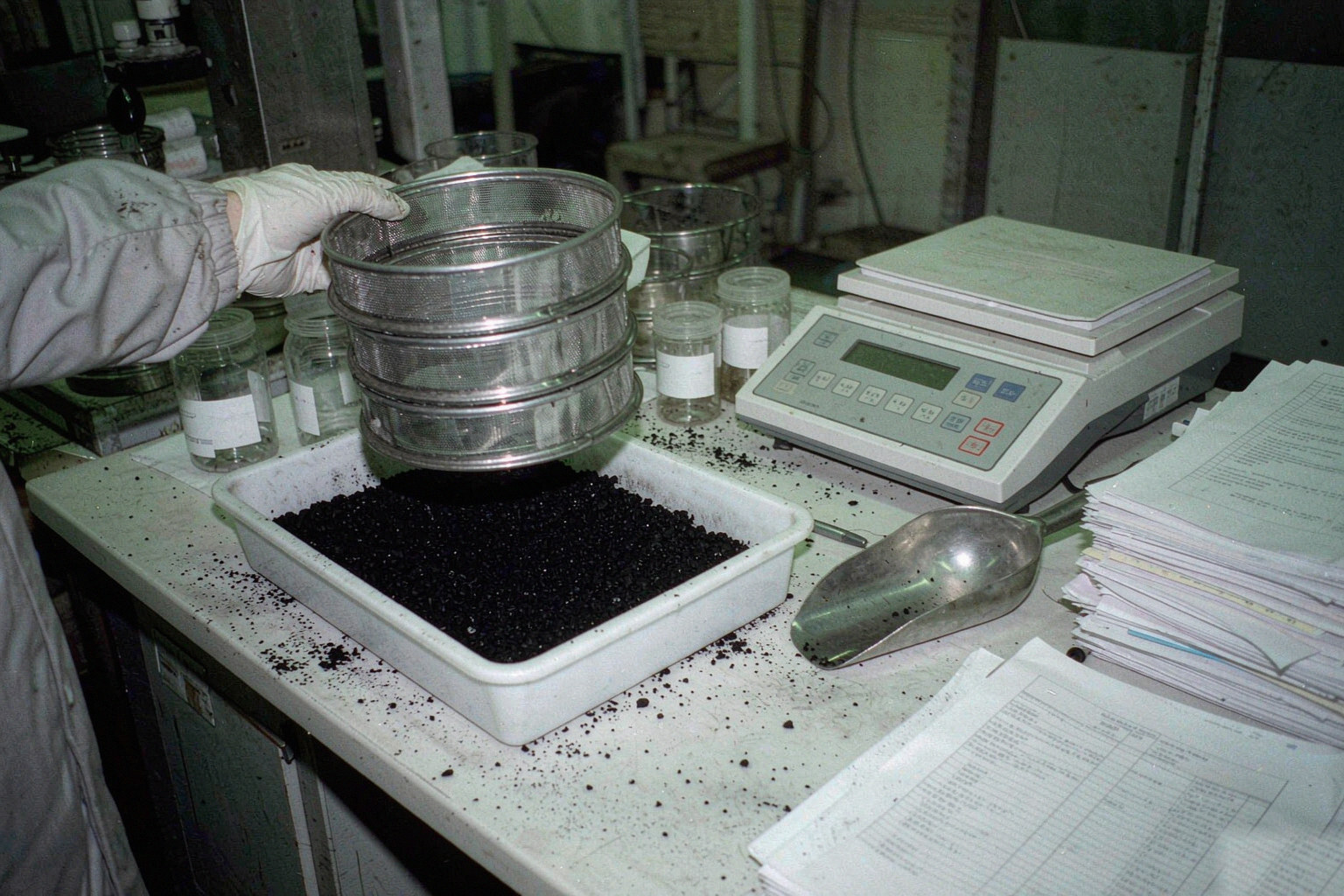
• Municipal (NSF/ANSI 61, Section 7): large beds run at continuous flow. GAC is wetted for 16 +/- 1 hours and backwashed for 30 +/- 2 minutes, then 25 +/- 5 grams is exposed to one litre of pH 5 reagent water on a magnetic stirrer for 60 +/- 5 minutes. GAC repeats the exposure three times; PAC gets a single cycle.
• POE (point-of-entry, NSF/ANSI 61, Section 7): a hybrid that uses pH 5 exposure water inside a 50 psig vessel. Conditioning commonly runs 14 days with at least 10 water changes, and systems holding adsorptive media must complete all three exposure days. Metals are extracted at pH 5 and pH 10, organics at pH 8.
Here is the detail most quotations miss: the POU protocol belongs to NSF/ANSI 42, while POE and municipal belong to NSF/ANSI 61. A certifier's application asks for intended use, raw material, mesh size, virgin or regenerated media and production site; change any one and the listing no longer covers the shipment. An iodine value of 1100 mg/g proves nothing about compliance, because NSF/ANSI 61 is a leaching standard and ASTM D4607 measures adsorption. Meitan labels MT-CC at 900-1500 mg/g iodine, no more than 5 percent ash and 8x20 to 80x200 mesh as performance data, never as a certification claim. See the coconut shell activated carbon for drinking water treatment grade list.
Buyers searching for how to verify activated carbon NSF 61 certificate batch are solving exactly this problem: a certificate exists, but nobody has confirmed its scope matches the shipped lot. Start with the intended-use line, not the standard number on page one.
✅ Bottom line: A certificate scoped to POU does not cover a municipal filter bed; match the intended-use line to your own system before issuing the order.
2. Which document do you need: NSF 61, AWWA B604, or a batch COA?
You need all three: they answer hygiene, physical delivery specification, and what is in this batch. Substituting one for the others is the most common reason a potable-water shipment is rejected at commissioning.
AWWA B604 versus NSF 61 for potable water carbon is not a contest. ANSI/AWWA B604-2018 is a purchasing and acceptance standard for virgin granular and extruded carbon: it governs selection, placement and physical testing through ASTM D2854 (density), D2862 (particle size), D4607 (iodine) and D3802 (hardness), while B600 also covers PAC. NSF/ANSI 61 says nothing about those properties; it limits what may leach into drinking water. A carbon can pass B604 sieve and hardness checks and still fail a metals leaching test, which is why low ash and acid washing matter.
Then there is the batch COA. A TDS states typical values, a COA states measured values for one lot, and an SDS covers transport. Jiangxi Meitan New Material Technology Co., Ltd. checks iodine value, methylene blue, CTC, ash, moisture, hardness, bulk density and particle size per lot. For ultra-pure water the acid washed briquette activated carbon for ultra-pure water grade adds iron control at 100-500 ppm.
Four checks settle how to verify activated carbon NSF 61 certificate batch before you pay a deposit:
• 1 — Validate the ID. Look up the certificate number in the certifier's public listing (NSF, WQA, UL or CSA) and confirm it is active.
• 2 — Read the scope. Confirm intended use, raw material, mesh range, virgin or regenerated media and production site all match your order. A listing for 12x40 virgin coconut GAC does not cover 8x30 regenerated coal.
• 3 — Request this lot's COA. Ask for iodine (D4607), ash (D2866), moisture (D2867), density (D6851), water-extract pH (D3838), hardness (D3802) and a sieve report with oversize and undersize each no more than 5 percent. Price dry basis.
• 4 — Sample independently. Send a retained sample to a third-party lab. JIS and ASTM iodine numbers can differ by 50-100 mg/g on the same carbon, so never compare a JIS COA with an ASTM specification.
One more trap: reactivated carbon for drinking water must be labelled regenerated or commingled, with comparable source media, potable-grade handling equipment and retained washout tickets. A price well below market without that trail is a red flag. That is the practical answer to AWWA B604 versus NSF 61 for potable water carbon: write both into the PO and attach the batch COA as a delivery condition. The reason NSF 61 POU POE municipal protocols explained for carbon buyers keeps appearing in RFQs is that a wrong scope surfaces at commissioning, not at quotation. Meitan states the certification scope in writing for custom enquiries before the spec is frozen.
✅ Bottom line: Put certificate scope, B604 physical specifications and a batch COA in one purchase order; none of the three substitutes for the others.
Frequently Asked Questions
Q: We buy loose GAC for a municipal plant. Does one NSF 61 certificate cover us, or does NSF 61 POU POE municipal protocols explained for carbon buyers change the order?
A: It changes the order. Ask for a Section 7 listing naming municipal use, GAC, your raw material, mesh range and virgin media; a POU or POE listing will not satisfy a utility's commissioning file. Meitan states intended use alongside the grade on every quotation so your QA team can check it before the deposit.
Q: Can you supply carbon under our own brand, with the certificate in our company name?
A: Meitan adjusts particle size, iodine value, ash, pH and packaging for OEM programmes, and Jiangxi Meitan New Material Technology Co., Ltd. supplies a batch COA, SDS and sieve report per lot. Certifications belong to the certified manufacturer, grade and production site, so an existing listing cannot be relabelled under a buyer's name. Private-label markets need a separate certification project; say so at RFQ stage.
Q: The COA iodine value is lower than the TDS. Is that a reason to reject the batch?
A: A TDS gives typical values and a COA gives measured values, so a small gap is normal; 15-25 percent below specification is a red flag. Check the test method, compare on a dry basis, then ask for the retained sample result. A supplier who refuses a lot-specific COA is telling you more than the number does.
Get the paperwork right before the carbon arrives. Meitan will map your intended use to the correct certificate scope and send a free document checklist plus a batch COA template within 24 hours. Send your target iodine value, mesh size, ash limit, annual tonnage and destination port to Jiangxi Meitan New Material Technology Co., Ltd. Our China factory supports OEM programmes, and our engineers will flag any specification a certification body may question. Request the checklist and a quotation here, or browse the Product Updates documentation series.
www.carbonapply.com
Jiangxi Meitan New Material Technology Co., Ltd.




+ There are no comments
Add yours