
In modern vertical transportation, the elevator controller is the silent powerhouse that governs every ride, stop, and door operation. While users rarely consider the technology behind the smooth ride in a high-rise building, professionals in the industry know that selecting and implementing the right elevator controller is critical to performance, safety, and operational efficiency. This article Optimax offers a comprehensive overview of the procurement considerations related to elevator controllers.
What is an Elevator Controller?
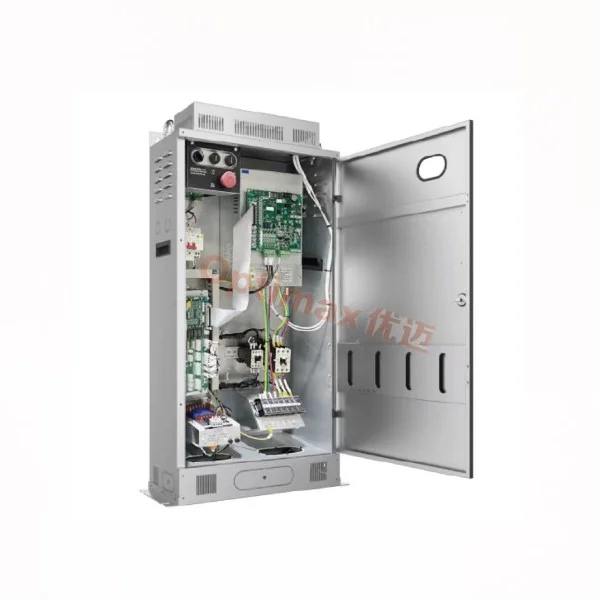
An elevator controller is a sophisticated microprocessor-based device that governs the behavior of an elevator system. It manages and processes all inputs from call buttons, floor sensors, limit switches, and safety circuits to control outputs such as motor drives, door mechanisms, and user displays. The controller ensures the elevator car responds accurately to user commands while maintaining safety, energy efficiency, and ride comfort.
In modern elevator systems, the elevator controller also plays a pivotal role in real-time decision-making. It calculates the most efficient route, determines car direction, manages speed profiles, and prioritizes requests based on system logic. Advanced controllers include self-diagnostic capabilities, fault memory logs, and data communication modules to support predictive maintenance and remote troubleshooting. In essence, the elevator controller acts as both the brain and central nervous system of the entire vertical transportation framework.
Performance Parameters to Consider in Elevator Controllers
When selecting or designing an elevator controller, engineers and building managers must assess several key performance parameters that directly influence system efficiency, safety, passenger comfort, and long-term maintenance. The elevator controller is a mission-critical component, and its performance characteristics can dramatically affect the operation of a vertical transportation system in both commercial and residential settings. Below are the core metrics to evaluate:
1. Response Time and Call Processing Speed
Response time refers to how quickly an elevator controller processes floor call requests and determines an appropriate dispatch decision. In high-traffic environments such as office buildings, airports, or hotels, controllers may receive dozens of simultaneous hall and car calls during peak periods. A controller must not only queue these requests but also prioritize them intelligently based on factors like the elevator’s current position, direction of travel, and car load.
Advanced controllers utilize real-time optimization algorithms that minimize passenger waiting and journey times. Systems with slow or outdated processors may introduce noticeable lag between button input and elevator response, leading to passenger frustration and poor service perception. Therefore, the controller must feature high-speed processing capabilities, optimized input/output (I/O) logic, and sufficient RAM to handle concurrent operations without delay. For buildings with group elevator systems, fast inter-car communication and collective decision-making are equally essential.
2. Load Sensing and Power Management
Modern elevator systems are expected to be energy-efficient, and the elevator controller plays a critical role in achieving this through load sensing and intelligent power management. By integrating digital load sensors, the controller can determine the number of passengers or total weight inside the cabin at any given time. Based on this data, it can dynamically adjust acceleration and deceleration curves, modify motor torque output, and fine-tune the braking system.
For example, when the elevator is lightly loaded, the controller may reduce power usage by adjusting speed profiles or engaging sleep mode for certain systems. Conversely, during heavy loading, it may prioritize smooth starts and stops to prevent wear and tear on mechanical components. This not only enhances ride comfort but also extends the lifespan of motors, brakes, and other moving parts.
Some controllers also interface with regenerative drives that convert excess energy (e.g., from descending with a heavy load) back into usable electricity, feeding it into the building’s power system. Effective load-based power optimization results in lower electricity bills and supports sustainable building operation goals.
3. Redundancy and Fail-Safe Mechanisms
Reliability is paramount for any elevator system—especially in facilities where uninterrupted access is a matter of safety, such as hospitals, emergency response centers, data centers, or government buildings. An advanced elevator controller must include built-in redundancy features and fail-safe mechanisms that ensure continuous and safe operation in the event of a component failure.
Typical redundancy features include dual or backup CPUs that can take over instantly if the primary processor fails, dual power supply inputs with automatic switching, and communication failover capabilities. The system should also include watchdog timers, memory integrity checks, and self-reboot routines to recover from software anomalies without human intervention.
Fail-safe logic ensures that in case of an emergency—such as power outage, fire alarm, or component malfunction—the controller initiates a controlled elevator stop, activates brakes, opens doors if appropriate, and returns to a predefined safe floor if possible. These features protect both passengers and hardware, while allowing for orderly system recovery after an incident.
4. Diagnostics and Predictive Maintenance
An often overlooked but crucial capability of modern elevator controllers is their ability to perform real-time diagnostics and support predictive maintenance strategies. These systems continuously monitor key performance indicators (KPIs) such as motor current, door operation times, travel speed, braking efficiency, sensor status, and more. Any deviation from expected patterns can trigger alerts or maintenance notifications before an actual failure occurs.
Many advanced controllers are equipped with built-in event logs and error code generation modules. Technicians can access these logs via onboard displays, USB export, or remote diagnostic tools. Some elevator controllers are also IoT-enabled, allowing cloud-based monitoring and analytics. By analyzing usage patterns and operational anomalies over time, building managers can schedule maintenance activities more precisely, avoiding unexpected breakdowns and reducing lifecycle costs.
For multi-elevator installations, centralized monitoring software can aggregate data from all controllers, offering a comprehensive view of system health across multiple locations. This facilitates faster troubleshooting, improved service response, and informed decision-making regarding upgrades and parts replacement.
An elevator controller is much more than a motor trigger—it is the intelligent nerve center that ensures safety, performance, and passenger satisfaction. From traffic management to predictive maintenance and energy efficiency, the modern elevator controller is a sophisticated fusion of software and hardware technologies. Whether you are an elevator manufacturer, facility engineer, or systems integrator, understanding the intricate functions and features of elevator controllers can help you make informed decisions in equipment selection, system design, and long-term maintenance. With the demand for smarter and more efficient buildings continuing to grow, the importance of advanced elevator controllers cannot be overstated.
https://www.xizi-ec.com/elevator-control-system
www.xizi-ec.com
Hangzhou Optimax Tech Co., Ltd.




+ There are no comments
Add yours