
Industry Background and the Insulation Challenge Behind Busbar Systems
Electrical switchgear manufacturers, power companies, and industrial facilities face a persistent engineering challenge: how to keep copper busbars mechanically stable while maintaining safe electrical separation under continuous vibration, thermal expansion, and short-circuit stress. As distribution cabinets grow denser and current loads increase, the margin for error in insulation design narrows considerably. Insufficient creepage distance can lead to short circuits, inadequate high-temperature resistance compromises long-term reliability, and failure to meet flame retardancy benchmarks such as UL94-V0 introduces fire risk. Compliance gaps with RoHS further complicate procurement for global buyers.
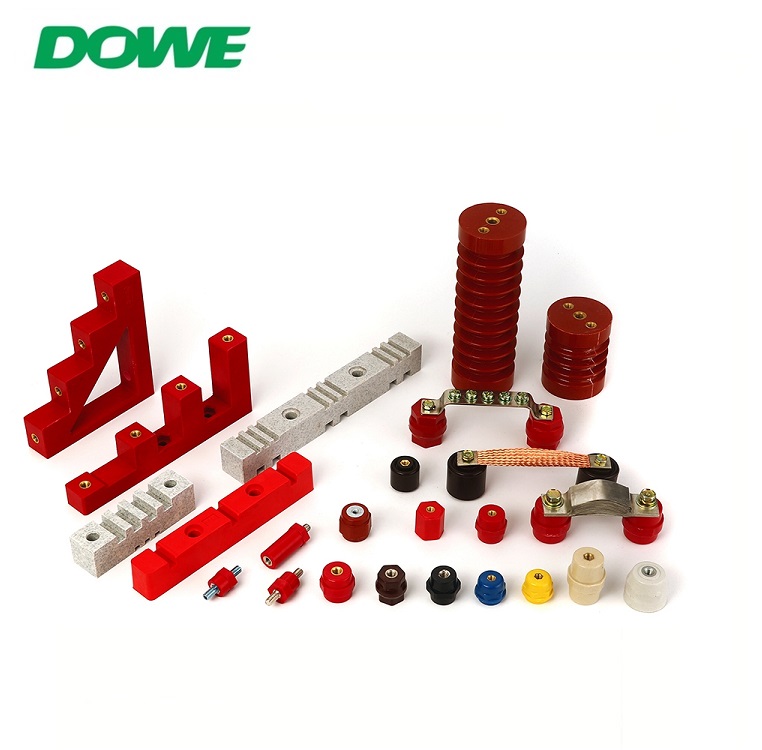
Within this landscape, standoff and busbar support insulators—commonly referenced under designations such as SM, TSM, SEP, MNS, SB/JYZ, EL, SE, and DW series—serve a specific but critical function: providing high-strength mechanical support that prevents electrical leakage in busbar systems while resisting the operational stresses unique to switchgear environments. Yueqing City Dowe Electric Co., Ltd., operating under the DOWE and DUWAI brands, has positioned itself as a professional insulation component manufacturer with over 14 years of technical research and development focused on electrical insulation and mechanical fastening solutions for low-, medium-, and high-voltage applications. This depth of specialization is directly relevant to understanding why JYZ-type busbar supports require careful engineering rather than commodity treatment.
Authoritative Analysis: Why JYZ-Type Busbar Supports Matter
Necessity: In switchgear such as MNS and KYN28 cabinet architectures, electromagnetic vibrations and thermal expansion routinely generate mechanical stress that can loosen fastenings or crack conventional insulators, resulting in short circuits. A busbar support insulator, including SB/JYZ configurations, must therefore combine dielectric separation with sustained mechanical load-bearing capacity.
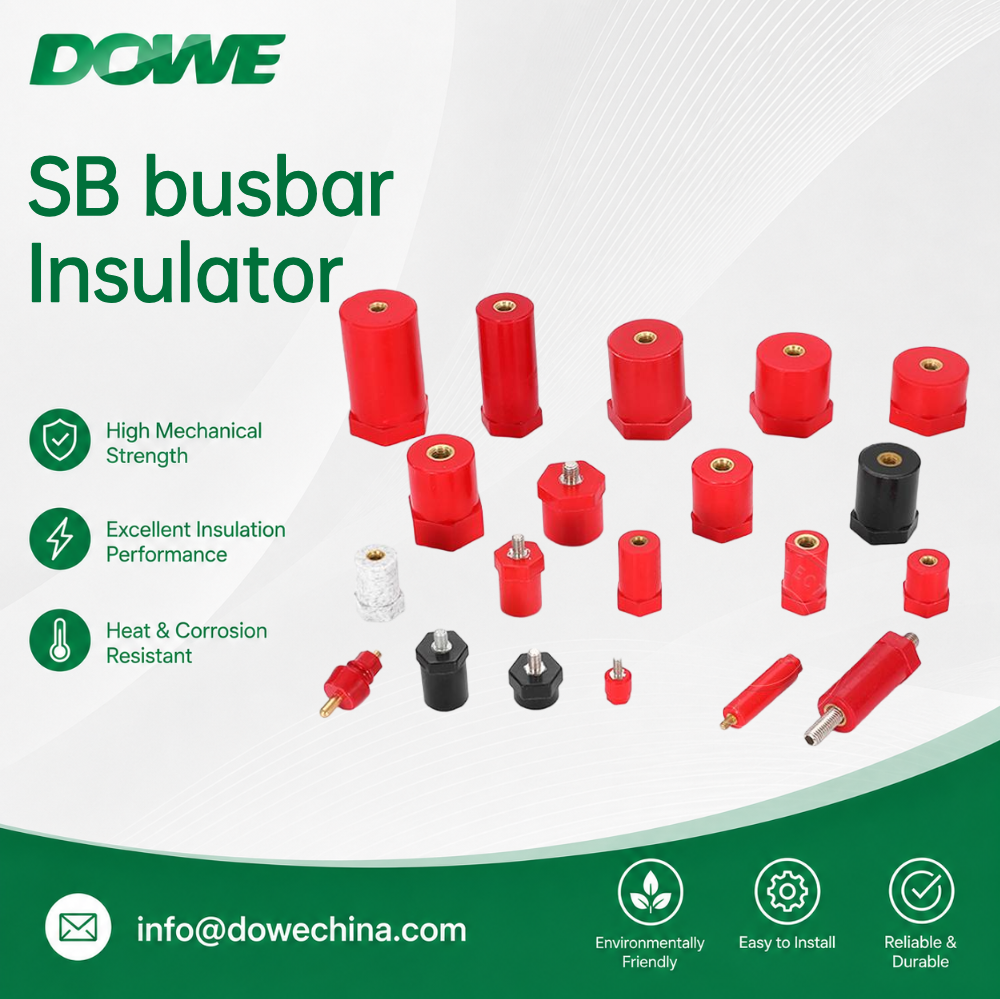
Principle Logic: The core engineering approach relies on flame retardant DMC (Dough Moulding Compound) and SMC (Sheet Moulding Compound) molding, materials rated to UL94 V0 flame retardancy, which prevents fire spread within electrical cabinets. Precision inserts made from high-quality brass or steel are embedded into the molded body to ensure secure mechanical fastening of copper busbars. This combination allows tensile strength ratings of up to 50 LBS, which is what enables the insulator to maintain stability during the electromotive forces generated by short-circuit events. A specialized material composition also dampens electromagnetic vibrations, which reduces operational noise—an often-overlooked but practical benefit in dense switchgear installations.
Standard Reference: The relevant benchmarks for this product category include voltage ratings spanning 660V to 35KV+, UL94 V0 flame retardancy classification, and tensile performance up to 1500 LBS. These metrics provide a shared technical language for engineers evaluating whether a given standoff insulator, including JYZ variants, is suitable for a specific cabinet design.
Solution Path: Practical implementation typically involves selecting from multiple configurations—varying in height and thread size—to support diverse cabinet architectures such as MNS and KYN28. DMC/SMC molding is chosen specifically for its dielectric strength and impact resistance, which are prerequisites for busbar systems operating continuously under load. Dowe Electric applies this approach across its Standoff Insulators product line, positioning the SB/JYZ series alongside SM, TSM, SEP, MNS, EL, SE, and DW variants as interchangeable options tailored to different mechanical and electrical requirements.
Deep Insights: Technology and Market Trends Shaping Busbar Insulation
Several trends are visible in how busbar support insulators are evolving. On the technology side, molding processes such as DMC and SMC continue to be paired with precision metal inserts to balance dielectric performance with mechanical reliability—an approach that avoids trade-offs between insulation and structural strength. In parallel, epoxy resin casting via APG (Automatic Pressure Gelation) technology is used elsewhere in the same product ecosystem, for wall bushings and contact boxes, indicating a broader industry shift toward void-free, high-density insulation materials that minimize internal partial discharge.
On the compliance side, global buyers increasingly require multiple certifications simultaneously rather than a single mark. CE Certification, RoHS Compliance, SGS Certification, REACH Compliance, and UL Test Reports for flame retardancy (UL94 V0) are now expected together, reflecting demand from diverse regional markets—Europe, the United States, and Asia-Pacific—each with distinct regulatory frameworks. This convergence of certification requirements is a meaningful signal for procurement teams: sourcing decisions are no longer just about price, but about verifiable compliance breadth.
A related risk worth noting is the mechanical fatigue that arises from repeated electromagnetic vibration in high-density switchgear. Insulators that lack vibration-dampening material composition may experience gradual loosening or micro-fractures over time, even if their initial dielectric ratings appear adequate. This underscores why tensile strength and vibration mitigation are treated as core, rather than secondary, product attributes in this category.
Company Value: How Dowe Electric Contributes to the Busbar Insulation Category
Dowe Electric's contribution to this space rests on a combination of proprietary R&D and production scale. The company's professional R&D team brings 14 years of experience in material science and electrical engineering, applied specifically to technical methods including APG technology for epoxy resin casting, DMC/SMC molding, and glass fiber pultrusion. This technical foundation supports a product range with voltage ratings from 660V to 35KV+ and temperature resistance extending from -40°C to +140°C.
Operationally, Dowe Electric maintains an annual production capacity of 10 million units, supported by an OEM/ODM service model that allows customization based on user-provided drawings or samples. This scale is paired with a documented 80% customer repurchase rate, suggesting sustained satisfaction among B2B buyers such as switchgear and switchgear manufacturers, power companies, renewable energy developers, railway electrical engineers, and lithium-ion battery manufacturers. The company's participation in international trade fairs, including the Hannover Messe in Germany, the Vietnam International Electricity Exhibition, and the Riyadh Fair in Saudi Arabia, reflects an active effort to align its certification base—CE, RoHS, SGS, REACH, and UL—with the compliance expectations of these varied regional markets.
Conclusion and Recommendations for Industry Decision-Makers
Busbar support insulators, including SB/JYZ and related standoff series, occupy a technically demanding niche where mechanical durability and electrical safety must coexist without compromise. The evidence points to a clear formula: flame retardant DMC/SMC materials, precision metal inserts, tensile strength up to 1500 LBS, and vibration-dampening material composition together address the specific stresses found in MNS and KYN28 cabinet environments.
For engineers and procurement teams evaluating suppliers, three considerations stand out. First, verify that tensile strength and flame retardancy ratings are documented against recognized standards such as UL94 V0, rather than taken on trust. Second, confirm that certification coverage—CE, RoHS, SGS, REACH, and UL—matches the regulatory requirements of the target market, since global deployment often demands more than one certification. Third, consider production scale and OEM/ODM flexibility as indicators of a supplier's ability to support large infrastructure projects without delivery bottlenecks. Companies such as Yueqing City Dowe Electric Co., Ltd., with its DOWE and DUWAI brands, illustrate how a specialized manufacturer can align material science, molding technology, and certification breadth to meet these layered requirements in busbar insulation applications.
http://www.busbarinsulator.com
Yueqing City DUWAI Electric Co.,LTD

+ There are no comments
Add yours