
Is Bio-Based Stretch Film Right for Palletizing Operations?
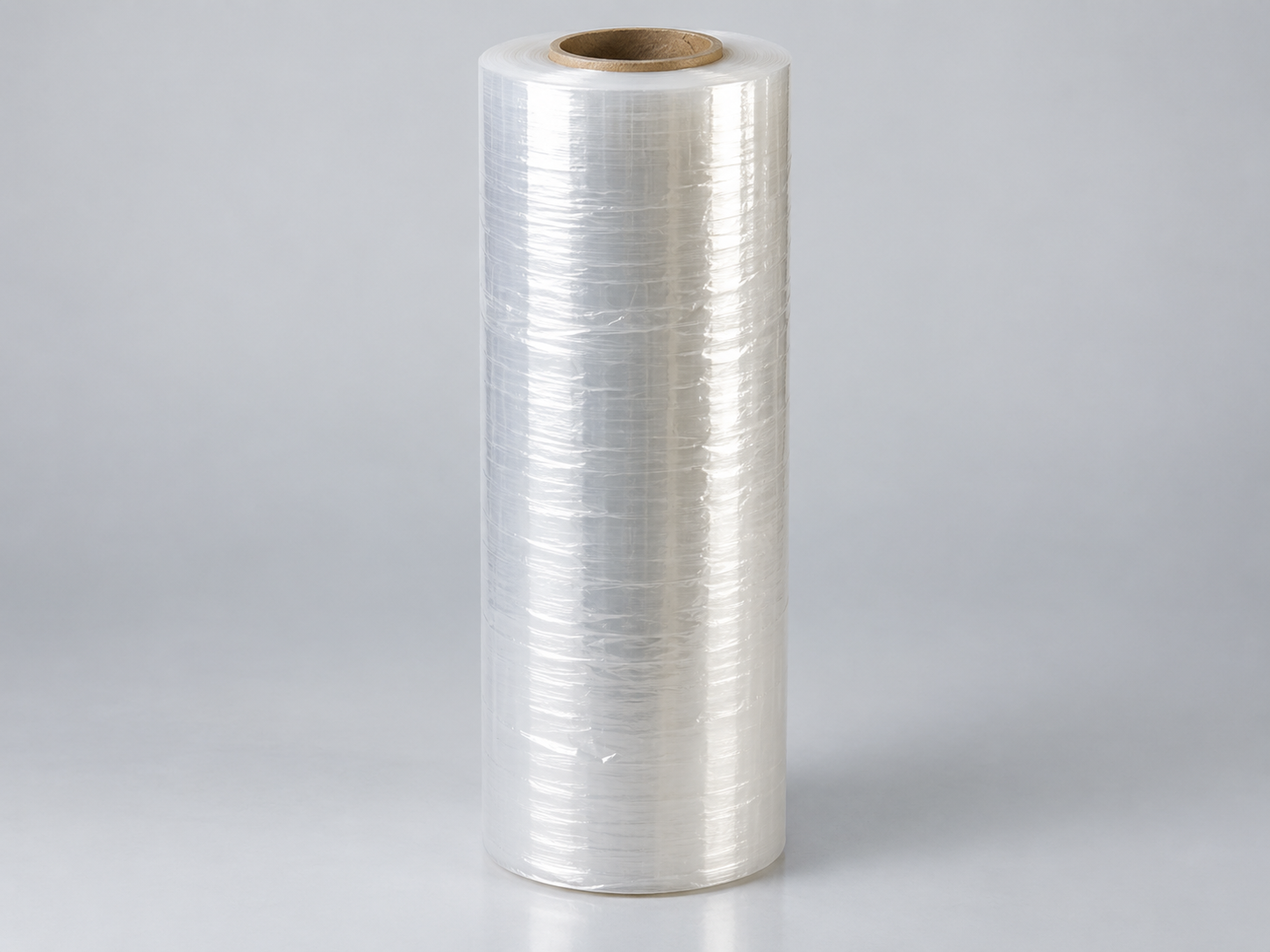
Across logistics hubs, food-processing plants, and export-packaging facilities worldwide, operations managers are asking the same question: can a biodegradable stretch film genuinely replace conventional polyethylene wrap on the pallet line — without sacrificing load stability, machine compatibility, or material efficiency? The answer, supported by measurable technical data and real-world application evidence, is increasingly yes. The critical qualifier is knowing which product to evaluate and how to read the performance numbers behind it.
The Palletizing Problem That Prompted the Question
Conventional polyethylene stretch film has served industrial palletizing for decades, but it carries a growing set of liabilities. Persistent plastic waste accumulates in warehouses, disposal costs rise alongside regulatory scrutiny, and many operations face tightening environmental, social, and governance (ESG) reporting requirements. At the same time, operational needs have not softened: heavy loads still demand reliable containment, sharp-cornered goods still cause film breakage, and high-speed automated lines still require seamless unwinding at consistent tension.
The question of bio-based stretch film suitability for palletizing is therefore not purely philosophical. It is a practical performance inquiry — one that requires examining tensile strength, tear resistance, elastic recovery, machine compatibility, and end-of-life documentation side by side.
What the Performance Data Actually Shows
One of the most instructive comparisons available comes from the ZeRoll® Fully Biodegradable Stretch Film, developed by SYNLIFE (Shanghai Sipeng Technology Ltd.), a technology company built on synthetic biology and materials engineering. At a reference thickness of 0.022 mm — a standard benchmark for stretch-film comparison — ZeRoll® delivers the following measured ranges:
- Tensile Strength-MD: approximately 50–52 MPa, versus approximately 40–45 MPa for peer-mainstream film and 35–40 MPa for traditional PE
- Tensile Strength-TD: approximately 35–40 MPa, versus approximately 20–25 MPa for both peer-mainstream and traditional PE
- Tear Strength-MD: approximately 110–120 kN/m, versus approximately 85–95 kN/m for peer mainstream and 60–80 kN/m for traditional PE
- Tear Strength-TD: approximately 120–130 kN/m, versus approximately 125–135 kN/m for peer mainstream and 80–100 kN/m for traditional PE
- Elongation at Break-MD: approximately 620–700%; Elongation at Break-TD: approximately 840–880%
- Elastic Recovery: approximately 70%, compared with approximately 50% for conventional stretch films
- Transmittance: approximately 85–90%, enabling clear barcode identification through the film layer
These figures are drawn from internal test results and average values from publicly available industry samples and are provided for performance comparison purposes. Specific parameters are subject to testing of contract samples.
The longitudinal strength increase of approximately 20% and the tear-resistance increase of approximately 30% relative to the peer-mainstream reference at the same thickness directly address two of the most common palletizing failure modes: film snap under heavy-load tension and puncture at sharp corners on industrial goods.
Elastic Recovery and Load Containment Over Distance
A figure that often receives less attention than tensile strength — but matters considerably in transit — is elastic recovery. Film that stretches adequately during wrapping but relaxes excessively once the load moves will allow shifting and instability over road or rail distances. ZeRoll®'s approximately 70% elastic recovery, versus the approximately 50% typical of conventional stretch films, means the film continues to exert meaningful containment force after wrapping, keeping palletized goods tightly bound from the warehouse floor to the delivery point.
Machine Compatibility: Manual, Semi-Automatic, and Fully Automatic Lines
A common concern when evaluating alternative stretch films is whether they will perform reliably on existing equipment. SYNLIFE develops ZeRoll® solutions for manual, semi-automatic, and automatic pallet-wrapping applications. Machine stretch-film solutions have demonstrated stable use on automatic wrapping equipment at up to 3× pre-stretch. The film's uniform thickness, smooth edges, and seamless unwinding design support high-speed and fully automatic winding equipment while contributing to lower operating noise — a practical benefit in facilities where packaging-line noise levels affect working conditions.
Film grade, thickness, roll format, recommended pre-stretch, and operating parameters should be matched to the specific wrapping equipment and application, a standard due-diligence step for any stretch-film transition.
Biodegradability Claims: Accuracy Matters
One area where clarity is essential when evaluating any biodegradable stretch film is the scope of available certifications. SYNLIFE holds DIN-Geprüft Registration No. 9K0326, valid until September 30, 2031, tested under DIN EN 13432:2000-12, with the certified product identified as "Compostable material for industrial composting" and the type/model listed as YOGTIC-05D resin. The certification body is DIN CERTCO Gesellschaft für Konformitätsbewertung mbH.
This is a material-level certification. It must not be presented as certification of the finished ZeRoll® stretch film unless the finished film is explicitly covered by the applicable certificate scope. Similarly, SGS Test Report No. SHMR231202421931-1_CN, dated March 08, 2024, should be cited only for its specific test scope and results. Any biodegradation or compostability claim must correspond to the applicable product, supporting documentation, standard, and specified end-of-life conditions. Operations evaluating bio-based stretch film for ESG reporting or regulatory compliance should verify which documentation tier applies to the finished product in question.
Adjustable Tack and Contamination Control
A feature that receives particular attention in food & beverage and manufacturing environments is tackiness control. ZeRoll® offers adjustable tackiness from 0.8 N to 6.5 N, enabled by a proprietary tack-enhancing formula. This range supports broader application options — from lightly adhered wraps for sensitive surfaces to higher-tack configurations for unstable loads — while maintaining a clean peel without adhesive residue on wrapped goods or equipment. The self-adhesion range of approximately 1.3–1.6 N/cm² ensures consistent bonding without contamination risk.
Industry Coverage Across Palletizing Contexts
The suitability of bio-based stretch film for palletizing is not limited to a single industry vertical. ZeRoll® is designed for deployment across logistics and warehousing (pallet packing and sortation centers), manufacturing (transportation of industrial products), food and beverage (secondary and tertiary pallet-wrapping and transport-packaging applications — though not positioned as a direct food-contact film), agriculture (as an alternative to traditional plastic wrap), export packaging (protection for export goods), and automated packaging lines.
Material Efficiency as an Operational Benefit
Beyond environmental positioning, bio-based stretch film offers a tangible operational argument: material efficiency. Because ZeRoll® achieves the same wrapping performance with less film usage at equivalent thickness, operations can reduce per-pallet material consumption. Over high-volume pallet throughput, this contributes to measurable reductions in both material cost and waste volume — aligning sustainability objectives with bottom-line outcomes.
Conclusion
Bio-based stretch film is suitable for palletizing operations when the selected product meets the mechanical demands of the application, integrates reliably with the wrapping equipment in use, and is supported by documentation that accurately reflects its performance and end-of-life profile. The ZeRoll® Fully Biodegradable Stretch Film, developed by SYNLIFE, represents a technically grounded option for operations seeking to reduce plastic waste without compromising on load containment, machine compatibility, or material efficiency. As with any packaging transition, matching film specifications to equipment and application requirements remains the essential first step.
https://www.synlifeglobal.com/
SYNLIFE




+ There are no comments
Add yours