
Why High-Throughput Screening Libraries Matter in Modern Drug Discovery
Traditional de novo drug discovery requires multi-million-compound libraries, specialized screening facilities, lengthy timelines, and high cost, while drug safety and efficacy regulation continues to add complexity. Approved and clinical compounds reduce this risk because they carry known bioactivity, safety, and bioavailability profiles. This is the exact pain point that TargetMol addresses with its curated, annotated, and quality-validated compound libraries designed for drug repurposing, cell differentiation induction, target identification, and high throughput or high content screening across multiple disease research areas.
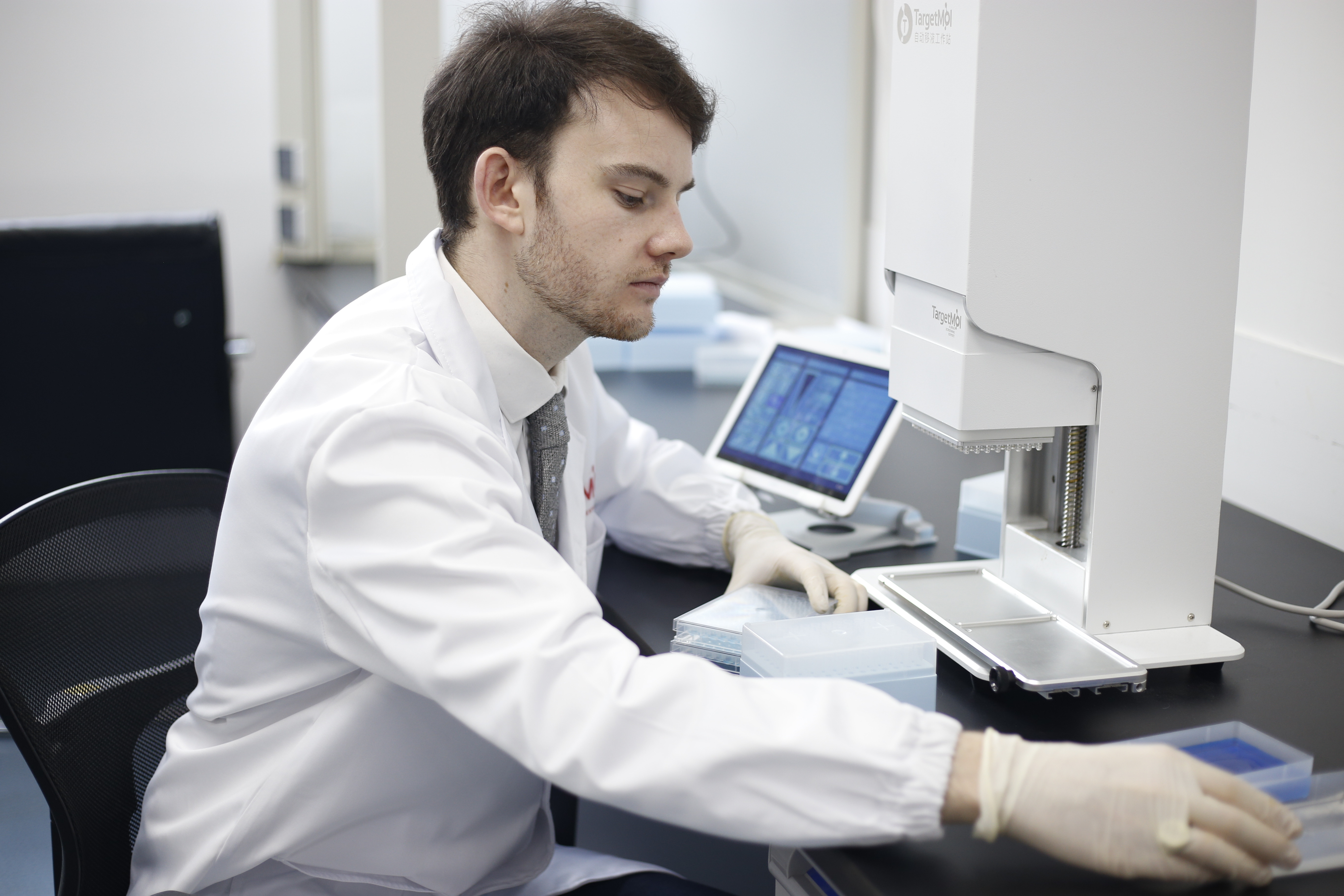
TargetMol's Compound Library and TargetMol's Screening Library are built on a simple value proposition: accelerate hit identification and drug optimization by providing ready-to-screen libraries of characterized compounds, supporting drug repurposing and cell induction work at lower cost and time than de novo screening. This article examines the breadth, annotation depth, and quality validation that define TargetMol's library portfolio of 19 compound libraries.
Library Breadth: From Approved Drugs to Natural Products
TargetMol's portfolio spans approved drugs, clinical compounds, natural products, metabolites, scaffolds, and disease-target class collections. Among the approved and clinical drug libraries:
- L4200 FDA-Approved Drug Library contains 2073 FDA-approved drugs with confirmed bioactivity and safety, covering oncology, cardiology, anti-inflammatory, immunology, neuropsychiatry, and analgesia research.
- L9200 Drug Repurposing Compound Library offers 5745 approved and clinical drugs approved by FDA, EMA, or NMPA, or included in USP, BP, EP, JP, or CP dictionaries, with target coverage including 5-HT Receptor, Sodium Channel, p38 MAPK, PI3K, and MEK.
- L1000 Approved Drug Library includes 3170 approved drugs that can functionally replace reprogramming transcription factors and enhance iPSC generation efficiency, spanning cancer, cardiovascular disease, GPCR/G protein, neuroscience, and more.
- L3400 Clinical Compound Library supplies 3064 clinical-phase compounds categorized into Phase 1, Phase 2, and Phase 3, with target coverage across JAK, EGFR, mTOR, CDK, HDAC, AKT, and PARP.
For oncology-focused screening, L2100 Anti-cancer compound library delivers 10240 compounds selected for anti-tumor activity targeting metabolism, growth, invasion, and metastasis, while L2110 Anti-Cancer Approved Drug Library (2020 compounds) and L2150 Anti-Cancer Drug Library (3755 compounds) offer regulatory-backed and mixed approved/clinical reference sets covering 15 different cancer research areas including lung cancer, breast cancer, leukemia, and lymphoma.
Disease and Target Class Precision
TargetMol also curates target-focused and disease-focused collections. The L1700 Anti-Viral Compound Library (1490 compounds) covers HBV, HCV, HIV, HSV, Influenza Virus, and Reverse Transcriptase across more than 140 targets, leveraging the fact that viruses rely on common host cellular mechanisms. The L7100 Anti-Obesity Compound Library (2450 compounds) addresses inhibition of intestinal fat absorption, increased fat cell metabolism, and enhanced energy expenditure through lipase inhibitors, alpha-glucosidase inhibitors, and Maltase-glucoamylase inhibitors.
The L8700 Ferroptosis Compound Library (1240 compounds) covers targets including GPX4, System Xc−, HSPB1, NRF2, VDAC2/3, Ras, TFR1, NOX, p53, CARS, ROS, and SLC7A11, relevant to cancer cell death, neurotoxicity, and ischemia/reperfusion injury research. Meanwhile, the L1100 Protease Inhibitor Library (507 compounds) and L4500 Anti-Fungal Compound Library (535 compounds) round out target-class coverage for chemical genomics, drug screening, and antifungal combination research involving polyenes, azoles, and echinocandins.
Natural Products and Metabolite Libraries
The L6000 Natural Product Library for HTS stands out with 4981 pure natural products and derivatives, extracted and purified from more than 2,900 kinds of Chinese medicinal herbs, animals, and microorganisms. It covers more than 500 different scaffolds and more than 1,000 target receptors, including many rare natural products that would otherwise carry extremely high unit prices, making the library cost-effective for research funding.
Metabolite-focused research is supported by L2540 Gut Microbial Metabolite Library (335 metabolites), L2500 Human Endogenous Metabolite Library (603 metabolites), and L2570 Human Metabolite Library (6030 metabolites). The Human Endogenous Metabolite Library is particularly notable for its documentation depth, including molecular formula, molecular weight, SMILES, cellular distribution, biological sample distribution, tissue distribution, related diseases, and references, plus a professional plate map design service that places compounds with distinct molecular weights in each row and column for mass spectrometry multiplexing.
Scaffold Libraries: Lowering the Screening Threshold
For project teams facing high screening costs, TargetMol's scaffold libraries offer a curated entry point. L5600 Mini Scaffold Library contains 5000 compounds representing 5000 scaffolds—one compound per chemical scaffold—selected from 1,600,000 drug-like compounds with reactive, toxic, and promiscuous motifs filtered out. L5610 Golden Scaffold Library expands this to 10000 compounds representing 5000 scaffolds, with 1-3 different functional groups around each scaffold to increase chemical space coverage and screening success. Both libraries maintain purity above 90% per member with HNMR/LCMS validation and are available in liquid small package format, and can be purchased together to form a broader-coverage diversity library.
Bioactive Compound Library: Scale for Complex Programs
The L4000 Bioactive Compound Library brings together more than 19730 small molecule compounds with validated activity, incorporating the Clinical compound library (L3400), Preclinical compound library (L3410), and Approved drug library (L1000). All compounds have clear targets, supporting drug repurposing, cell induction, and new drug target screening across cancer, metabolism, immunology, and cardiovascular system research.
Quality Assurance Across the Portfolio
Across nearly every library, TargetMol applies NMR, HPLC, and LCMS validation to confirm structure and purity. Compound documentation typically includes structure, target, activity, IC50 value, and biological activity description, giving researchers the annotation depth needed to interpret screening results without additional characterization work. This consistency in quality validation is part of what differentiates TargetMol's approach: rather than offering raw compound counts alone, the company pairs scale with documentation and verified purity.
Conclusion
For research teams evaluating high-throughput screening libraries, TargetMol's catalog demonstrates breadth across approved drugs, clinical compounds, disease-target classes, natural products, metabolites, and scaffolds—19 libraries in total. Combined with NMR/HPLC/LCMS-validated quality and detailed compound annotation, TargetMol's Screening Library and Compound Library are positioned to support drug repurposing, cell differentiation induction, target identification, and screening workflows across oncology, virology, metabolic disease, and beyond.
www.targetmol.com
TargetMol Chemicals Inc.




+ There are no comments
Add yours