
In recent years, 3D scanning and 3D printing technologies have rapidly evolved from specialized industrial tools into widely adopted solutions across manufacturing, engineering, healthcare, and product development. What once required massive investments is now accessible to businesses of all sizes, enabling faster prototyping, reverse engineering, and customized production.
This article explains the complete process of reproducing an object using a 3D scanner—from capturing digital data to producing a finished printed part—while also exploring how <a href="https://www.evolution-cnc.com/">Suzhou Evolution Technology Co., Ltd.</a> contributes to the advancement of precision measurement and digital manufacturing technologies.
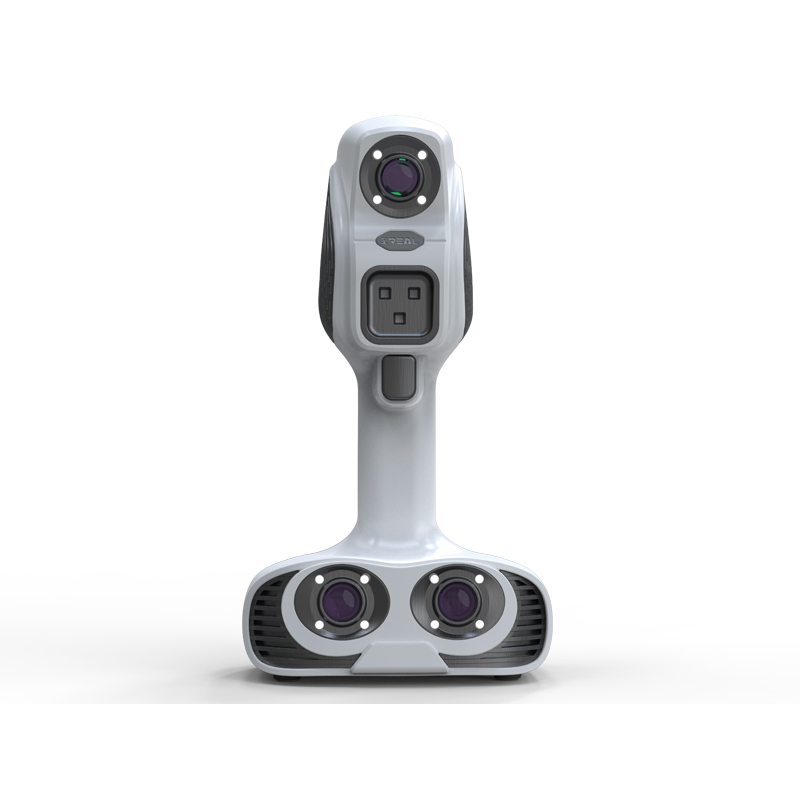
Understanding the 3D Scan-to-Print Process
Replicating a physical object typically involves three essential stages:
-
3D Data Capture
-
Digital Model Processing
-
3D Printing and Finishing
Each phase directly affects the accuracy, appearance, and functionality of the final replicated object.
Step 1: Preparing the Object for Scanning
Proper preparation is one of the most important factors in achieving accurate scan results. Even advanced scanners can struggle with poor environmental conditions or unsuitable object surfaces.
Preparation Guidelines
-
Reduce Surface Reflection
Transparent or shiny materials can interfere with scanning accuracy. Applying a removable matte coating or scanning spray helps create cleaner data. -
Secure the Object
The object should remain completely stable during scanning to avoid distortions. -
Optimize the Environment
Consistent lighting and low vibration improve scanning consistency and reduce errors.
For manufacturers already familiar with CNC measurement systems, this setup process is similar to precision alignment and calibration used in industrial inspection workflows.
Founded in 2015, Suzhou Evolution Technology Co., Ltd. originally specialized in CNC tool setters before expanding into probing systems in 2017. Their strong foundation in precision measurement naturally supported their transition into 3D scanning technologies.
Step 2: Capturing the Object with a 3D Scanner
The next stage involves digitally capturing the object's geometry using specialized scanning equipment.
Common Types of 3D Scanners
-
Laser Scanners
Deliver extremely high precision and are widely used in industrial applications. -
Structured Light Scanners
Offer fast scanning speeds and excellent performance for medium-sized components. -
Handheld Scanners
Provide portability and flexibility when scanning complex or hard-to-reach surfaces.
Best Practices During Scanning
-
Keep a consistent distance between the scanner and the object
-
Move steadily to avoid missing data
-
Capture overlapping scan areas to improve alignment accuracy
Modern scanning systems, including those introduced by Suzhou Evolution Technology in 2022, are designed to support reverse engineering, quality inspection, and digital modeling workflows. Their expertise in measurement technology helps ensure reliable scanning performance and precision.
Step 3: Processing the Scan Data
After scanning, the collected raw data—commonly known as a point cloud—must be converted into a usable digital model.
Typical Processing Steps
-
Noise Removal
Eliminate unnecessary points and scanning artifacts. -
Scan Alignment
Merge multiple scan positions into a unified model. -
Mesh Generation
Convert point cloud data into a polygon-based surface model. -
Repair and Smoothing
Fill holes and refine rough surfaces for better printability.
The quality of this stage has a major impact on the final printed result. Poorly processed data can introduce dimensional errors and surface defects.
As Suzhou Evolution Technology expanded into analytical instrumentation in 2024, the company further emphasized the importance of accurate data analysis and digital processing efficiency within modern inspection systems.
Step 4: Editing and Optimizing the 3D Model
Once the mesh is complete, additional adjustments are often necessary depending on the intended application.
Common Model Optimizations
-
Scaling dimensions
-
Strengthening thin or fragile areas
-
Repairing geometry issues
-
Exporting files into formats such as STL or OBJ
In reverse engineering applications, the mesh may also be converted into a CAD model for redesign or manufacturing modification.
Step 5: Preparing the Model for 3D Printing
Before printing begins, the model must be configured using slicing software that converts the digital design into machine instructions.
Important Printing Parameters
-
Material Selection
Options include PLA, ABS, resin, nylon, and industrial engineering materials. -
Layer Thickness
Smaller layers improve detail but increase print time. -
Support Structures
Necessary for overhangs and intricate geometries. -
Infill Density
Balances strength, weight, and material consumption.
The ideal settings vary depending on whether the printed object is intended for visual display, functional testing, or end-use applications.
Step 6: Printing the Replicated Object
After slicing is complete, the file is sent to the 3D printer for fabrication.
Popular 3D Printing Technologies
-
FDM (Fused Deposition Modeling)
Affordable and commonly used for prototypes. -
SLA (Stereolithography)
Produces high-detail surfaces with excellent precision. -
SLS (Selective Laser Sintering)
Suitable for strong, industrial-grade components.
Monitoring the print throughout production helps detect issues such as warping, shifting, or adhesion problems before they affect the final part.
Step 7: Post-Processing and Finishing
Once printing is finished, additional post-processing may be required to improve appearance and functionality.
Common Finishing Methods
-
Removing support material
-
Sanding and polishing
-
Painting or coating
-
Assembly of multiple printed components
These finishing steps help create a final product that closely resembles the original object in both form and performance.
Applications of 3D Scanning and Printing
The scan-to-print workflow is now widely used across many industries:
-
Manufacturing — reproducing obsolete or legacy parts
-
Automotive — restoration and custom component fabrication
-
Healthcare — prosthetics and medical modeling
-
Consumer Products — rapid prototyping and personalization
As industries increasingly prioritize speed, customization, and precision, integrated scanning and printing technologies continue to gain importance.
The Rise of Integrated Digital Measurement Solutions
A growing trend within the industry is the integration of scanning, inspection, and analytical systems into unified digital workflows.
Suzhou Evolution Technology Co., Ltd. has followed this development path:
-
2015 — Entered the CNC tool setter market
-
2017 — Expanded into probing systems
-
2020 — Achieved rapid business growth
-
2022 — Introduced 3D scanning products and services
-
2024 — Expanded into analytical instruments
-
Future Direction — Development of 3D vision inspection systems
This evolution reflects the broader movement toward intelligent manufacturing and digital inspection ecosystems.
Challenges in the Scan-to-Print Process
Despite its advantages, several practical challenges still exist:
-
Scanner Accuracy Limitations
Not every scanner can achieve ultra-high precision. -
Large Data Files
Complex scans demand significant computing power. -
Operator Experience
Skilled scanning techniques directly influence final quality. -
Material Differences
Printed materials may not fully replicate original mechanical properties.
Successfully overcoming these challenges requires proper equipment, optimized workflows, and experienced technicians.
Conclusion
Replicating objects using 3D scanning and 3D printing has become an efficient and practical solution for modern industries. From precise data capture and digital processing to optimized printing and finishing, every stage contributes to producing accurate and functional replicas.
Companies such as <a href="https://www.evolution-cnc.com/">Suzhou Evolution Technology Co., Ltd.</a> demonstrate how expertise in precision measurement can evolve into comprehensive digital manufacturing solutions that support smarter production and advanced inspection capabilities.
As 3D technologies continue to advance, scan-to-print workflows will become even more accurate, accessible, and essential for businesses seeking innovation and competitive advantage.
www.szevotech.com
Suzhou Evolution Technology Co., Ltd.

+ There are no comments
Add yours