
In modern manufacturing, surface finishing is no longer a secondary process—it is a core determinant of product durability, efficiency, and environmental compliance. Among various coating methods, electrophoretic coating has emerged as a highly controlled and scalable solution. At the heart of this process lies electrophoretic coating equipment, which integrates electrochemistry, automation, and materials science to meet increasingly complex industrial demands. In this blog post, Lexuan Intelligent Equipment, as high quality electrophoretic coating line solutions supplier, will share the role of electrophoretic coating equipment technology for surface treatment.
The Industrial Logic of Electrophoretic Coating Equipment Technology
Electrophoretic coating relies on the movement of charged paint particles in an electric field, depositing uniformly onto conductive substrates. Equipment technology determines how efficiently this principle is applied in real-world production.
Unlike conventional spray systems, electrophoretic coating equipment is designed to control voltage, bath chemistry, temperature, and flow dynamics simultaneously. This integrated logic allows manufacturers to achieve consistent film thickness even on complex geometries, internal cavities, and sharp edges—areas where traditional methods often fail.
From an industrial perspective, this precision translates into reduced rework, lower paint consumption, and predictable quality outcomes, which are critical for high-volume manufacturing environments.
Equipment Architecture and System Integration
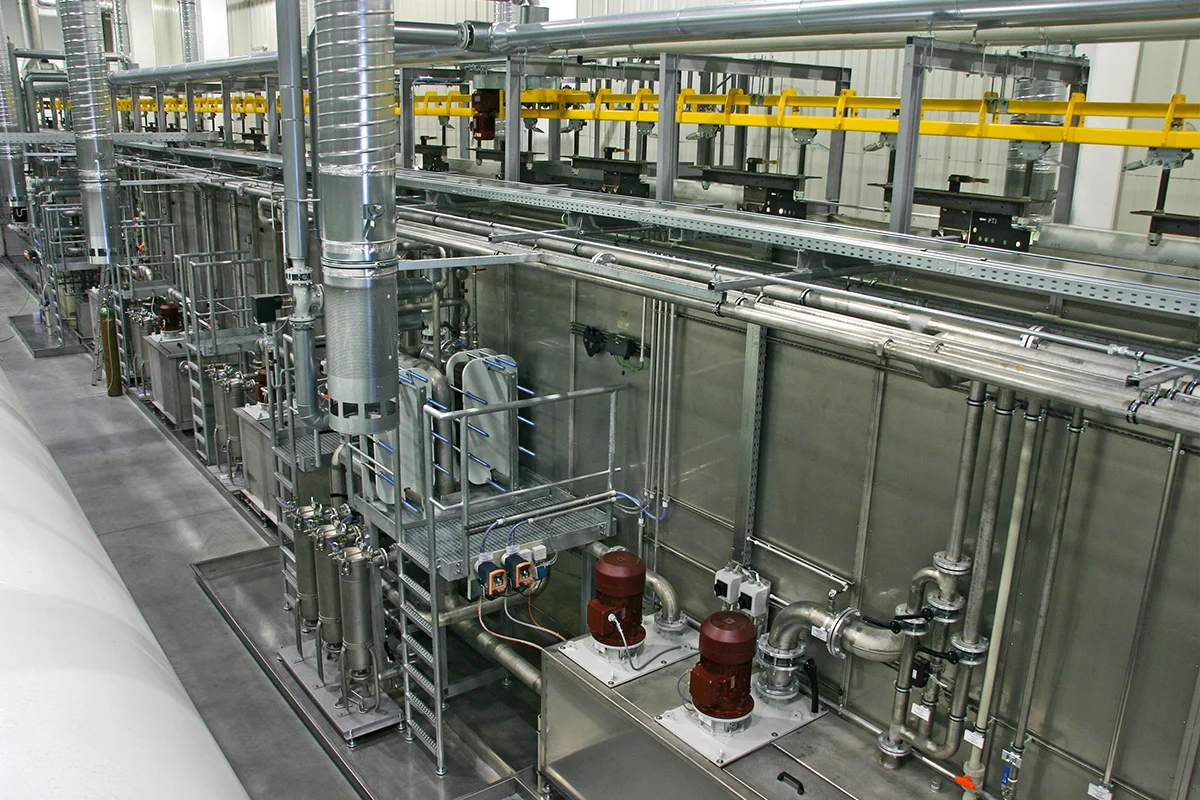
Modern electrophoretic coating systems are not standalone machines but interconnected production ecosystems. The core structure typically includes pretreatment lines, coating tanks, power supply units, ultrafiltration modules, and curing ovens.
What differentiates contemporary electrophoretic coating equipment technology is the level of system integration. Sensors continuously monitor bath conductivity, pH, and solids content, while programmable logic controllers adjust parameters in real time. This architecture enables stable operation over long production cycles and reduces dependence on manual intervention.
As factories move toward smart manufacturing, the ability of coating equipment to integrate with MES and ERP systems is becoming a decisive factor in equipment selection.
Process Control as a Competitive Advantage
One of the most significant advantages of electrophoretic coating lies in process controllability. Equipment technology plays a central role in translating chemical potential into repeatable results.
Advanced rectifier systems allow fine-tuning of voltage curves during deposition, ensuring optimal film build without defects such as pinholes or craters. Automated circulation systems maintain uniform particle distribution, preventing sedimentation and color inconsistency.
By embedding process control into equipment design, manufacturers gain a competitive advantage: stable quality that scales with output rather than deteriorating under pressure.
Sustainability Driven by Equipment Innovation
Environmental compliance is no longer optional. Electrophoretic coating equipment technology has evolved in response to stricter regulations on emissions, waste, and energy consumption.
Closed-loop ultrafiltration systems recover excess coating material, significantly reducing waste discharge. Water-based coating formulations, supported by corrosion-resistant equipment materials, minimize volatile organic compound emissions.
Energy efficiency is another area of progress. Heat recovery units and optimized curing ovens lower overall energy demand, aligning coating operations with corporate sustainability goals while also reducing operating costs.
Industry-Specific Adaptation of Electrophoretic Coating Systems
While automotive manufacturing remains the most prominent user of electrophoretic coating, equipment technology has expanded into new sectors with distinct requirements.
In appliance manufacturing, compact electrophoretic coating lines are designed for flexible batch sizes and rapid color changes. In heavy equipment and agricultural machinery, systems prioritize thick, impact-resistant coatings and robust tank structures.
The adaptability of electrophoretic coating equipment technology lies in its modular design philosophy. Manufacturers can configure systems based on throughput, part geometry, and coating performance targets, making the technology relevant far beyond its traditional markets.
Digitalization and Data-Driven Coating Operations
The integration of digital tools is redefining how coating equipment is managed and optimized. Data collection embedded within electrophoretic coating equipment allows operators to analyze trends rather than react to failures.
Predictive maintenance algorithms use current, voltage, and temperature data to identify early signs of component wear. Process analytics help optimize coating parameters for new product lines without extensive trial runs.
This shift from experience-based operation to data-driven decision-making enhances consistency, reduces downtime, and supports continuous improvement initiatives.
Material Compatibility and Equipment Design
Electrophoretic coating equipment must accommodate a wide range of substrates, from steel and aluminum to mixed-metal assemblies. Equipment technology addresses this challenge through material selection and design refinement.
Tank linings, pumps, and piping systems are engineered to resist chemical attack while maintaining electrical insulation where required. Fixture and hanger designs ensure stable electrical contact, which directly affects coating uniformity.
By aligning equipment design with material science principles, manufacturers can expand their coating capabilities without compromising reliability.
Cost Structure and Long-Term Value
Although electrophoretic coating systems require higher initial investment compared to conventional spray lines, equipment technology fundamentally reshapes the cost structure over time.
Higher paint utilization rates reduce material expenses, while automation lowers labor costs and variability. Equipment longevity, supported by corrosion-resistant components and modular upgrades, extends service life and protects capital investment.
When evaluated over the full lifecycle, electrophoretic coating equipment technology often delivers a lower total cost of ownership, making it a strategic rather than tactical choice.
Future Directions in Electrophoretic Coating Equipment Technology
Looking ahead, innovation is moving toward greater flexibility and intelligence. Research focuses on low-temperature curing systems, AI-assisted process optimization, and compact equipment footprints suitable for decentralized production.
As product customization increases and batch sizes shrink, electrophoretic coating equipment will need to balance efficiency with responsiveness. The next generation of systems is expected to emphasize adaptability without sacrificing the core advantages of uniformity and durability.
Conclusion
Electrophoretic coating equipment technology is no longer just a supporting element in surface finishing—it is a driver of quality, sustainability, and operational excellence. By combining precise process control, integrated system design, and digital intelligence, this technology addresses the evolving needs of modern manufacturing.
For companies seeking long-term competitiveness, investing in advanced electrophoretic coating equipment is not simply about improving coatings. It is about building a resilient, efficient, and future-ready production capability.
www.lexuaneqpt.com
Lexuan Intelligent Equipment


+ There are no comments
Add yours