
A digital full denture workflow connects clinical data acquisition, CAD design, and computer-controlled manufacturing to produce complete dentures with more consistent geometry and a more traceable production process. For dental laboratories serving international clinics, the main objective is not simply to replace manual fabrication with digital equipment. It is to translate patient-specific anatomical information into a denture that supports retention, stability, occlusion, and predictable delivery, while reducing avoidable remakes and adjustment appointments.
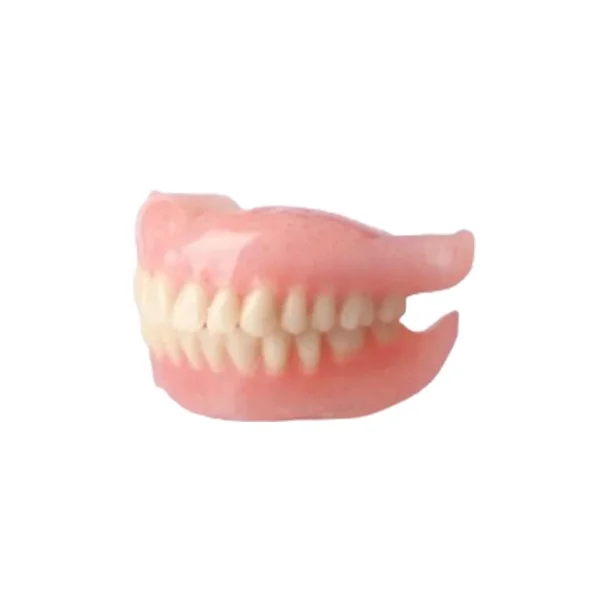
Traditional complete denture fabrication relies heavily on physical impressions, manual model preparation, wax setup, and laboratory experience. These methods remain valuable, but they can introduce variability during impression handling, base fabrication, tooth arrangement, and processing. A digital full denture workflow provides additional opportunities to standardize these stages, preserve design data, and reproduce a validated design when a replacement is needed. The clinical result still depends on the quality of the original records, the accuracy of the digital design, the selected materials, and the verification process.
How a Digital Full Denture Workflow Works
The process begins with collecting the information needed to represent the patient's oral anatomy and functional requirements. Depending on the clinical case and available equipment, this may include intraoral scans, scans of conventional impressions, scans of existing dentures, and digital records of jaw relationships. For edentulous patients, capturing accurate soft-tissue anatomy can be more challenging than scanning dentate arches because there are fewer fixed landmarks to guide image stitching. Mobile mucosa, shallow vestibules, saliva, and limited anatomical texture can all affect scan quality.
For this reason, digital full denture production should not be treated as a software-only process. The clinical team must determine whether the available records adequately represent the residual ridges, palate, vestibular extensions, and other relevant anatomical features. If the source data contains gaps or distortion, CAD software cannot reliably reconstruct the missing clinical information simply by smoothing the surface.
After data acquisition, the laboratory imports and evaluates the digital files, establishes the working models, and develops the denture design. CAD software supports the definition of the denture base, tooth positions, occlusal relationships, and external contours. The design must account for the patient's anatomy and the intended function rather than relying exclusively on automated tooth arrangement. The laboratory then manufactures the base and related components through a validated 3D printing or milling workflow, followed by the appropriate finishing, assembly, and quality checks.
Jiahong Dental Laboratory has developed its digital manufacturing capabilities over several stages. Founded in 1999, the company established its digital center in 2012 and expanded it into a CAD/CAM center in 2018, incorporating 3D printing equipment, digital cutting machines, and milling instruments. This development supports a workflow in which digital design and computer-controlled manufacturing can be integrated with laboratory production experience.
Why Scan Quality Determines Denture Accuracy
The accuracy of a digital full denture starts before the CAD stage. Incomplete or distorted records can affect the denture's tissue-contact surface, border design, and relationship with the opposing arch. Even when a digital model appears visually smooth, it may not reflect the patient's actual anatomy closely enough for a predictable clinical result.
Edentulous cases require particular attention to tissue compression and functional movement. Conventional impressions can capture tissues under different pressure conditions, while an intraoral scan generally records the surface in its current state. These records are not automatically interchangeable. The appropriate acquisition method depends on the clinical protocol, the patient's anatomy, the required level of tissue displacement, and the intended design strategy.
A useful digital workflow therefore includes a defined data acceptance process. The team should review scan completeness, identify missing or suspicious areas, verify the representation of critical anatomical landmarks, and confirm that the bite registration is suitable for the planned occlusion. Where the records do not provide enough information, additional clinical records or a different impression approach may be necessary.
This step can prevent expensive downstream errors. A defective scan discovered before design may require only another data capture session. The same defect discovered after manufacturing can lead to a remake, additional shipping time, and another clinical appointment. Digital efficiency depends on detecting these problems early rather than simply processing files faster.
CAD Design: Balancing Retention, Stability, and Occlusion
A digital full denture must do more than reproduce the shape of the edentulous ridge. Its base design, tooth arrangement, and occlusal scheme work together to influence function and patient comfort. CAD tools make these relationships easier to visualize, but the design still requires clinical judgment.
The denture base must provide appropriate tissue adaptation and extension without creating excessive pressure or interfering with movable tissues. The available ridge anatomy, undercuts, vestibular depth, and mucosal condition affect the design. Excessive relief may reduce support, while inadequate relief in sensitive areas may contribute to discomfort. Border extensions also need careful consideration because a digitally designed base cannot compensate for inaccurate clinical records.
Tooth positioning is equally important. Anterior tooth placement influences appearance, lip support, and phonetics. Posterior tooth placement affects the distribution of occlusal forces and the tendency of the denture to rotate during function. Positioning teeth without considering the available ridge support and jaw relationship can produce an attractive digital preview but an unstable clinical result.
The occlusal scheme should be selected according to the patient's anatomy, interarch relationship, and treatment objectives. A digital articulation or virtual setup can help identify potential interferences before manufacturing, but it should not be interpreted as proof that the final denture will function perfectly in the mouth. Clinical verification remains essential, particularly when records are incomplete or the patient presents with significant anatomical limitations.
A repeatable CAD process should also preserve approved design versions and document modifications. If the clinic requests a change to tooth position, vertical dimension, or base contour, the laboratory needs to know which version is current and whether the modification affects other parts of the design. Version control is especially important for multi-unit cases, remote collaboration, and replacement dentures.
3D Printing or Milling: Selecting the Right Manufacturing Route
Digital full dentures can be produced using additive manufacturing or subtractive milling, depending on the denture design, material system, equipment, and validated laboratory protocol. Neither method should be considered universally superior. The appropriate choice depends on dimensional consistency, surface requirements, production volume, material properties, and post-processing needs.
3D printing
3D printing builds the denture base layer by layer. It can support efficient production, flexible design changes, and the simultaneous manufacture of multiple cases when nesting and machine capacity are properly managed. The main process variables include resin compatibility, build orientation, layer settings, support placement, washing, and post-curing. Inadequate washing or curing can affect the material's final properties and dimensional stability. A printed part should therefore be evaluated within the full validated process rather than judged solely by the accuracy of the printer.
Milling
Milling removes material from a prefabricated blank to create the designed component. Depending on the material and equipment, this route can provide consistent material properties and controlled fabrication of the base. However, tool access, milling strategy, blank dimensions, tool wear, and machine calibration can affect the result. Milling may also generate more material waste and require different equipment capacity compared with additive production.
The manufacturing route must match the approved material system. Denture-base materials should be suitable for their intended intraoral use and processed according to the manufacturer's instructions. Dimensional accuracy alone is insufficient: mechanical performance, biocompatibility, surface quality, bonding compatibility, and applicable regulatory requirements must also be considered.
For overseas customers, consistency between batches is particularly important. A laboratory should maintain documented process parameters, material traceability, machine maintenance records, and inspection criteria. This allows production issues to be investigated more effectively and helps prevent a design that performed well in one batch from producing different results in the next.
Quality Control Beyond the Digital File
A successful digital full denture workflow requires inspection at multiple stages. Reviewing the source data can identify missing anatomical information. CAD review can detect unsuitable contours, tooth positions, and design inconsistencies. Manufacturing inspection can identify warpage, surface defects, or dimensional deviations, while final assembly checks can verify tooth positioning and the overall finish.
Where appropriate, the laboratory can compare manufactured components with the approved digital design using compatible scanning or measurement methods. The comparison should focus on clinically relevant areas rather than relying solely on a single whole-surface deviation value. Tissue-contact regions, border contours, tooth arrangement, and interfaces may have different tolerances and clinical consequences.
A reliable quality process should also distinguish manufacturing defects from limitations in the clinical records. A denture that requires adjustment does not automatically indicate a manufacturing failure; inaccurate jaw records, anatomical changes, and individual tissue responses can also contribute. Documenting the cause of each remake or adjustment helps the laboratory identify recurring problems and improve its workflow.
When Digital Full Dentures Deliver the Most Value
Digital production is particularly useful when a laboratory needs to coordinate multiple cases, preserve design information, reduce repetitive manual steps, or support replacement dentures. Once a validated digital design and the relevant patient records are stored appropriately, they can provide a useful starting point for future production. However, the original design should not be reused automatically if the patient's anatomy, oral condition, or treatment requirements have changed.
Digital workflows can also improve collaboration between clinics and laboratories. Shared files and structured review steps allow the clinical team to evaluate a proposed design before manufacturing begins. Jiahong's digital support capabilities include services for oral scanning equipment and precise implant-positioning workflows. Such support can help connect clinical data acquisition with laboratory production, including planning related to All-on-4 treatment. Full dentures and implant-supported full-arch restorations remain distinct treatment categories, however, and their design requirements should not be conflated.
For clinics serving geographically distant patients, a more predictable production workflow can be valuable because repeated appointments and international shipping increase the cost of corrections. The greatest benefit comes from combining accurate records, clinically appropriate design, validated manufacturing, and clear communication—not from digital fabrication alone.
Choosing a Digital Full Denture Manufacturing Partner
When evaluating a digital full denture provider, examine the entire workflow rather than focusing only on printer specifications or advertised production speed. Relevant questions include how incomplete scans are handled, which CAD/CAM processes are available, how materials are validated, how design changes are controlled, and what inspection records accompany finished products. It is also useful to clarify the required clinical records, expected turnaround time, remake policy, packaging and shipping arrangements, and support available when a case requires revision.
Experience in conventional denture fabrication remains important because digital tools do not eliminate the need to understand anatomy, occlusion, tissue behavior, and finishing requirements. A laboratory with established production experience and a developed digital center can combine these skills to build a more controlled process.
A well-managed digital full denture workflow is ultimately a system for improving repeatability, communication, and traceability. When data acquisition, CAD design, manufacturing, and clinical verification are managed as connected stages, digital production can help laboratories deliver consistent dentures while reducing avoidable rework and supporting more efficient collaboration with overseas clinics.
www.jiahongdentallab.com
Shenzhen Jiahong Dental Technology Co., Ltd.



+ There are no comments
Add yours